Instant Pot Vegan Chili Recipe 2024- Healthy Food Recipe


Instant Pot Vegan Chili: A Hearty, Flavourful and Healthy Feast
Craving a warm, comforting bowl of chili without the meat? This Instant Pot vegan chili is the answer: two kinds of beans, tomatoes, peppers and a short list of everyday spices, pressure-cooked into a thick, savoury pot in well under half an hour of hands-on effort. It is a plant-based recipe built entirely from store-cupboard ingredients, which makes it a realistic weeknight dinner rather than a weekend project — and it tastes even better the next day.
Serves: 6 | Prep time: about 10 minutes | Pressure cook time: 10 minutes, plus natural release | Diet: vegan and naturally gluten-free (check your vegetable broth label)
Why This Chili Works
Good chili is about layers, and this recipe builds them in the right order. The onion, garlic and peppers are sautéed first so they sweeten instead of steaming. The spices are toasted briefly in the hot oil, which wakes up their flavour far more than stirring them into liquid at the end. Two different beans — black beans and kidney beans — give the pot contrasting texture and a more complete, substantial bite than a single bean would. And the two forms of tomato, plain diced and diced with chillies, bring both body and background heat, so the finished chili tastes cooked-all-day even though the pressure cooker did the work in minutes.
There are good nutritional reasons to keep a pot like this in your regular rotation too:
- Plant protein and fibre together: beans are one of the few everyday foods that deliver both in the same serving, which is why bean-based meals keep you full for so long.
- Lower in saturated fat: with no meat and just a tablespoon of olive oil for the whole pot, this chili is naturally far lower in saturated fat than a beef version, and contains no cholesterol.
- Meal-prep friendly: the recipe doubles cleanly, freezes well, and the flavour improves after a night in the fridge as the spices settle into the beans.
- Genuinely adaptable: the heat, the vegetables and the serving base are all adjustable without breaking the recipe, as the variations below show.
If you prefer the classic meat version on other days, compare it with our chili con carne recipe — and for more weeknight ideas in the same spirit, browse our healthy food recipes collection.
Ingredients (Serves 6)
- 1 tablespoon olive oil
- 1 medium onion, chopped
- 2 cloves garlic, minced
- 1 bell pepper, chopped (optional)
- 1 jalapeño pepper, seeded and finely chopped (optional)
- 1 teaspoon chili powder
- 1 teaspoon ground cumin
- 1/2 teaspoon smoked paprika
- 1/4 teaspoon black pepper
- 1/4 teaspoon cayenne pepper (optional)
- 1 (15-ounce) can diced tomatoes, undrained
- 1 (15-ounce) can black beans, drained and rinsed
- 1 (15-ounce) can kidney beans, drained and rinsed
- 1 cup vegetable broth
- 1 (14.5-ounce) can diced tomatoes with chiles, undrained
- 1 cup cooked brown rice, quinoa, or barley (optional)
- 1/2 cup chopped fresh cilantro, for garnish
- Salt, to taste — add at the end, since canned beans and broth vary in saltiness
A note on the beans: draining and rinsing canned beans matters. It removes much of the starchy canning liquid, which keeps the chili’s texture clean and reduces the salt you cannot control. If you would rather cook dried beans from scratch, use the equivalent amount of cooked beans and keep the vegetable broth as written — just season a little more assertively, because home-cooked beans arrive unsalted.
Method
- Sauté the base. Set the Instant Pot to “Sauté” mode. Heat the olive oil, add the onion and cook until softened, about 5 minutes, stirring now and then so it softens rather than browns hard.
- Add the aromatics. Stir in the garlic, bell pepper (if using) and jalapeño (if using). Cook for 1 minute, stirring frequently, just until the garlic smells fragrant.
- Toast the spices. Add the chili powder, cumin, smoked paprika, black pepper and cayenne pepper (if using). Cook for about 30 seconds, stirring constantly. This brief toasting in oil deepens the flavour of the whole pot — do not skip it, and do not let the spices scorch.
- Load the pot. Add the diced tomatoes, black beans, kidney beans, vegetable broth and diced tomatoes with chiles. Stir well, scraping the bottom of the pot with your spoon to lift any sautéed bits — this also helps prevent a burn warning during pressure cooking.
- Pressure cook. Close and lock the lid, set the valve to sealing, and pressure cook on “High” pressure for 10 minutes. Let the pressure release naturally for 5 minutes, then carefully release any remaining pressure manually.
- Finish. Stir in the cooked brown rice, quinoa or barley (if using) and let the chili sit for 2–3 minutes to heat through. Taste, add salt as needed, and adjust the heat with extra cayenne or a dash of hot sauce if you want more.
- Serve. Ladle into bowls and garnish with fresh cilantro. Set out toppings and let everyone build their own bowl.
Nutrition per Serving (Estimated)
Based on the ingredient quantities above, divided into 6 servings and without the optional rice, quinoa or barley:
- Calories: approximately 180 kcal per serving
- Protein: approximately 9 g per serving
These figures are estimated from USDA FoodData Central values for the listed ingredients; your brands will vary, especially for canned beans, tomatoes and vegetable broth. Serving the chili over cooked rice, quinoa or barley will add calories and a little extra protein on top of these base figures.
Most of those calories come from the beans themselves, which is exactly what you want from a chili: slow-digesting carbohydrate, fibre and plant protein in one bowl, rather than calories from added fat. For Indian home cooks checking how this fits alongside everyday staples, the Indian Food Composition Tables from ICMR–National Institute of Nutrition, listed in our Sources, are the reference we use for local ingredients.
Serving Suggestions
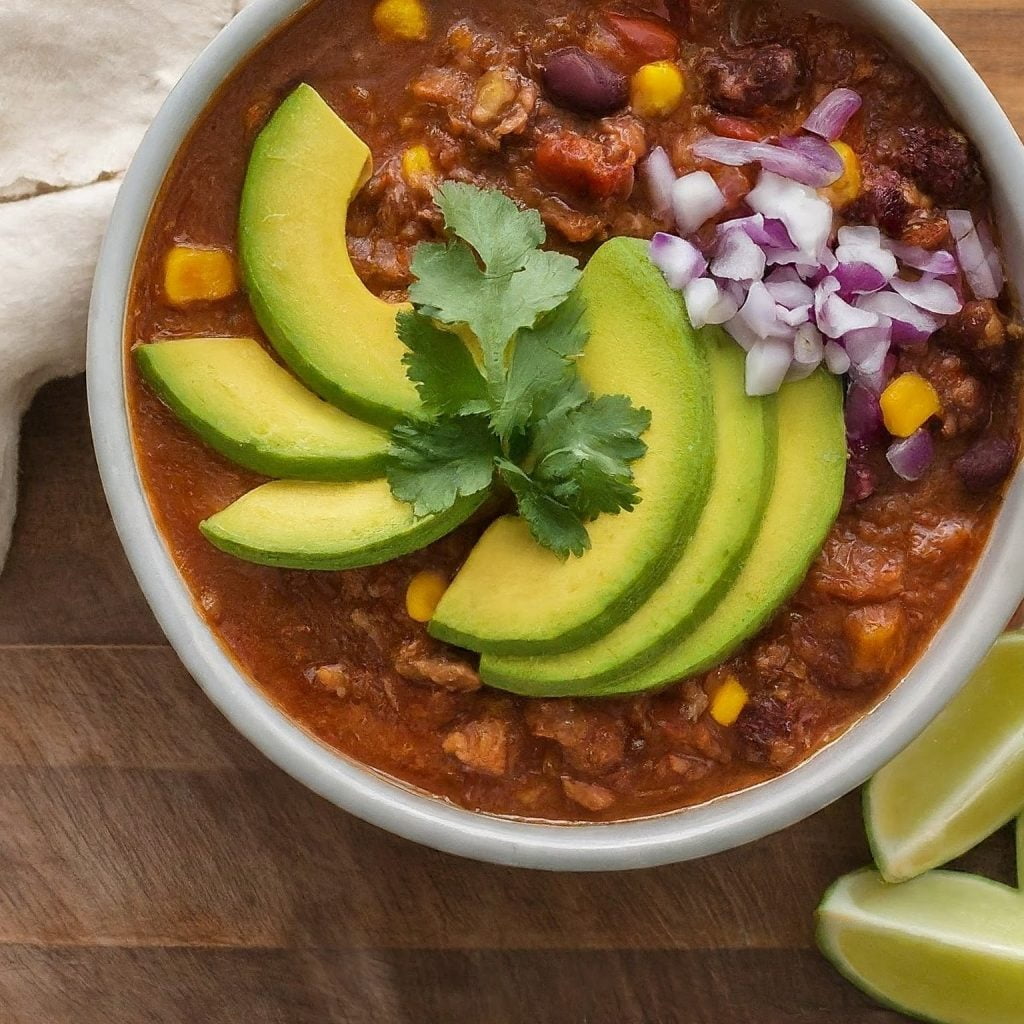
- Classic bowl: serve as it is, with avocado slices, chopped onion, fresh cilantro, lime wedges and hot sauce on the side.
- Over grains: spoon over brown rice, quinoa or barley for a fuller meal.
- With bread or wraps: serve with warm flatbread, tortillas or a crusty roll to catch the sauce.
- Loaded style: add a spoonful of vegan sour cream or plain unsweetened curd-style topping, grated plant-based cheese, or crushed tortilla chips for crunch.
Storage and Reheating
- Fridge: cool the chili completely, transfer to an airtight container and refrigerate for up to 4 days. The flavour genuinely improves on day two.
- Freezer: freeze in portion-sized containers for up to 3 months. Leave a little headspace, as bean-based dishes expand slightly when frozen.
- Reheating: thaw overnight in the fridge, then reheat on the stove or in the microwave until piping hot all the way through, stirring halfway. The chili thickens in storage, so stir in a splash of water or vegetable broth while reheating to bring it back to your preferred consistency.
- Food safety: do not leave the cooked chili sitting at room temperature for long stretches, and reheat leftovers only once.
Tips and Variations
- Thicker chili: mash some of the beans with the back of a spoon before pressure cooking, or simmer briefly with the lid off after cooking, stirring so it does not catch.
- More vegetables: corn, diced carrots, courgette or mushrooms all work well here. Add firmer vegetables like carrots with the beans; stir softer ones in at the end.
- Deeper smoky flavour: add a chipotle pepper in adobo sauce, finely chopped, or increase the smoked paprika slightly.
- Heat control: the jalapeño and cayenne are both optional. Leave both out for a mild, family-friendly pot, or keep the seeds in the jalapeño and add extra cayenne for a properly hot one.
- No Instant Pot? The same recipe works in a heavy pot on the stove: follow the sauté and spice steps as written, then cover and simmer gently until the beans and vegetables are fully tender and the flavours have come together, adding a little extra broth if it reduces too far.
There you have it — a simple, healthy vegan chili that respects a busy schedule. Cook a full pot, eat well tonight, and let the leftovers solve lunch for two days. Once you have the base down, make it your own: change the beans, the vegetables, the heat. That is how a recipe becomes a staple.
Sources
- Healthy diet — WHO fact sheet
- USDA FoodData Central
- Vegetarian Diet — MedlinePlus Medical Encyclopedia
- Indian Food Composition Tables (ICMR–National Institute of Nutrition)
By the FitNTip Editorial Team · Last updated: 11 February 2024
How FitNTip builds its guides: our articles are compiled from official public sources — including the Indian Food Composition Tables (ICMR–National Institute of Nutrition), USDA FoodData Central and the WHO healthy diet guidance — and reviewed against them when updated.
This article is educational and is not medical advice. If you have a medical condition, are pregnant, or plan a major change in diet or training, talk to your doctor first.
This article is for informational and educational purposes only. It does not constitute medical advice, diagnosis, or treatment. The information presented is researched from trusted sources including peer-reviewed scientific journals, CDC, NIH, WHO, and recognized health organizations. Always consult a qualified healthcare professional before making any changes to your diet, exercise routine, or health regimen.