Contents
I used to hit the snooze button more times than I care to admit. My mornings often felt like a slow, groggy crawl out of bed, followed by a stiff, achy shuffle to the coffee maker. Sound familiar? For years, I thought this was just part of being a busy professional – the inevitable consequence of burning the midnight oil and juggling a million demands. But then, I discovered the magic of a simple morning mobility routine. It’s not about intense workouts or breaking a sweat before breakfast; it’s about gently coaxing your body to life, preparing it for the day ahead with fluidity and ease. And the best part? It takes less time than scrolling through your phone!
Also Read-15 Healthy 10-Minute Dinner Recipes for Hectic Weeknights
The “why” behind this is simple and profound. When we sleep, our bodies are relatively still. Muscles can tighten, joints can feel a bit creaky, and our overall circulation slows down. A short, intentional movement session first thing can reverse this. It increases blood flow, lubricates your joints, and helps to improve your posture, which can set a more positive tone for your entire day. Think of it as a gentle oil change for your body, getting all the parts moving smoothly before you hit the road.
Why Bother with Morning Movement?
Let’s be honest, the temptation to just roll out of bed and dive straight into the day’s chaos is strong. But a few minutes of mindful movement can make a surprisingly big difference. For beginners and busy folks alike, the benefits are tangible. You might notice less stiffness throughout the day, a greater range of motion when you reach for something or bend down, and even a subtle boost in your mood. It’s about feeling more connected to your physical self, rather than just a disembodied brain operating on caffeine.
Consider this: your body is your primary vehicle for experiencing life. Keeping it well-maintained and responsive shouldn’t be an afterthought. Even a short routine can help prevent the small aches and pains that can escalate over time. It’s an investment in your long-term physical well-being, and it starts with just 15 minutes. Imagine feeling more energized, less restricted, and generally more capable from the moment you wake up. That’s the power of a consistent morning mobility practice.
Getting Started – What You’ll Need.
What if I told you that you can set up your entire morning mobility routine with stuff you already have at home? For most of the wake up exercises I walk you through, you just need a small patch of floor where you can lie down without bumping into a chair or your bed frame. A yoga mat is nice, but a folded blanket or carpet is totally fine, especially if you’re doing stretching for beginners and your knees are a bit sensitive.
When I’m tight on time before work, I keep it stupid simple: a mat, a small towel, and a bottle of water nearby so I don’t wander off and get distracted. If you want to get slightly fancy, a strap or belt helps for hamstring stretches, and a pillow or cushion can support your hips for some of the gentler morning stretches so your body feels supported, not forced.
☀️ Your 15-Minute Wake-Up Routine: A Detailed Guide.
This routine is designed to be accessible for everyone. No fancy equipment is needed—just a little space and a willingness to move. We’ll focus on key areas that tend to get stiff from prolonged sitting or sleeping: your neck, shoulders, and hips. Each movement should feel good; if something causes sharp pain, ease up or skip it. Listen to your body – it is your best guide.
| Movement | Duration | Primary Focus |
|---|---|---|
| 1. Gentle Neck Rolls | 2 minutes | Neck Tension Relief |
| 2. Shoulder Circles | 2 minutes | Upper Back & Shoulder Mobility |
| 3. Hip Circles | 2 minutes | Lower Back & Hip Mobility |
| 4. Cat-Cow Stretch | 3 minutes | Spinal Flexion & Extension |
| 5. Forward Fold (Standing or Seated) | 3 minutes | Hamstring & Posterior Chain Stretch |
| 6. Child’s Pose | 3 minutes | Relaxation & Grounding |
| Total Time | 15 Minutes |
1. Gentle Neck Rolls (2 minutes).
Goal: To gently relieve overnight stiffness and tension in the neck muscles.
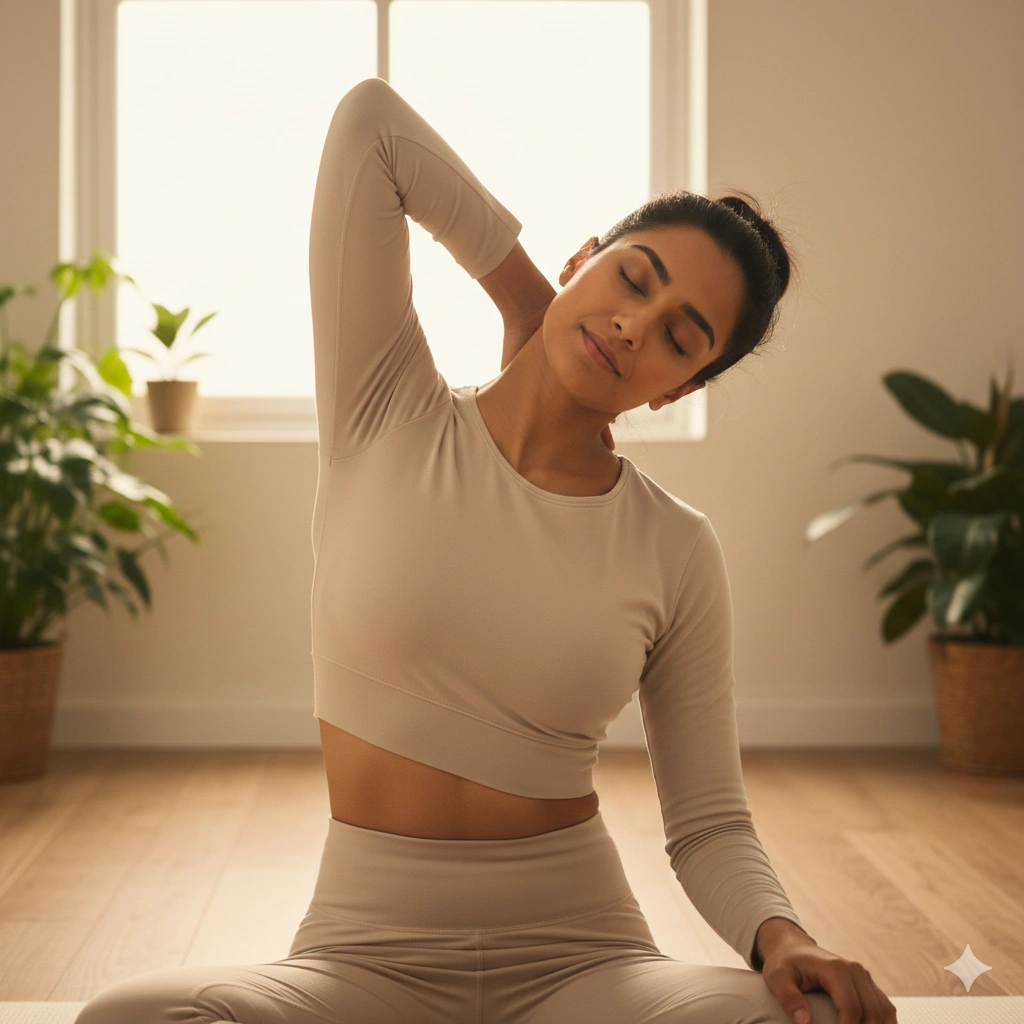
- Starting Position: Start by sitting comfortably on the floor or standing tall with your spine long. Ensure your shoulders are relaxed and pulled away from your ears.
- The Movement:
- Gently drop your chin towards your chest, lengthening the back of your neck.
- Slowly roll your right ear towards your right shoulder, pausing briefly to feel the gentle stretch along the left side of your neck.
- Roll your chin back down to your chest, maintaining control and slow speed.
- Continue the movement by rolling your left ear towards your left shoulder, pausing to feel the stretch on the right side.
- Key Instruction: Avoid rolling your head all the way back as this can compress the delicate cervical spine. Keep the movement a half-circle from shoulder to shoulder.
- Repetitions: Aim for 5-6 slow, controlled repetitions in each direction.
2. Shoulder Circles (2 minutes).
Goal: To improve mobility in the shoulder joints and counteract a hunched-over posture.
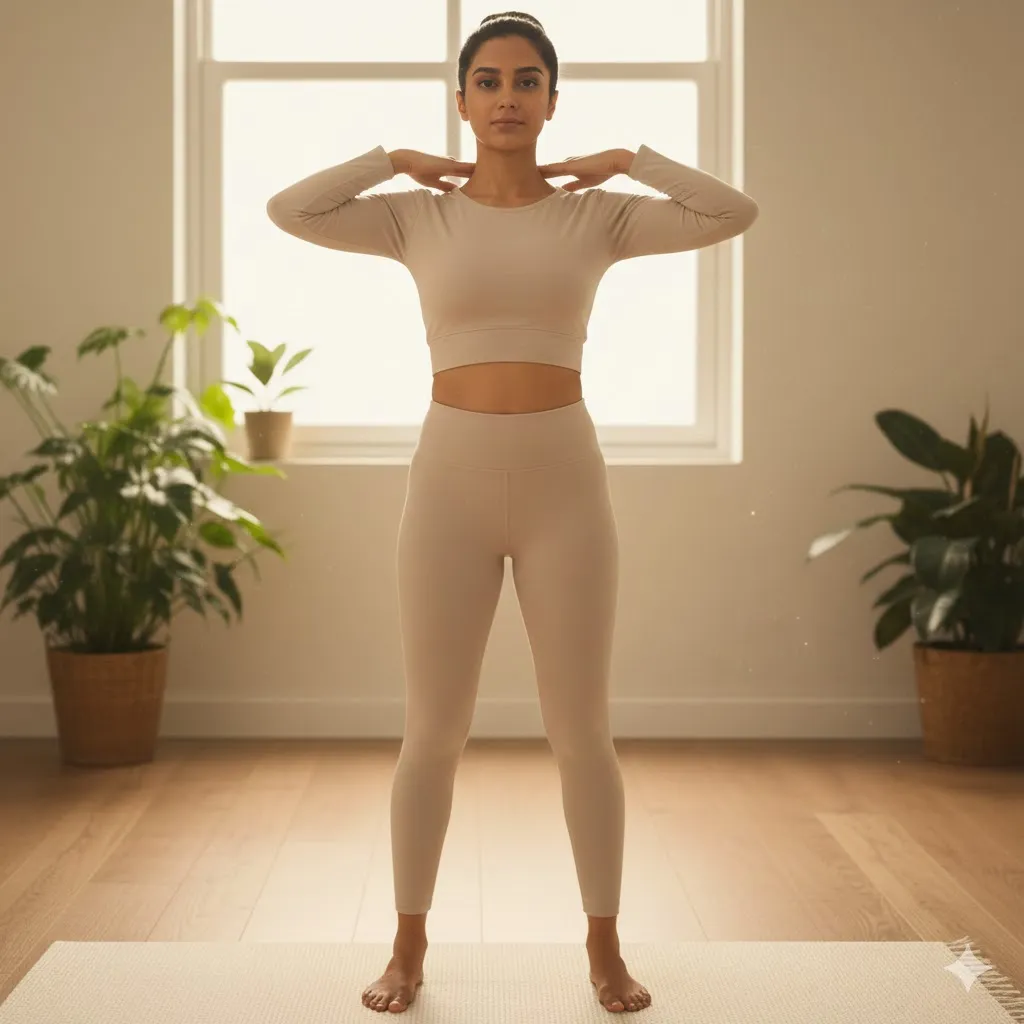
- Starting Position: Stand with your feet hip-width apart, arms relaxed at your sides.
- The Movement (Forward):
- Inhale and draw your shoulders up towards your ears (shrug).
- Exhale and roll them forward, then down towards the floor.
- Begin with small circles, then gradually make the circles larger and more expressive, aiming to feel your shoulder blades glide on your back.
- Complete 10-12 circles forward.
- The Movement (Backward):
- Reverse the movement. Inhale as you draw the shoulders up and back, squeezing your shoulder blades together.
- Exhale as you roll them down the back and forward. This is the more crucial direction for correcting posture.
- Complete 10-12 circles backward.
- Advanced Option: You can perform one shoulder at a time (alternating) to focus on isolating the movement.
3. Hip Circles (2 minutes).
Goal: To mobilize the hips and lubricate the hip joints, easing tension in the lower back.
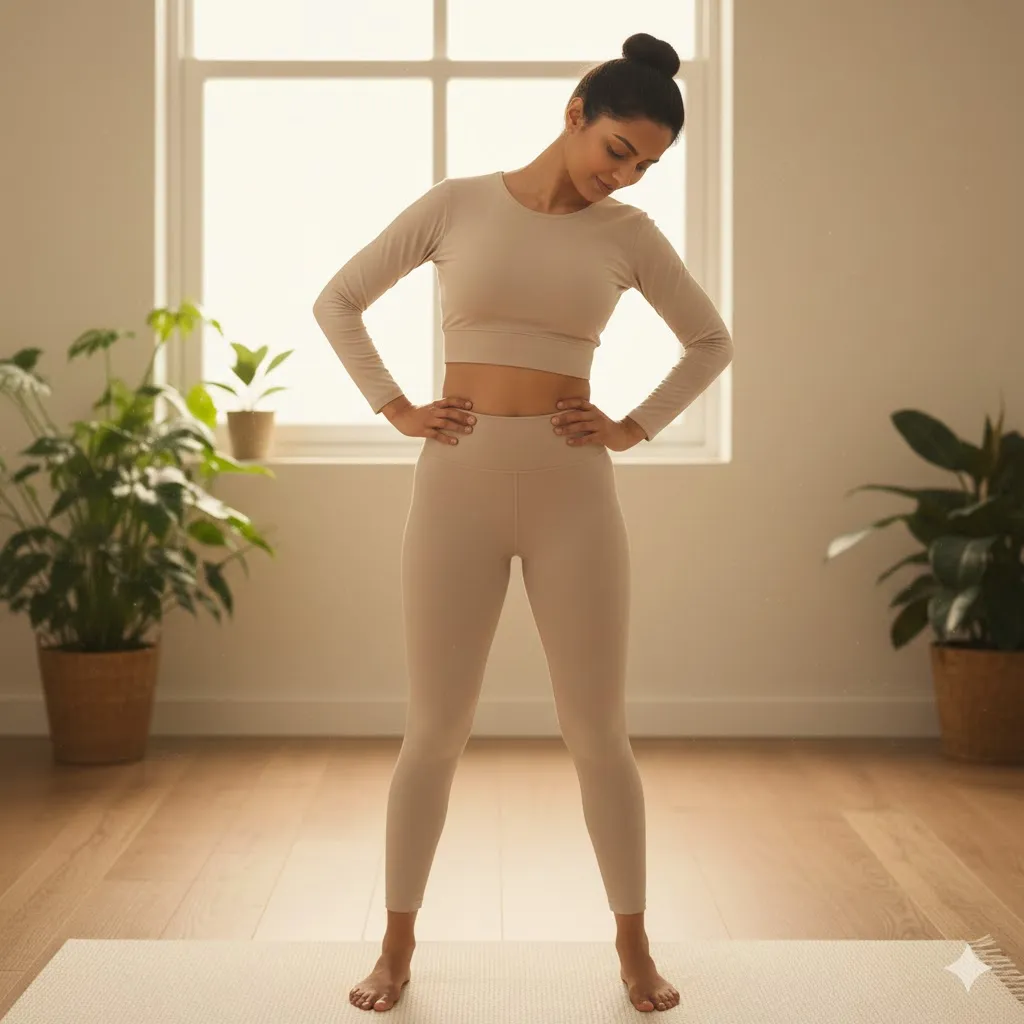
- Starting Position: Stand with your feet a little wider than hip-width apart, hands resting lightly on your hips. Keep your knees slightly bent (unlocked).
- The Movement:
- Begin to slowly circle your hips, imagining you are drawing a large circle with your tailbone.
- Push your hips out to one side, back, to the other side, and forward.
- Let your torso follow the movement naturally, but keep the focus on the hip joint itself.
- Repetitions: Complete 10-12 repetitions clockwise.
- Repetitions: Reverse the direction and complete 10-12 repetitions counter-clockwise.
- Benefit: This helps release tension that accumulates in the lower back and surrounding muscles from prolonged stillness.
4. Cat-Cow Stretch (3 minutes).
Goal: To gently warm up and increase the flexibility of the entire spine, coordinating breath with movement.
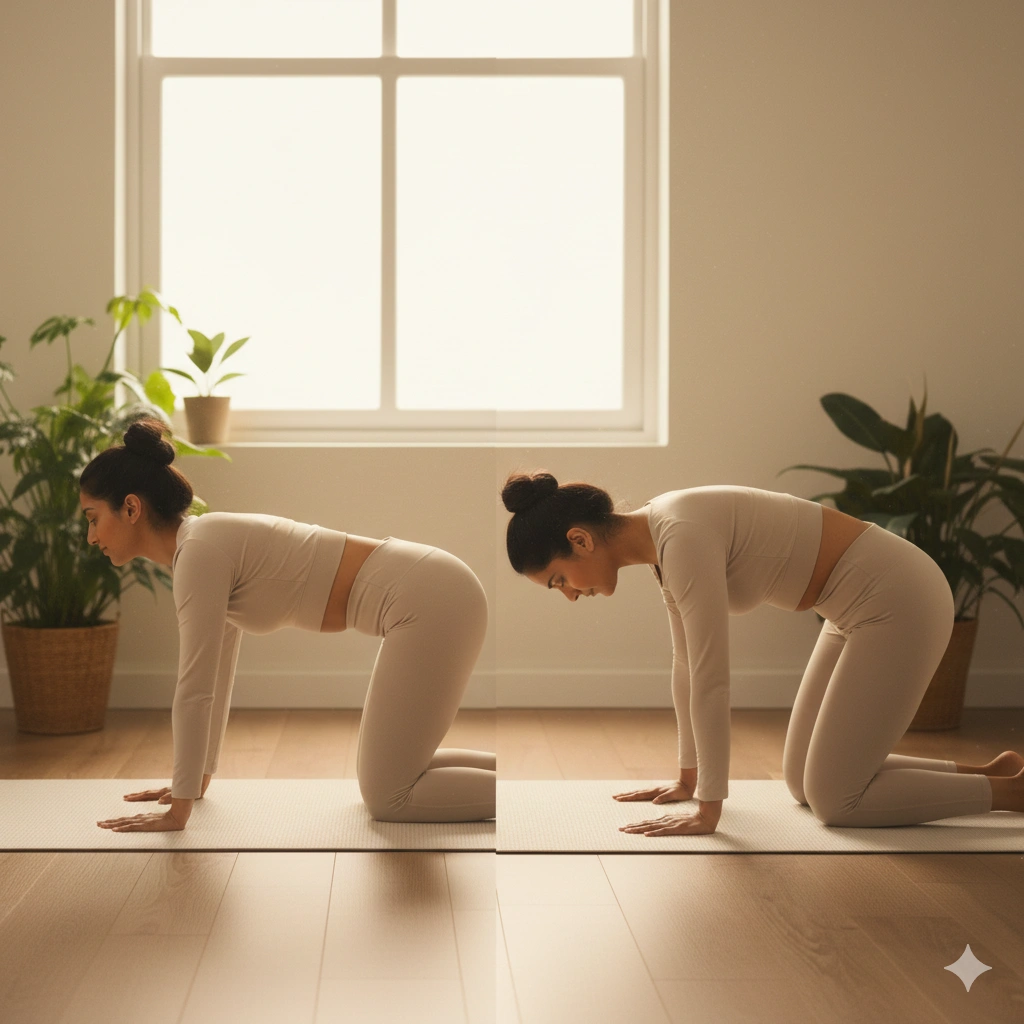
- Starting Position: Come onto your hands and knees in a tabletop position. Ensure your wrists are directly under your shoulders and your knees are under your hips. Distribute your weight evenly across your palms.
- Cow Pose (Inhale):
- As you inhale, slowly drop your belly towards the floor.
- Arch your back, and simultaneously lift your gaze and your tailbone towards the ceiling.
- Gently broaden your collarbones.
- Cat Pose (Exhale):
- As you exhale, round your spine aggressively towards the ceiling, like an angry cat.
- Tuck your chin to your chest and tuck your tailbone underneath you.
- Press firmly into your hands, creating space between your shoulder blades.
- Flow: Fluidly move between Cat and Cow poses, letting your breath initiate the movement.
- Duration: Flow for 8-10 complete breath cycles.
5. Forward Fold (Standing or Seated) (3 minutes).
Goal: To lengthen the hamstrings, stretch the entire back of the body, and promote a calming effect.
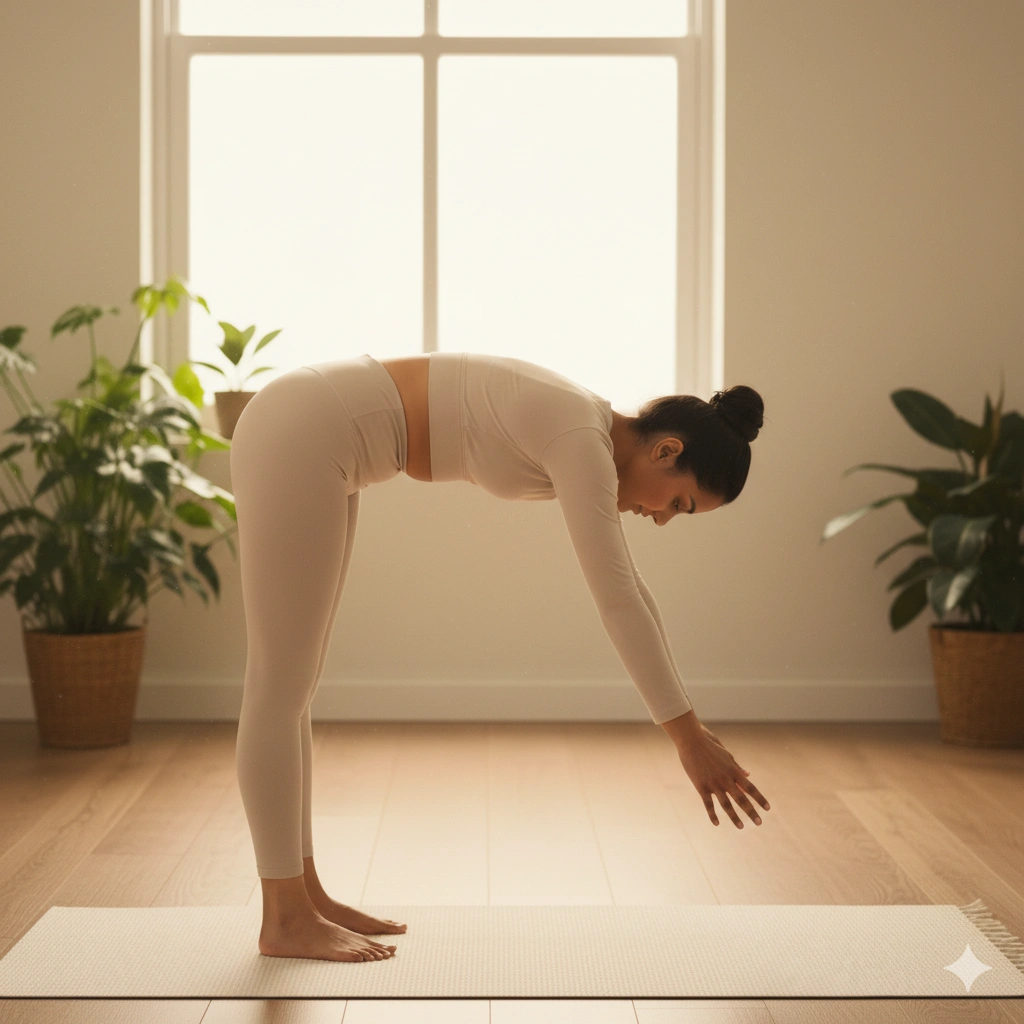
- Option 1: Standing Forward Fold (Uttanasana)
- Stand with your feet hip-width apart.
- With a soft bend in your knees, hinge deeply at your hips and let your torso hang towards the floor. The bend should come from the hips, not the lower back.
- Allow your head and neck to be completely heavy and relaxed (give your head a gentle shake “Yes” and “No”).
- You can let your arms dangle, or gently grasp opposite elbows.
- Hold for 45-60 seconds, breathing deeply into the stretch.
- To exit: Bend your knees generously and slowly roll up to a standing position, one vertebra at a time, letting your head come up last.
- Option 2: Seated Forward Fold (Paschimottanasana)
- Sit on the floor with your legs extended straight in front of you.
- Modification: If your hamstrings feel very tight, place a cushion under your hips or keep a slight bend in your knees.
- Inhale and sit up tall, lengthening your spine.
- Exhale and hinge forward from your hips, reaching your hands towards your shins, ankles, or feet.
- Focus on maintaining a long spine rather than rounding to touch your toes.
- Hold for 45-60 seconds, feeling the stretch in the back of your legs and lower back.
6. Child’s Pose (Balasana) (3 minutes).
Goal: To rest, ground the body, and signal to the nervous system that the day is beginning in a peaceful, intentional way.
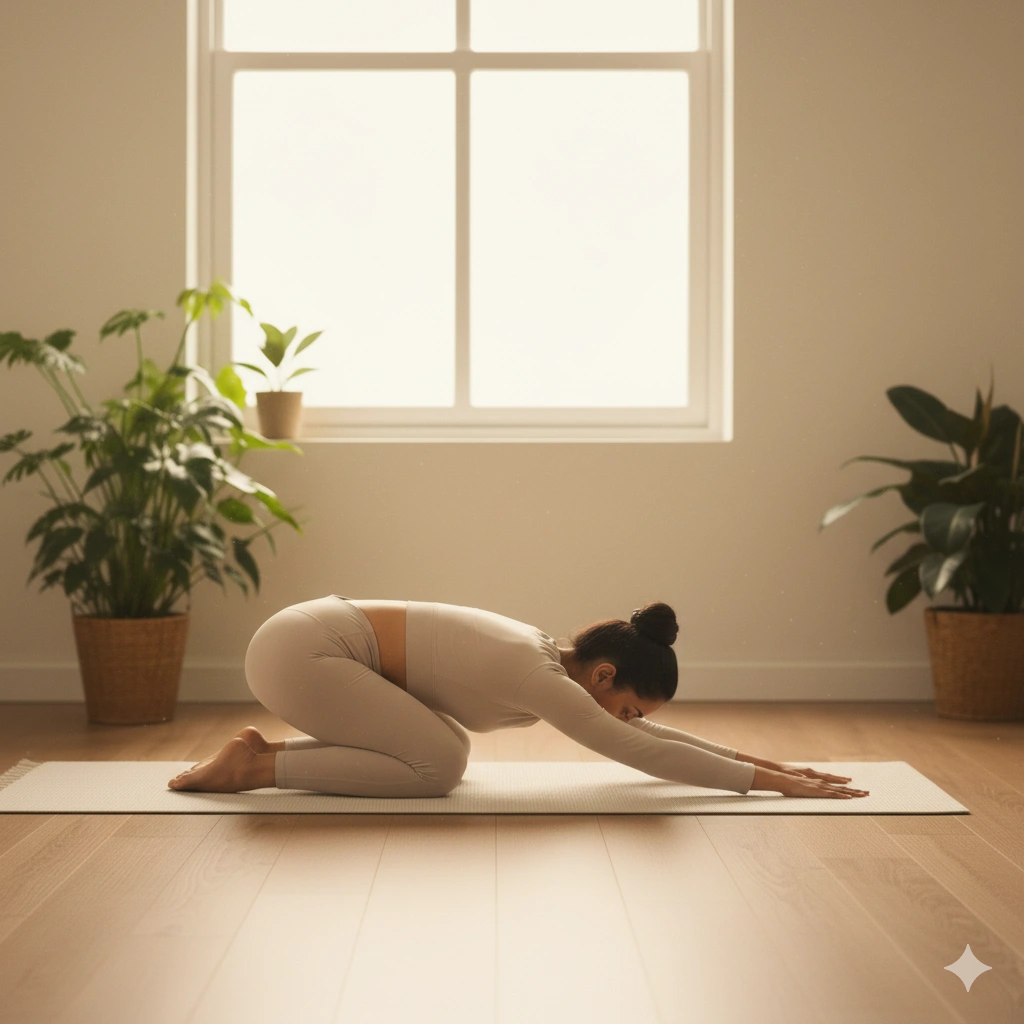
- Starting Position: Come onto your hands and knees again.
- The Movement:
- Bring your big toes to touch and widen your knees as far apart as feels comfortable (or keep them closer together for a different sensation).
- Sink your hips back towards your heels and let your torso rest between your thighs.
- Extend your arms straight forward along the floor (active) or rest them alongside your body, palms facing up (restorative).
- Rest your forehead on the floor or on a stacked hand/block.
- Duration: Stay here for 2-3 minutes.
- Focus: Breathe deeply, allowing your inhales to gently expand your back and your exhales to melt any remaining tension into the floor. This is your well-deserved moment of quiet transition.
Consistency is Key: Making it Stick.
You’ve done the routine, and you probably feel pretty good. Now, how do you make sure this doesn’t become a forgotten experiment? Consistency is where the real magic happens. Here are a few strategies I’ve found helpful:
- Set an Alarm: It sounds obvious, but a gentle reminder 15 minutes before you plan to start can be incredibly effective. Treat it like an important appointment.
- Lay Out Your Workout Clothes (Even Just Pajamas!): If you have dedicated comfy clothes you wear for this, having them ready can remove a small barrier. For this routine, it might just be wearing your PJs!
- Habit Stacking: Link your mobility routine to an existing habit. For example, do it right after you brush your teeth in the morning, or immediately after you get out of bed.
- Make it Enjoyable: Put on some calming music or a podcast you like. This can make the time feel less like a chore and more like a pleasant ritual.
- Don’t Aim for Perfection: Missed a day? It happens. Don’t beat yourself up about it. Just get back to it the next day. A slightly shorter routine is better than no routine at all.
Beginner vs. Experienced: A Quick Comparison.
This 15-minute routine is fantastic for beginners, but even those who are more experienced can benefit. Here’s a breakdown of how you might approach it:
| Aspect | Beginner Approach | Experienced Approach |
|---|---|---|
| Duration of Hold | Focus on holding stretches for 15-20 seconds. | Hold stretches for 30-60 seconds, or longer if comfortable. |
| Range of Motion | Move within a comfortable, pain-free range. Don’t force it. | Gradually explore a deeper range of motion, listening to your body. |
| Flow & Breath | Focus on coordinating breath with movement. | Emphasize deep, conscious breathing to deepen the stretches and relaxation. |
| Variations | Stick to the basic movements as outlined. | Incorporate more advanced variations if desired (e.g., spinal twists, deeper hip openers). |
| Frequency | Aim for 3-5 times per week. | Daily practice is ideal. |
“The goal isn’t to force your body into positions it’s not ready for, but to encourage it to move with ease and awareness. Every little bit of mindful movement adds up.” – A wise yoga instructor I once had.
Listen to Your Body, Always.
This routine is a template, a starting point. Your body is unique, and it will communicate its needs to you. If a particular movement feels good, spend a little extra time there. If something feels off, modify it or skip it. The objective is to foster a positive relationship with your body, not to push it to its limits right out of the gate.
For those who are truly new to exercise or movement, consulting with a healthcare provider or a qualified fitness professional is always a good idea before starting any new routine. They can offer personalized advice and ensure you’re moving safely and effectively. Remember, this is about enhancing your quality of life, one gentle morning movement at a time.
So, tomorrow morning, instead of hitting snooze, try setting your alarm just 15 minutes earlier. Roll out of bed, find a little space, and let’s wake up your body together. You’ll be amazed at how much better you feel, ready to take on whatever the day throws your way. It’s a small commitment with significant rewards, and your body will thank you for it.
Frequently Asked Questions (FAQs) on Your Morning Routine.
How often should I do this 15-minute routine for best results?
What is the single biggest benefit of stretching in the morning?
Is it okay if I can’t touch my toes in the Forward Fold?
Should I eat or drink anything before starting the routine?
What should I do if a movement causes a sharp pain?
Do I need any special equipment?
Is this routine suitable for beginners?
{
“@context”: “https://schema.org”,
“@type”: “FAQPage”,
“mainEntity”: [
{
“@type”: “Question”,
“name”: “How often should I do this 15-minute routine for best results?”,
“acceptedAnswer”: {
“@type”: “Answer”,
“text”: “For the best results in improving flexibility and reducing stiffness, you should aim to do this routine daily, or at least 5 to 6 times per week. Consistent, gentle movement is far more effective than intense, occasional stretching.”
}
},
{
“@type”: “Question”,
“name”: “What is the single biggest benefit of stretching in the morning?”,
“acceptedAnswer”: {
“@type”: “Answer”,
“text”: “The biggest benefit is boosting energy and alertness. Morning stretching increases blood flow and oxygen delivery to your muscles and brain, naturally reducing grogginess and setting a positive, focused tone for the day ahead, often better than coffee alone.”
}
},
{
“@type”: “Question”,
“name”: “Is it okay if I can’t touch my toes in the Forward Fold?”,
“acceptedAnswer”: {
“@type”: “Answer”,
“text”: “Absolutely! Flexibility is not a requirement; it is a result. In the Forward Fold, focus on hinging deeply from your hips (not rounding your back) to feel the stretch in your hamstrings. You can keep a generous bend in your knees or use a cushion under your hips to ease the stretch.”
}
},
{
“@type”: “Question”,
“name”: “Should I eat or drink anything before starting the routine?”,
“acceptedAnswer”: {
“@type”: “Answer”,
“text”: “A light routine like this can generally be done on an empty stomach. The most important thing is to hydrate! Have a large glass of water before or during your stretching session to help rehydrate your body after sleep and support muscle movement.”
}
},
{
“@type”: “Question”,
“name”: “What should I do if a movement causes a sharp pain?”,
“acceptedAnswer”: {
“@type”: “Answer”,
“text”: “If you experience any sharp, shooting, or pinching pain, stop that movement immediately. Ease out of the stretch or skip it entirely. Stretching should feel like a deep pull or tension, but never painful. Listen to your body and back off if needed.”
}
},
{
“@type”: “Question”,
“name”: “Do I need any special equipment?”,
“acceptedAnswer”: {
“@type”: “Answer”,
“text”: “No special equipment is required! This routine is designed to be accessible to everyone and can be done entirely on a comfortable spot on your floor or a yoga mat. Comfortable, flexible clothing is all you need.”
}
},
{
“@type”: “Question”,
“name”: “Is this routine suitable for beginners?”,
“acceptedAnswer”: {
“@type”: “Answer”,
“text”: “Yes, it is perfectly suited for beginners. The movements are simple, focus on gentle mobility, and require no prior experience. Just maintain awareness of your body and never push past your natural range of motion.”
}
}
]
}

Hi there!
I’m C.K. Gupta, the founder and head writer at FitnTip.com. With a passion for health and wellness, I created FitnTip to share practical, science-backed advice to help you achieve your fitness goals.
Over the years, I’ve curated valuable information from trusted resources on topics like nutrition, exercise, weight loss, and overall well-being. My aim is to distill this knowledge into easy-to-understand tips and strategies you can implement in your daily life.
Whether you’re looking to get in shape, eat healthier, or simply feel your best, FitnTip is here to support and guide you. I believe that everyone has the potential to transform their health through sustainable lifestyle changes.
When I’m not researching the latest health trends or writing for FitnTip, you can find me trying out new fitness routines, experimenting with nutritious recipes, and spending quality time with loved ones.
I’m excited to have you join our community as we embark on this wellness journey together. Let’s make positive, lasting changes and unlock a healthier, happier you!