Contents
- 1 The 3‑Check System: Your No‑Stress Label Routine.
- 2 Check 1: Serving Size vs Reality.
- 3 Check 2: The First Three Ingredients.
- 4 Check 3: The % Daily Value (DV) Rule.
- 5 Healthy Yogurt vs Dessert Yogurt: A Quick Label Comparison.
- 6 Hidden Sugars: Different Name, Same Story.
- 7 “Natural” vs “Organic”: Why the Label Matters.
- 8 Putting It Into Practice: Your Grocery Store Challenge.
- 9 Trusted Nutrition & Labeling Resources.
You stand in the cereal aisle, box in hand, staring at the nutrition label like it’s a foreign language. The kids want the cartoon tiger, you’re vaguely aiming for “healthy,” and after a few seconds of label fatigue, you throw the “less bad” option into the cart and move on. Recent studies suggest that while 87% of consumers believe they understand food labels, only about 53% can correctly interpret basic information and use it to make better choices, which means most people are shopping with confidence but not accuracy.
“Don’t eat anything your great-great grandmother wouldn’t recognize as food.” – Michael Pollan
This smart shopper’s guide is built to make labels less stressful and more useful in real life. The goal is simple: get you from “no idea” to “quick, confident decision” in under 10 seconds per product, without needing a nutrition degree.
Also Read-Understanding Macros: A Simple Guide to Protein, Carbs, and Fats
The 3‑Check System: Your No‑Stress Label Routine.
Instead of reading every line on the panel, use a simple 3‑Check System: Serving Size, First Three Ingredients, and % Daily Value. This keeps you focused on what matters most for nutrient density, sugar, salt, and how processed foods really are, while supporting a cleaner ingredient list overall.
Think of it as a mini checklist you can run through for any packaged food: cereals, breads, yogurts, snacks, even ready‑to‑eat meals. With practice, it becomes as automatic as checking the price.

Check 1: Serving Size vs Reality.
The top of the Nutrition Facts panel always lists serving size, but that rarely matches how people actually eat. Many shoppers can locate serving size information but struggle to translate it into real‑world portions, which leads to underestimating calories, sugar, and sodium intake.
- A “serving” is a reference amount, not a moral rule. If a pint of ice cream lists 3 servings, and you usually finish half the tub, you’re eating about 1.5 servings—not “just one.” Many popular pints are labeled as 3–4 servings, which dramatically changes the total sugar and calorie load if you eat more than the label assumes.
- For cereals, chips, or biscuits, quickly multiply: if the serving is 30 g and you know you’ll eat double, mentally double the calories, sugar, and sodium. This one habit alone tightens portion awareness and makes “cheat foods” more honest.
Key takeaway: Always ask, “Is this how much I actually eat?” If not, adjust the numbers in your head before deciding whether it earns a spot in your grocery haul.
The Fix: Always look at the “Servings Per Container” line first. If you plan to eat the whole bag, do the math.
Check 2: The First Three Ingredients.
The ingredient list tells you what the product really is, not what the front‑of‑pack marketing wants you to believe. By law, ingredients are listed in order of weight, so the first three ingredients make up the bulk of what you’re about to eat.
- Aim for a shorter ingredient list with recognizable foods: milk, oats, chickpeas, peanuts, yoghurt cultures, spices, etc. This usually signals a more “clean label” product with fewer unnecessary additives, which supports better nutrient density over empty calories.
- If sugar or salt (or their aliases) show up in the top three ingredients, that’s a red flag for everyday use. Words like sugar, jaggery, glucose syrup, honey, high fructose corn syrup, maltose, or dextrose near the top tell you the product is built on sweetness more than nutrition.
For processed foods you still want in the mix—like crackers or flavored yogurt—compare two brands. Often, one will have whole grains or milk first and sugar further down, while the other flips that order. Choose the one where real food leads, and added sugar plays a supporting role.
The Fix: Scan the first three ingredients. If sugar, salt, or refined oils appear here, the product is likely low in nutrient density and high in empty calories.
Check 3: The % Daily Value (DV) Rule.
% Daily Value (%DV) is the little percentage column most people skim past. It shows roughly how much a nutrient in one serving contributes to an average day’s recommended intake, based on a standard reference diet.
A simple way to use it is the 5/20 Rule:
- 5% DV or less per serving = low
- 20% DV or more per serving = high
Use sodium as your main example:
- For everyday foods (bread, soup, snack mixes), aim for low sodium, ideally under 5–10% DV per serving. Regularly choosing foods with 20% DV or more of sodium in each serving can quietly push daily intake above recommended levels, especially when multiple processed foods are eaten together.
- For nutrients you want more of—like fiber, calcium, iron, and sometimes protein—higher %DV (close to or above 20%) is a positive sign. This helps you focus on nutrient density instead of just calories when building balanced meals.
If you remember only one thing about %DV, let it be this: 5 is low, 20 is high. Low for sodium and added sugar, higher for fiber, vitamins, and minerals.
The Fix: Use this specifically for Sodium. If a soup can has 40% DV of sodium per serving, that is a sodium bomb.
Healthy Yogurt vs Dessert Yogurt: A Quick Label Comparison.
Yogurt is a classic example of where labels matter more than the front photo of fruit or “light” buzzwords. Below is a simplified comparison of a typical plain or lightly sweetened “Healthy” Yogurt versus a heavily sweetened “Dessert” Yogurt that looks virtuous but behaves like pudding.
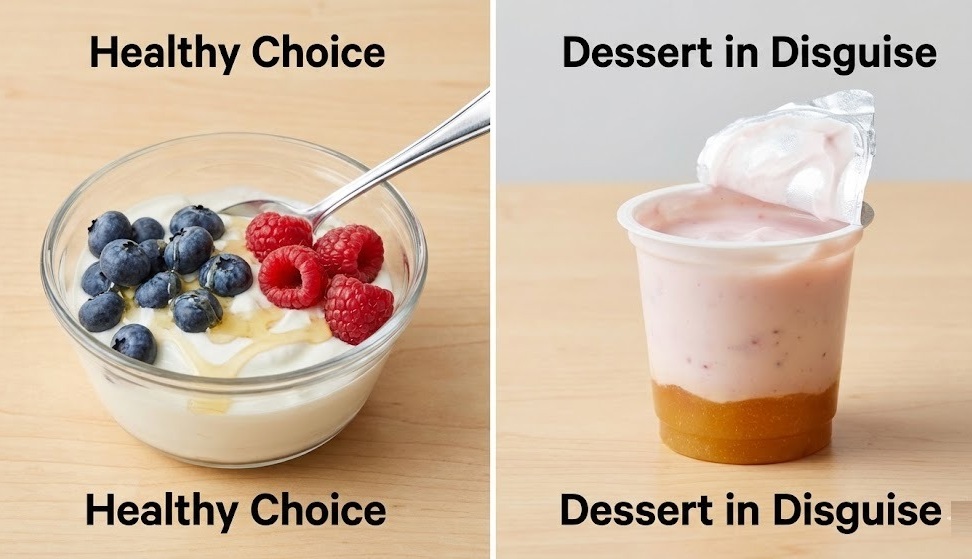
Here is a breakdown of what to look for on a clean label.
| Metric | The True “Healthy” Yogurt (Plain/Greek) | The “Dessert” Yogurt (Fruit-on-the-bottom) |
| Serving Size | 3/4 Cup (170g) | 1 Cup (170g) |
| Added Sugar | 0g | 16g (4 teaspoons!) |
| Protein | 16g | 6g |
| Ingredient List Length | Short (Milk, Cultures) | Long (Milk, Sugar, Thickeners, “Natural Flavors”) |
Pro Tip: Buy plain Greek yogurt and sweeten it yourself with fresh fruit or a drizzle of honey. You control the sugar that way.
How to use this in the store:
- Start with Check 2: Scan the first three ingredients. If sugar or any syrup is in the top three, treat it like dessert, not a daily breakfast.
- Then Check 3: Look at %DV for added sugar (if listed) and protein. Higher added sugar with low protein means quick energy and faster hunger; moderate sugar with good protein supports better satiety and more balanced nutrient density.
Hidden Sugars: Different Name, Same Story.
Food labels rarely stop at the word “sugar.” To make products sound better, manufacturers use many different scientific‑sounding names that act just like sugar in your body. Research compilations list dozens of common aliases used across cereals, drinks, sauces, and snack foods.
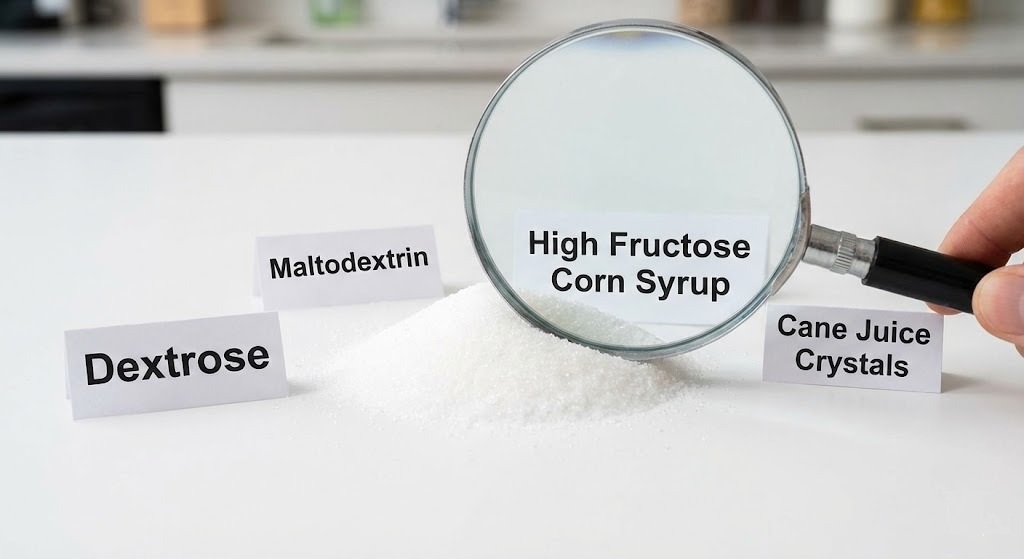
Some names to watch for:
- Dextrose or Maltodextrin – a form of glucose often added to drinks, sweets, and processed snacks.
- High Fructose Corn Syrup (HFCS) – a corn‑based sweetener widely used in sodas, flavored yogurts, and sauces, associated with high added sugar intake.
- Evaporated Cane Juice / Cane Juice Crystals – sounds more “natural” than sugar but is still a refined sugar source.
- Fruit Juice Concentrate – concentrated fruit sugar used to sweeten “no added sugar” style products; nutritionally, it behaves much like other added sugars.
As a simple rule, if a word ends in “-ose” (like dextrose, fructose, maltose) or mentions syrup, nectar, or concentrate, mentally file it under “added sugar” and factor it into how often you want that product in rotation.
“Natural” vs “Organic”: Why the Label Matters.
Many shoppers assume “natural” automatically means less processed and safer, but the term is often loosely defined and lightly regulated. In many regions, “natural” mainly refers to the absence of added artificial colors or synthetic ingredients, without strict rules for pesticides, farming methods, or processing.
“Organic,” on the other hand, is tied to formal certification standards. Under programs like the USDA National Organic Program and similar frameworks in other regions, organic foods must meet rules around how crops are grown and animals are raised, including restrictions on synthetic pesticides, fertilizers, GMOs, and certain additives. In practice, that means:
- “Natural” on a label does not guarantee fewer chemicals, higher nutrient density, or more ethical farming. It is mostly a marketing word.
- “Certified Organic” means the product has been checked against specific standards by an accredited body, which gives it a clearer, regulated meaning than “natural.”
This doesn’t mean you must buy everything organic. It does mean you should rely more on the ingredient list and the 3‑Check System than on vague front‑of‑pack claims.
Putting It Into Practice: Your Grocery Store Challenge.
Next time you’re in the store, treat this like a mini experiment, not a test. The aim is to build label confidence one aisle at a time.
Your challenge:
- Pick one food category you buy often—cereal, bread, yogurt, or snack bars.
- Choose two brands you might normally buy.
- For each one, run the 3‑Check System:
- Check 1: Does the serving size match how much you actually eat? If not, adjust the calories, sugar, and sodium in your head.
- Check 2: Read the first three ingredients. Are they mostly real foods, or is sugar/syrup right up front?
- Check 3: Scan %DV for sodium, fiber, and added sugar (if listed). Remember: 5% is low, 20% is high.
Then make a decision on which product you’ll bring home this week—and why. Over time, this simple habit helps you shift your grocery haul toward better nutrient density, less unnecessary sugar and sodium, and a cleaner, more understandable ingredient list, without adding stress to your already busy day.
Frequently Asked Questions (FAQs) on Reading Nutrition Labels.
What is the 5/20 rule on food labels?
How do I identify hidden sugars in the ingredient list?
What is the difference between “Natural” and “Organic”?
Why is the serving size often different from what I eat?
What does “Total Carbohydrate” vs. “Net Carbs” mean?
Why are ingredients listed in a specific order?
Disclaimer: The information provided in this article is for educational purposes only and does not constitute medical advice, diagnosis, or treatment. Always seek the advice of your physician or qualified health provider with any questions you may have regarding a medical condition or dietary changes.
Trusted Nutrition & Labeling Resources.
- U.S. FDA – How to Understand and Use the Nutrition Facts Label
- World Health Organization – Healthy Diet Overview
- British Nutrition Foundation – Food Labels Explained
- National Institute of Diabetes and Digestive and Kidney Diseases – Portions and Serving Sizes
- UCSF SugarScience – Hidden Sugars in Packaged Foods
- Rodale Institute – Natural vs. Organic Labels

Hi there!
I’m C.K. Gupta, the founder and head writer at FitnTip.com. With a passion for health and wellness, I created FitnTip to share practical, science-backed advice to help you achieve your fitness goals.
Over the years, I’ve curated valuable information from trusted resources on topics like nutrition, exercise, weight loss, and overall well-being. My aim is to distill this knowledge into easy-to-understand tips and strategies you can implement in your daily life.
Whether you’re looking to get in shape, eat healthier, or simply feel your best, FitnTip is here to support and guide you. I believe that everyone has the potential to transform their health through sustainable lifestyle changes.
When I’m not researching the latest health trends or writing for FitnTip, you can find me trying out new fitness routines, experimenting with nutritious recipes, and spending quality time with loved ones.
I’m excited to have you join our community as we embark on this wellness journey together. Let’s make positive, lasting changes and unlock a healthier, happier you!