The Difference Between Aerobic and Anaerobic Exercise Explained


If you have ever stepped foot in a gym, read a fitness magazine, or scrolled through health tips online, you have almost certainly heard the terms “aerobic” and “anaerobic.” They are the two pillars of physical fitness, yet they are often misunderstood.
Most of us know that running feels different than lifting heavy weights. One leaves you panting but able to keep going, while the other makes your muscles burn until you have to stop. But what is actually happening inside your body during these moments? Understanding the difference between aerobic and anaerobic exercise is about more than just knowing vocabulary; it is the key to designing a workout routine that burns fat, builds muscle, and keeps your heart healthy.
Also Read-What is Functional Fitness and Why is it Trending?
In this guide, we will break down the science into simple, plain English. We will look at how your body fuels itself, the specific aerobic vs anaerobic benefits, and how you can combine them for the best results.

What Is Aerobic Exercise?
The word “aerobic” literally means “with oxygen.” When you perform aerobic exercise, your muscles have enough oxygen to produce the energy needed to perform the effort. This is often what people refer to as “cardio.”
During these activities, your heart rate and breathing rate increase, but they stay steady. You aren’t gasping for air in a panic; you are breathing rhythmically. Because oxygen is readily available, your body can continuously break down fat and carbohydrates to fuel your movement. This is why aerobic exercises can be sustained for long periods—from twenty minutes to several hours.
Think of your body like a hybrid car cruising on the highway. It is efficient, steady, and can go a long distance on its fuel source without overheating.
Types of Aerobic Exercise.
You are likely doing aerobic activity without even calling it that. Common examples include:
- Walking: Brisk walking is the most accessible form of aerobic conditioning.
- Running and Jogging: A steady pace that you can maintain.
- Cycling: Whether outdoors or on a stationary bike.
- Swimming: Laps at a moderate pace.
- Dancing: Zumba or just dancing around your living room.
- Cardio Machines: Ellipticals, stair climbers, and rowing machines (at a steady pace).
“Aerobic exercise is like a hybrid car cruising on the highway—efficient, steady, and built for distance.”
What Is Anaerobic Exercise?
On the flip side, “anaerobic” means “without oxygen.” This doesn’t mean you stop breathing! It simply means the demand for energy is so high and so sudden that your heart and lungs cannot deliver oxygen to your muscles fast enough to keep up.
When this happens, your body switches its energy system. Instead of relying on oxygen, it taps into energy stored immediately in your muscles (like glycogen and creatine phosphate). This energy system is powerful but short-lived. It generates a lot of force quickly, but it also creates byproducts like lactate, which eventually causes that burning sensation in your muscles and forces you to stop and rest.
If aerobic exercise is a car cruising on the highway, anaerobic exercise is a drag racer. It is capable of incredible speed and power, but it burns through fuel rapidly and can only sustain that effort for a very short time.
Types of Anaerobic Exercise.
These are high-intensity activities that are usually performed in short bursts:
- Sprinting: Running as fast as you can for 10 to 30 seconds.
- Heavy Weightlifting: Lifting weights where you can only complete a few repetitions.
- High-Intensity Interval Training (HIIT): Alternating between maximum effort and rest.
- Plyometrics: Jump squats, box jumps, or burpees.
- Calisthenics: Push-ups or pull-ups performed to failure.
Image idea: A close-up of a sprinter in the starting blocks or a weightlifter gripping a barbell, focusing on the intensity and focus in their eyes.
Did You Know? 💡
The “Afterburn” Effect: One interesting fact about anaerobic exercise is that it creates an “oxygen debt” known as EPOC (Excess Post-exercise Oxygen Consumption). This means your body continues to burn calories at a higher rate for hours after you finish your workout, essentially giving you a metabolism boost while you sit on the couch!
Key Difference Between Aerobic and Anaerobic Exercise.
To make the best choices for your health, it helps to see exactly how these two compare side-by-side. While both move your body, they achieve very different things physiologically.
Here is a quick breakdown to help you spot the difference:
| Feature | Aerobic Exercise | Anaerobic Exercise |
|---|---|---|
| Meaning | With oxygen | Without oxygen |
| Primary Fuel | Oxygen, Glucose (Sugar), and Fat | Stored Muscle Glycogen |
| Intensity | Low to Moderate | High to Maximum Effort |
| Duration | Long (20 minutes to hours) | Short (Seconds to 2 minutes) |
| Feeling | Breathing is faster but rhythmic; you can talk. | “Out of breath”; muscles burn; hard to speak. |
| Main Goal | Endurance and Heart Health | Strength, Power, and Speed |
| Examples | Jogging, Swimming, Cycling | Sprinting, Powerlifting, HIIT |
The “Talk Test”.
The easiest way to tell which zone you are in is the “Talk Test.
- If you can speak in full sentences while moving, you are likely in an aerobic state.
- If you can only get out a word or two before needing to gasp for air, you have crossed into the anaerobic zone.
Health Benefits of Aerobic vs Anaerobic Exercise.
Why does this distinction matter? Because depending on your goals—whether you want to run a marathon, lose weight, or build big muscles—you need to prioritize different types of training. However, for general health, a mix of both is ideal.
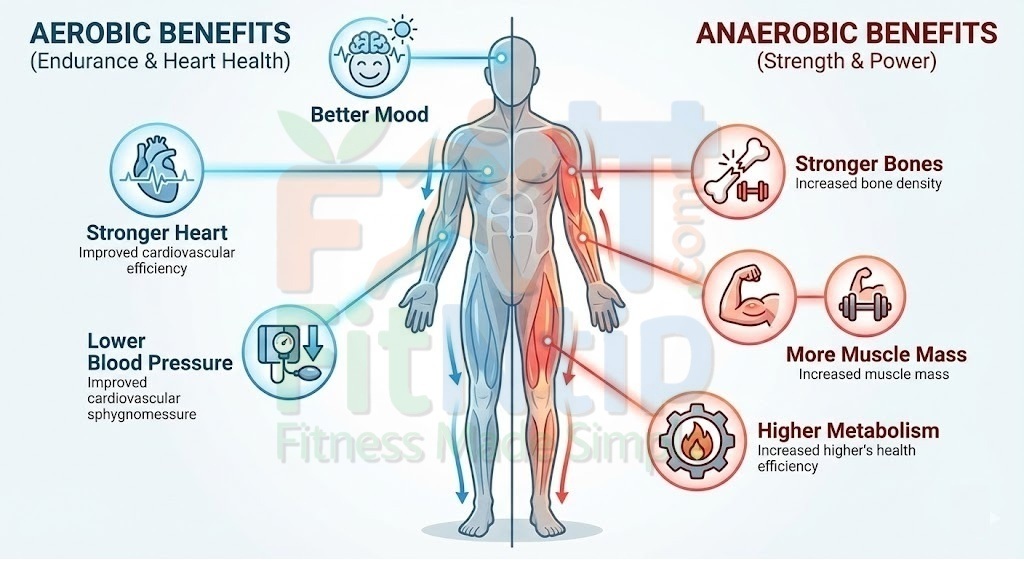
Aerobic Exercise Benefits.
Aerobic training is the foundation of a healthy life. According to major organizations like the American Heart Association and the Cleveland Clinic, regular aerobic activity is essential for cardiovascular protection.
- Improves Heart Health: Your heart is a muscle. Aerobic exercise strengthens it, allowing it to pump blood more efficiently throughout your body.
- Lowers Blood Pressure: Consistent “cardio” can help manage or prevent high blood pressure.
- Boosts Stamina: Over time, your lungs become more efficient at using oxygen, meaning you won’t get tired as easily when climbing stairs or playing with your kids.
- Mood Enhancement: Aerobic exercise triggers the release of endorphins, the body’s natural “feel-good” chemicals, which can combat stress and anxiety.
- Weight Management: Since you can perform these exercises for a long time, they are excellent for burning a significant number of calories in a single session.
Anaerobic Exercise Benefits.
Anaerobic exercise might sound intimidating, but it is incredibly potent for changing your body composition and long-term health.
- Builds Muscle and Strength: This is the primary way to increase lean muscle mass. More muscle means you are stronger and more functional in daily life.
- Increases Bone Density: Resistance training places stress on your bones, which signals them to grow stronger. This is crucial for preventing osteoporosis as we age.
- Burns Calories After You Stop: Because of the intensity, anaerobic exercise keeps your metabolism elevated longer than steady cardio.
- Improves Insulin Sensitivity: Research suggests that resistance training helps your muscles utilize blood sugar more effectively, which is vital for preventing or managing type 2 diabetes.
How Much Exercise Do You Need?
Knowing the benefits is great, but how much should you actually do? Global health authorities provide clear targets for the average adult to maintain health.
According to guidelines from the World Health Organization (WHO), adults should aim for:
- Aerobic Activity: At least 150 to 300 minutes of moderate-intensity aerobic physical activity per week. Or, if you prefer vigorous intensity, aim for 75 to 150 minutes.
- Anaerobic/Strengthening Activity: Muscle-strengthening activities at moderate or greater intensity that involve all major muscle groups on 2 or more days a week.
This might sound like a lot, but if you break it down, it is quite manageable. 150 minutes is just 30 minutes of walking, five days a week.
How to Combine Aerobic and Anaerobic in a Weekly Plan.
You do not have to choose sides in the “aerobic vs anaerobic” debate. The best fitness plans use both. Aerobic exercise builds your endurance foundation, while anaerobic exercise builds the strength and power on top of it.
Here is a simple example of how to combine aerobic and anaerobic exercises into a balanced 7-day routine:
- Monday (Aerobic): 30-minute brisk walk or light jog.
- Tuesday (Anaerobic): 20-minute bodyweight circuit (squats, push-ups, lunges). Do 3 sets of 10-12 reps.
- Wednesday (Active Recovery): Gentle stretching or a leisurely 15-minute walk.
- Thursday (Aerobic): 30-minute bike ride or swimming.
- Friday (Anaerobic/Mix): 15-minute HIIT session (30 seconds fast movement, 30 seconds rest).
- Saturday (Aerobic): Longer activity—perhaps a 45-60 minute hike or a fun dance class.
- Sunday (Rest): Full rest day to let your body repair.
“You don’t have to choose sides. The best bodies are built on a foundation of endurance and a framework of strength.”
Who Should Be Careful with High-Intensity Training?
While exercise is generally wonderful for the body, anaerobic exercise puts a significant strain on the heart and joints due to the high intensity.
If you are just starting out, have been sedentary for a long time, or are over the age of 40, it is smart to ease into it. Specifically, people with existing heart conditions, high blood pressure, or joint issues should consult a doctor before starting anaerobic activities like heavy lifting or sprinting.
Start with aerobic exercise to build a base level of fitness. Once you can walk briskly for 30 minutes without trouble, you can slowly introduce higher-intensity intervals or strength training.
Bringing It All Together in Your Routine.
Understanding the difference between aerobic and anaerobic exercise empowers you to train smarter, not just harder.
If you have been feeling stuck in your routine, ask yourself if you are missing one of these elements. Are you only running (aerobic) and neglecting strength? Or are you only lifting weights (anaerobic) and neglecting your heart health?
The magic happens when you find the balance. By feeding your body the oxygen it needs through steady cardio and challenging your muscles through strength training, you build a body that is not only capable and strong but also healthy for the long haul.
Start where you are today. Maybe that means a walk around the block, or maybe it means picking up that dumbbell. Whatever you choose, you are now equipped with the knowledge to make it count. Keep moving!
Frequently Asked Questions (FAQs) on Aerobic vs Anaerobic Exercise.
What is the main difference between aerobic and anaerobic exercise?
Which is better for weight loss: aerobic or anaerobic?
Is walking considered aerobic or anaerobic?
Can I do aerobic and anaerobic exercise on the same day?
Is HIIT aerobic or anaerobic?
How many days a week should I do anaerobic exercise?
{
“@context”: “https://schema.org”,
“@type”: “FAQPage”,
“mainEntity”: [
{
“@type”: “Question”,
“name”: “What is the main difference between aerobic and anaerobic exercise?”,
“acceptedAnswer”: {
“@type”: “Answer”,
“text”: “The main difference is oxygen usage. Aerobic exercise (‘with oxygen’) relies on oxygen to fuel sustained activity like jogging. Anaerobic exercise (‘without oxygen’) relies on stored energy in muscles for short, high-intensity bursts like sprinting or weightlifting.”
}
},
{
“@type”: “Question”,
“name”: “Which is better for weight loss: aerobic or anaerobic?”,
“acceptedAnswer”: {
“@type”: “Answer”,
“text”: “Both are effective, but they work differently. Aerobic exercise burns more calories during the actual session. Anaerobic exercise builds muscle, which raises your resting metabolism, and creates an ‘afterburn’ effect where you burn calories for hours after the workout. A combination of both is best for long-term weight loss.”
}
},
{
“@type”: “Question”,
“name”: “Is walking considered aerobic or anaerobic?”,
“acceptedAnswer”: {
“@type”: “Answer”,
“text”: “Walking is primarily an aerobic exercise. It is a low-to-moderate intensity activity that you can sustain for a long time while breathing rhythmically. However, if you add heavy weights or walk up a very steep hill at maximum effort, it can briefly become anaerobic.”
}
},
{
“@type”: “Question”,
“name”: “Can I do aerobic and anaerobic exercise on the same day?”,
“acceptedAnswer”: {
“@type”: “Answer”,
“text”: “Yes, this is called concurrent training. Many athletes do strength training (anaerobic) followed by a run (aerobic). If you do them in the same session, it is generally recommended to do the anaerobic (strength) work first when your energy stores are full, followed by the aerobic cardio.”
}
},
{
“@type”: “Question”,
“name”: “Is HIIT aerobic or anaerobic?”,
“acceptedAnswer”: {
“@type”: “Answer”,
“text”: “High-Intensity Interval Training (HIIT) is technically anaerobic because the work intervals are performed at near-maximum effort where oxygen cannot keep up. However, the short rest periods tax your aerobic system, so it is highly effective for improving both endurance and power.”
}
},
{
“@type”: “Question”,
“name”: “How many days a week should I do anaerobic exercise?”,
“acceptedAnswer”: {
“@type”: “Answer”,
“text”: “Global health guidelines suggest doing muscle-strengthening (anaerobic) activities on at least 2 days per week. Because this type of training damages muscle fibers to build them back stronger, you typically need 24-48 hours of rest between sessions for the same muscle groups.”
}
}
]
}
Disclaimer: The content provided in this article is for informational purposes only and is not intended as a substitute for professional medical advice, diagnosis, or treatment. Always seek the advice of your physician or other qualified health provider with any questions you may have regarding a medical condition or before starting a new exercise regimen.
Trusted Sources & References.
We believe in providing information backed by science and trusted global health authorities. To learn more about the guidelines mentioned in this article, please visit:
- World Health Organization (WHO): Physical Activity Guidelines
- American Heart Association (AHA): Recommendations for Physical Activity in Adults
- Mayo Clinic: Aerobic Exercise: Top 10 Reasons to Get Physical
This article is for informational and educational purposes only. It does not constitute medical advice, diagnosis, or treatment. The information presented is researched from trusted sources including peer-reviewed scientific journals, CDC, NIH, WHO, and recognized health organizations. Always consult a qualified healthcare professional before making any changes to your diet, exercise routine, or health regimen.