
Quadrobics: Unleash Your Inner Animal with This Viral Primal Workout


Quadrobics, the animal-inspired movement trend involving crawling and jumping, has seen a remarkable 174% surge in search interest. This unique workout style combines elements of aerobics and calisthenics by imitating the movements of four-legged animals. Whether you’re a fitness enthusiast looking for a new challenge or someone seeking a fun and engaging way to stay active, quadrobics offers a full-body workout that can improve strength, flexibility, and coordination.
This article will guide you through the world of quadrobics, providing tutorials for beginners and essential safety tips to ensure a rewarding and injury-free experience. Get ready to unleash your inner animal and discover the primal power of quadrobics.
Also Read-Percussive Therapy: Beyond Recovery –Guide to Devices, DIY Techniques, and Stress Relief in 2025
Key Points.
- Quadrobics, a primal workout involving animal-like movements on all fours, has seen a 174% search rise, indicating growing popularity.
- It seems likely that Quadrobics improves strength, flexibility, and coordination, based on research into quadrupedal movement.
- Tutorials for beginners should start with basic movements like Bear Crawl and Crab Walk, focusing on proper form.
- Safety tips include warming up, using gloves on rough surfaces, and consulting healthcare professionals for pre-existing conditions.
What is Quadrobics?
Quadrobics, often referred to as “quads,” is a fitness trend that involves moving on all fours, mimicking the gait and movements of four-legged animals. It is a full-body workout that combines various skills, including crawling, jumping, and balancing. People who practice quadrobics, often called “quadrobists,” engage in quadrupedal movements like trotting, cantering, and jumping. This practice can be done indoors or outdoors without any equipment, although gloves and shoes can be helpful when working out on hard surfaces.
Quadrobics dates back to the early 2000s but has recently reemerged in popularity, with searches for the workout increasing by 192%. This resurgence highlights a growing interest in back-to-basics workout styles that focus on functional movements.
Historical Context and Evolution.
The origins of Quadrobics can be traced back to the early 2000s, influenced by various movement disciplines and notable figures. A key figure is Kenichi Ito, a Japanese athlete who set multiple Guinness World Records for running 100 meters on all fours, with his best time being 15.71 seconds in 2015 at Komazawa Olympic Park in Tokyo (Kenichi Ito (athlete) – Wikipedia).
His achievements, inspired by studying animal movements like those of African patas monkeys, laid groundwork for Quadrobics. The trend also draws from parkour, “Crawling” fitness, and Animal Flow yoga, gaining momentum in recent years through social media, where videos showcasing Quadrobics have amassed millions of views, fostering a global community.
Why is Quadrobics Trending?
Several factors contribute to the rising popularity of quadrobics:
- Full-Body Workout: Quadrobics engages multiple muscle groups, including those in the arms, legs, core, and back, leading to improved strength, flexibility, and coordination.
- Cardiovascular Health: The continuous movement and varying intensity levels in quadrobics can elevate heart rate, potentially increasing cardiovascular fitness and endurance.
- Stress Relief: The rhythmic movements and focus on physicality can help clear the mind and reduce anxious feelings, making it a fun and playful way to relieve stress.
- Self-Expression: For individuals who identify as therians (people who identify as non-human animals), quadrobics can be a powerful form of self-expression and a way to connect with their animal identity.
- Accessibility: Quadrobics requires no equipment and can be practiced anywhere, making it an accessible workout option for people of all fitness levels.
- Fun and Engaging: Unlike traditional workouts, quadrobics can be a fun and engaging way to stay active, making exercise more enjoyable and less of a chore.
The Benefits of Quadrobics: More Than Just a Trend.
While quadrobics may seem like just another fitness fad, it offers a range of potential benefits for both physical and mental well-being.
- Improved Strength and Endurance: Quadrobics engages muscles throughout the body, leading to increased strength and endurance.
- Enhanced Flexibility and Mobility: The movements involved in quadrobics can improve flexibility and range of motion, promoting better mobility.
- Better Coordination and Balance: Quadrobics requires coordination and balance, which can improve these skills over time.
- Increased Body Awareness: By focusing on movement and body positioning, quadrobics can enhance body awareness and proprioception (the sense of body position and movement).
- Stress Reduction: The physical activity and focus required in quadrobics can help reduce stress and promote relaxation.
- Connection with Nature: Practicing quadrobics outdoors can foster a deeper connection with nature and the environment.
- Creative Expression: Quadrobics allows for creative expression and exploration of movement, which can be particularly appealing to those who identify as therians.
| Area | Description |
|---|---|
| Quadrobics Instructor | Train individuals or groups in quadrobics techniques, ensuring proper form and safety. Design and lead classes that cater to different skill levels, from beginners to advanced practitioners. |
| Personal Trainer | Incorporate quadrobics into personalized fitness plans, offering a unique approach to strength, flexibility, and coordination training. |
| Rehabilitation Specialist | Use quadrobics-inspired movements as part of physical therapy or rehabilitation programs to improve mobility, balance, and strength. |
| Fitness Content Creator | Create and share quadrobics tutorials, workout routines, and informational content on platforms like YouTube, Instagram, and TikTok. Build a following by providing engaging and informative content, and monetize through ads, sponsorships, and affiliate marketing. |
| Quadrobics Equipment Designer | Design and develop equipment and accessories specifically for quadrobics, such as specialized gloves, knee pads, and training mats. Focus on creating products that enhance comfort, safety, and performance. |
Quadrobics: Step-by-Step Tutorials for Beginner Movements.
Quadrobics, the animal-inspired movement trend that has seen a 174% search rise, offers a primal approach to fitness that engages your entire body. By mimicking four-legged animal movements like crawling and jumping, quadrobics provides a uniquely challenging workout that improves strength, flexibility, and coordination. For beginners looking to start their quadrobics journey, mastering the fundamental movements is essential for building a strong foundation and preventing injuries.
Bear Crawl.
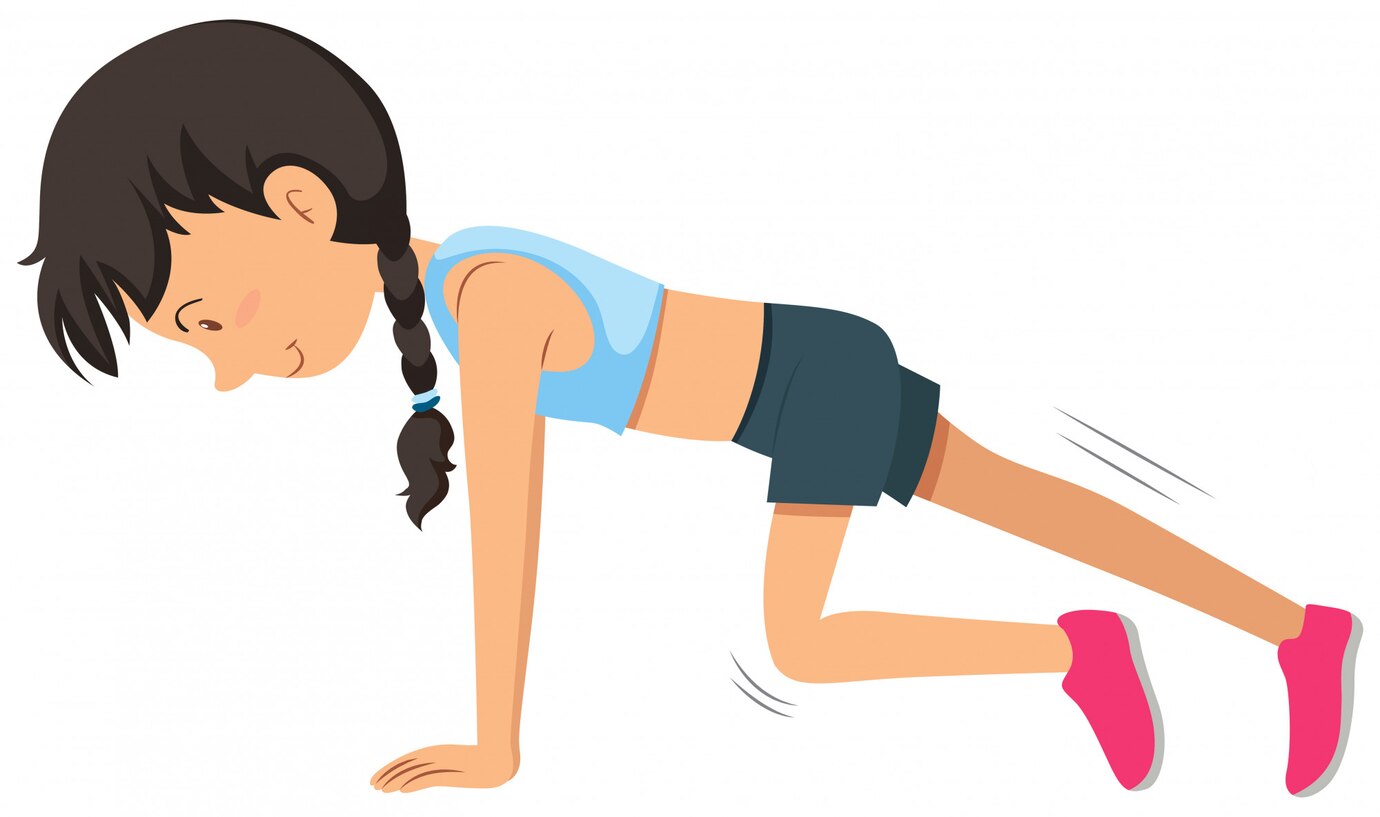
The bear crawl is an excellent exercise for beginners in Quadrobics, as it engages multiple muscle groups and improves coordination. Here’s how to do it:
- Starting Position: Begin on all fours with your hands directly under your shoulders and your knees under your hips. Ensure your back is flat and your core is engaged to maintain stability.
- Movement Technique: Move forward by stepping with your right hand and left foot simultaneously, then switch to your left hand and right foot. This alternating pattern mimics the gait of a bear and helps engage your shoulders, back, and core.
- Posture and Alignment: Keep your hips level and avoid arching or rounding your back. Maintain a steady pace and focus on smooth transitions between each step.
- Practice Duration: Start with short practice sessions, such as 30 seconds to 1 minute, and gradually increase the duration as your strength and endurance improve.
- Tips for Improvement: Focus on maintaining proper form and engaging your core throughout the exercise. If you find it challenging to keep your knees off the ground, start by practicing with your knees lightly touching the floor and gradually lift them as you become more comfortable with the movement.
Crab Walk.
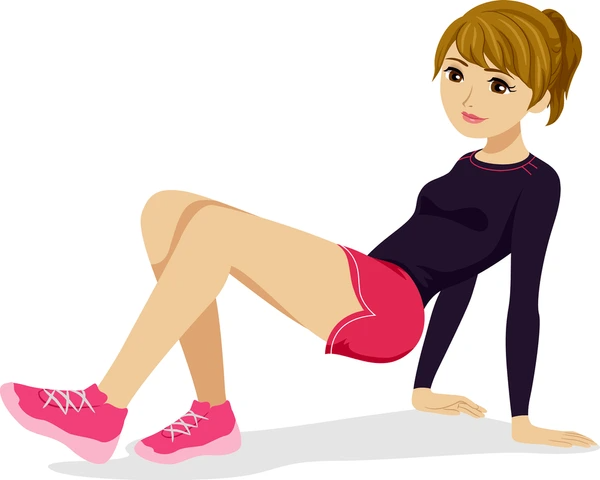
The crab walk is another engaging movement that targets the posterior chain and improves coordination. Here’s how to do it:
- Starting Position: Sit on the floor with your hands behind you, fingers pointing towards your feet. Lift your hips off the ground, keeping your knees bent at a 90-degree angle.
- Movement Technique: Walk forward by moving your right hand and left foot forward, then your left hand and right foot. Maintain a face-up position and keep your core tight to ensure stability.
- Posture and Alignment: Avoid letting your hips drop or your back arch. Keep your body in a straight line from head to heels to maximize the effectiveness of the exercise.
- Practice Duration: Start with short sets of 10-15 steps and gradually increase the number of steps as you build strength and endurance.
- Tips for Improvement: Focus on maintaining a stable core and smooth transitions between each step. You can also incorporate resistance bands around your feet for added challenge and glute engagement.
Cat-Cow Stretch.
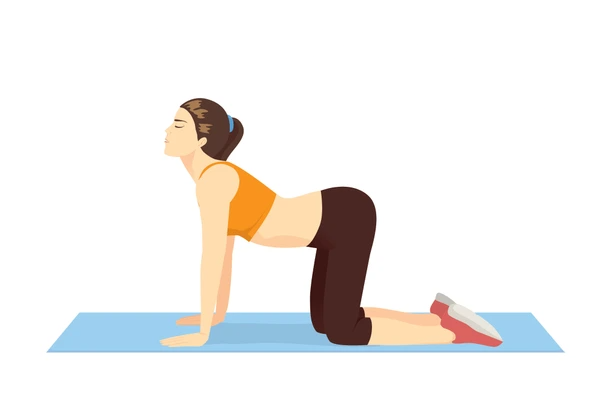
The cat-cow stretch is a versatile movement that combines flexibility with strength training. It’s an excellent warm-up or cool-down exercise for Quadrobics. Here’s how to do it:
- Starting Position: Begin on all fours with your hands under your shoulders and your knees under your hips. Ensure your spine is in a neutral position.
- Cow Pose: Inhale deeply and arch your back, lifting your head and tailbone towards the ceiling. This opens your chest and stretches your upper back.
- Cat Pose: Exhale slowly and round your back, dropping your head and tailbone towards the floor. This stretches your spine and engages your abdominal muscles.
- Flowing Movement: Flow smoothly between the cow and cat poses for several repetitions, focusing on synchronizing your breath with each movement. Aim for 5-10 repetitions to start.
- Tips for Improvement: Keep your shoulders relaxed and avoid forcing your chin to your chest in the cat pose. Focus on the smooth transition between poses and maintain a steady breathing rhythm.
Variations for Beginners.
Several crab walk variations can help beginners progress:
- Basic Crab Walk: Start with straight arms, bent legs, and practice forward and backward movement to build foundational strength.
- Crab Lateral Walks: Once comfortable with forward/backward movement, try side-to-side lateral movement, which challenges your coordination and works different muscle groups.
- Crab Walk with Resistance: For an added challenge, you can use a loop resistance band secured above your knees. This increases the difficulty by adding resistance to your leg movements while in the crab position.
Advanced Progression.
As you build strength and comfort with the basic crab walk, you can progress to more dynamic movements:
- Crab Underswitch To Table Top: This movement involves core rotation from the crab position to a table top position, adding a rotational component that increases core engagement.
- Crab Walks Underswitch To Table Top: Combine forward and backward movement with core rotation to the table top position for a more comprehensive movement pattern.
- X-Band Progression: For advanced practitioners, try the crab walk with an unlooped resistance band under your feet, holding the left side in your right hand and right side in your left hand, with arms raised above your head. Take three steps to the right, then three steps to the left, maintaining proper form throughout.
Cat-Cow Stretch: Foundation for Spinal Mobility.
The Cat-Cow stretch is an essential movement for developing spinal mobility and awareness, which serves as a foundation for more complex quadrobics movements. This flowing motion helps warm up the spine and teaches the fundamental skill of articulating through each vertebra.
Proper Form and Execution.
Begin by kneeling on your hands and knees on a yoga mat or carpeted floor. Position your wrists directly beneath your shoulders and your knees directly beneath your hips, creating a stable tabletop position.
Activate your core muscles by gently drawing your navel toward your spine. Maintain your neck in a neutral position by gazing down toward the floor, ensuring your spine remains in a neutral alignment to start.
For the Cow Pose (inhale phase):
- Tuck your toes so they softly touch the ground for added stability.
- As you inhale deeply, tilt your pelvis by lifting your tailbone upward.
- Allow this tilting motion to flow through your spine from tailbone to head, creating an arching sensation.
- Let your abdomen relax downward toward the mat while maintaining core engagement.
- Open your chest and gently gaze upward toward the ceiling, keeping your neck in a comfortable position without overextending.
For the Cat Pose (exhale phase):
- Let the tops of your feet rest flat on the floor.
- As you exhale, tilt your pelvis forward, tucking your tailbone under.
- Allow your spine to round naturally as you tuck your tailbone.
- Draw your navel toward your spine to deepen the stretch across your back.
- Let your head drop naturally toward the floor, bringing your gaze toward your navel.
Continue alternating between Cat and Cow poses, synchronizing each movement with your breath—inhaling for Cow and exhaling for Cat. Move slowly and mindfully through the sequence for 5 to 10 rounds, focusing on the fluid connection between breath and movement.
Common Mistakes to Avoid.
To get the maximum benefit from the Cat-Cow stretch while avoiding potential strain:
- Neck Strain: When lifting your gaze during Cow Pose, do so gently without forcing your neck backward. Similarly, in Cat Pose, allow your head to drop naturally without pushing it down.
- Misaligned Pelvis: Ensure that each movement initiates from your pelvis rather than your lower back. Your tailbone should lift in Cow Pose and tuck under in Cat Pose, with the rest of your spine following this initial movement.
- Using Arms for Movement: Keep your arms straight and stable, focusing on moving through the spine rather than pushing with your arms. This approach protects your shoulders and elbows while maximizing spinal articulation.
- Rushing Through Movements: Avoid moving quickly between positions. Instead, move slowly and deliberately, synchronizing each movement with your breath to protect your back and neck while developing greater body awareness.
Integrating Movements into a Beginner Quadrobics Routine.
After learning these fundamental movements individually, beginners can integrate them into a simple flow routine. Start with 2-3 minutes of Cat-Cow stretches to warm up the spine and establish a connection with your breath. Then alternate between 30 seconds of Bear Crawl and 30 seconds of Crab Walk, with 15-30 seconds of rest between each movement.
As you become more comfortable with the basic movements, try creating simple transitions between them. For example, from Bear Crawl position, you might transition to a plank, then flip over into Crab position, and finally return to all fours for Cat-Cow stretches.
The key to progression in quadrobics is patience and consistency. Focus on mastering proper form before increasing duration or adding complexity. With regular practice, these foundational movements will become second nature, allowing you to explore more advanced quadrobics techniques with confidence and safety.
Conclusion: Building Your Quadrobics Practice.
These three fundamental movements—Bear Crawl, Crab Walk, and Cat-Cow Stretch—provide an excellent introduction to the world of quadrobics. By practicing these movements regularly, beginners can develop the strength, flexibility, and body awareness necessary for more advanced quadrupedal movements.
Remember that quadrobics is not about speed or competition but rather about reconnecting with natural movement patterns and building functional fitness. Start with short sessions of 10-15 minutes, 2-3 times per week, and gradually increase duration and complexity as your body adapts.
With dedicated practice, you’ll soon experience the unique benefits of this animal-inspired movement practice—improved mobility, enhanced strength, better coordination, and a newfound appreciation for the wisdom encoded in our evolutionary movement patterns.
Safety First: Essential Tips for a Safe Quadrobics Workout.
While quadrobics can be a fun and rewarding workout, it’s essential to prioritize safety to prevent injuries. Here are some essential safety tips to keep in mind:
- Consult Your Doctor: It’s a good idea to talk with your doctor before starting an exercise program, especially if you have any health concerns.
- Start Gradually: When you begin experimenting with quadrobics, do so gradually to allow your muscles, tendons, and ligaments to get used to the motions.
- Listen to Your Body: It’s essential to listen to your body. If a particular movement (or the practice generally) causes pain or discomfort (beyond the typical post-workout stiffness or soreness), you should discontinue your regimen and talk with your doctor.
- Proper Technique: A proper technique is crucial while practicing quadrupedal movement training. This involves keeping the back straight, bending the knees, and balancing the effort across all limbs. Professional guidance, whether through classes or supervised practice, can be tremendously beneficial in mastering the form.
- Surface Selection: It’s best to practice quadrobics on even, cushioned surfaces like mats or grass initially. This helps protect your joints.
- Hand Placement: Hand placement and positioning are key to preventing injuries. Tuck your fingers under your hands and distribute weight onto your knuckles to protect your fingers from accidental sprains and reduce strain on the wrists.
- protective gear: If you experience extreme discomfort in your joints while practicing quadrobics, consider using protective gear. Grippy gloves and shoes are essential for protecting against scrapes, blisters, and abrasions while also providing support to the wrists and ankles.
- Appropriate Attire: Wear comfortable, flexible clothing that allows for a full range of motion, reducing the chances of restricted movement.
- Clear Space: Ensure you have a clear, obstacle-free space to practice. A safe, open area, like a backyard, park, or indoor space, is essential.
- Warm-up and Cool Down: Always warm up before and cool down after your workouts.
The Future of Quadrobics: A Lasting Trend or a Passing Fad?
The fitness world is constantly evolving, with new trends emerging and fading away. While it’s difficult to predict the future of any fitness trend, several factors suggest that quadrobics may have staying power.
- Functional Movement: Quadrobics aligns with the growing interest in functional movement, which focuses on exercises that mimic everyday activities and improve overall movement patterns.
- Accessibility: The accessibility of quadrobics, which requires no equipment and can be practiced anywhere, makes it an appealing option for people of all fitness levels.
- Community: The quadrobics community, particularly among therians, provides a strong social connection and sense of belonging, which can help sustain interest in the practice.
- Adaptability: Quadrobics can be adapted to different fitness levels and interests, allowing for creativity and personalization.
However, like any fitness trend, quadrobics also faces challenges:
- Risk of Injury: The unconventional movements involved in quadrobics can increase the risk of injury if not practiced correctly.
- Lack of Regulation: The lack of regulation and certification for quadrobics instructors can make it difficult to find qualified guidance.
- Public Perception: The unusual nature of quadrobics may be off-putting to some, limiting its mainstream appeal.
Ultimately, the future of quadrobics will depend on its ability to overcome these challenges and continue to provide value to its practitioners.
FAQ: Addressing Your Quadrobics Questions.
- Is quadrobics suitable for all ages and fitness levels?
Quadrobics can be adapted to different ages and fitness levels, but it’s essential to start slowly and gradually increase intensity. Consulting with a healthcare professional before starting any new exercise program is always recommended. - Can quadrobics help with weight loss?
Quadrobics can contribute to weight loss by burning calories and improving cardiovascular fitness. However, a balanced diet and overall healthy lifestyle are also essential for effective weight loss. - Is quadrobics a recognized sport?
No, quadrobics is not officially recognized as a sport because it lacks a set of rules and a governing body to oversee competition. However, the Guinness World Records recognizes quadrobics and has recorded the record for the fastest 100m sprint. - Where can I find quadrobics classes or instructors?
Quadrobics classes and instructors may be available in some fitness studios or online. You can also find tutorials and guidance on platforms like YouTube and social media. - What equipment do I need for quadrobics?
Quadrobics requires no equipment, but gloves and shoes with good grip can be helpful, especially when practicing on hard surfaces.
Conclusion: Embrace the Primal Workout.
Quadrobics offers a unique and engaging way to improve your fitness, relieve stress, and connect with your inner animal. Whether you’re a seasoned athlete or a beginner, quadrobics can be adapted to suit your individual needs and goals. By following the tutorials and safety tips outlined in this article, you can safely and effectively explore the world of quadrobics and unleash your primal power. So, get on all fours and discover the fun and rewarding benefits of this viral fitness trend.
Disclaimer
The information provided in this article about Quadrobics is for educational and informational purposes only. It should not be considered as medical advice, diagnosis, or treatment. Always consult with a qualified healthcare professional before starting any new exercise program, especially if you have any pre-existing health conditions or concerns.
The author and publisher of this article are not responsible for any injuries, damages, or adverse effects that may result from following the information or exercises described herein. Readers should exercise caution and use their best judgment when practicing quadrobics or any physical activity.
While every effort has been made to ensure the accuracy and completeness of the information presented, the fitness landscape is constantly evolving, and new research may emerge that contradicts or updates the information provided in this article.
This article is for informational and educational purposes only. It does not constitute medical advice, diagnosis, or treatment. The information presented is researched from trusted sources including peer-reviewed scientific journals, CDC, NIH, WHO, and recognized health organizations. Always consult a qualified healthcare professional before making any changes to your diet, exercise routine, or health regimen.


