
COVID Symptoms 2025 Chart: Is the Virus Mutating Faster Than We Thought?

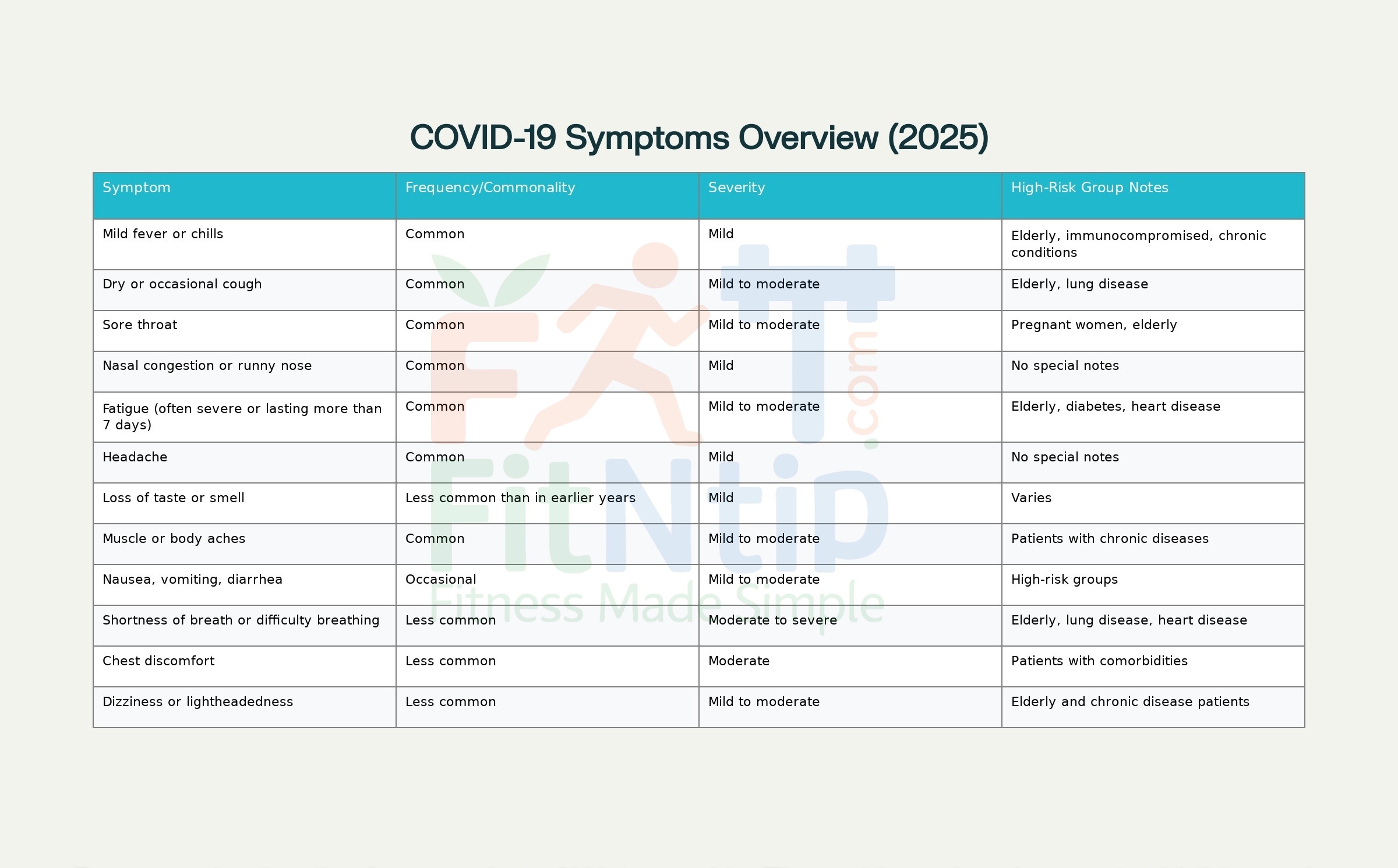
COVID-19 is an infectious respiratory illness caused by the SARS-CoV-2 virus. Most people who catch it have mild to moderate symptoms and recover at home without special treatment, but some people do become seriously ill and need hospital care. This page explains the symptoms in simple chart form, so you can recognise them early and know when to get medical help.
Omicron sub-lineages have continued to circulate through 2025–26; symptoms remain broadly similar to those seen in recent years. There is no single symptom that confirms COVID-19, and the illness can look a lot like a common cold or flu — which is why testing is the only reliable way to know.
Also Read — COVID Symptoms Explained: Common Signs, Serious Warning Signs and When to See a Doctor
COVID-19 symptoms chart
The World Health Organization (WHO) groups COVID-19 symptoms into most common, other possible, and serious symptoms. The chart below follows that grouping.
| Symptom | How common it is in COVID-19 | Notes |
|---|---|---|
| Fever | Most common | May be mild or high; not everyone with COVID-19 gets a fever |
| Cough | Most common | Usually a new, ongoing cough |
| Tiredness (fatigue) | Most common | Can be strong in the first days and may linger while you recover |
| Loss of taste or smell | Most common | Less frequent than in the first years of the pandemic, but still reported |
| Sore throat | Other possible symptom | Often one of the earliest signs |
| Headache | Other possible symptom | Common in the first few days |
| Aches and pains | Other possible symptom | Muscle and body aches, similar to flu |
| Diarrhoea | Other possible symptom | Stomach and gut symptoms can occur, with or without respiratory symptoms |
| Skin rash, or discolouration of fingers or toes | Other possible symptom | Less common; seen in some patients |
| Red or irritated eyes | Other possible symptom | Can occur alongside other symptoms |
| Difficulty breathing or shortness of breath | Serious symptom | Seek medical care immediately — see the red-flag section below |
| Chest pain | Serious symptom | Seek medical care immediately |
| Confusion, or loss of speech or mobility | Serious symptom | Seek medical care immediately |
Symptoms usually start a few days after exposure to the virus — on average around five to six days, but it can take up to 14 days. Some people who are infected have very mild symptoms or none at all, and can still pass the virus to others.
COVID-19 vs cold vs flu: a simple comparison
Because the symptoms overlap, many people understandably mix up COVID-19, the common cold and flu (influenza). This comparison chart shows the typical pattern of each illness. It is a guide only — individual cases vary, and a test is the only way to confirm COVID-19 or flu.
| Feature | COVID-19 | Common cold | Flu (influenza) |
|---|---|---|---|
| How it starts | Gradual or sudden; symptoms can appear 2–14 days after exposure | Gradual | Sudden, often within 1–3 days |
| Fever | Common, mild to high | Uncommon; if present, usually mild | Common, often high and sudden |
| Cough | Common | Common, usually mild | Common |
| Tiredness | Common, can be severe and long-lasting | Sometimes, usually mild | Common, often strong |
| Loss of taste or smell | Can occur | Sometimes, usually because of a blocked nose | Uncommon |
| Sore throat | Common | Common | Sometimes |
| Runny or blocked nose | Common | Very common | Sometimes |
| Headache and body aches | Common | Mild or uncommon | Common, often strong |
| Diarrhoea | Sometimes | Uncommon | Sometimes, more often in children |
| Breathing difficulty | Can occur — a serious warning sign | Uncommon | Can occur in severe cases |
For a fuller explanation of each symptom and how the illness usually progresses, read our detailed guide to COVID-19 symptoms.
How the illness usually feels
For most people, COVID-19 begins with symptoms such as fever, cough, tiredness, a sore throat or a headache. The first few days are often the worst, after which symptoms slowly ease. Many people with mild illness feel better within one to two weeks, although tiredness can take longer to settle. Rest, fluids and staying home while you are unwell help your recovery and protect the people around you.
Some people become more seriously ill, usually with breathing problems. Older adults and people with underlying conditions — such as diabetes, heart or lung disease, or a weakened immune system — face a higher risk of severe illness and should take symptoms seriously from the start and speak to a doctor early.
When to seek medical care — red-flag symptoms
Most cases can be managed at home, but some symptoms are warning signs that you need medical care straight away. Seek immediate medical attention if you or someone with you has:
- Difficulty breathing or shortness of breath
- Chest pain or pressure
- Confusion or difficulty staying awake
- Loss of speech or mobility
- Symptoms that are rapidly getting worse instead of better
Do not wait for these signs to pass on their own. Contact your doctor, visit a hospital, or call your local emergency number. If you are in a higher-risk group, or you care for someone who is, it is also wise to contact a doctor as soon as symptoms start, even if they seem mild — early advice can change the treatment plan.
Should you get tested?
Yes. If you have symptoms that could be COVID-19 — especially fever, a new cough, or loss of taste or smell — testing helps you know what you are dealing with and how careful you need to be around others. Testing matters most if you live with or are visiting someone at higher risk of severe illness, or if a doctor needs a confirmed result to guide treatment. While you are unwell, stay home as much as you can, rest, and keep some distance from others in the house where possible.
FAQ: COVID symptoms chart
- Q1: What are the most common symptoms of COVID-19?
A: According to WHO, the most common symptoms are fever, cough, tiredness, and loss of taste or smell. Other symptoms include a sore throat, headache, aches and pains, diarrhoea, a skin rash, and red or irritated eyes. - Q2: How is COVID-19 different from a cold or flu?
A: The three illnesses overlap a lot. Loss of taste or smell points more towards COVID-19, a sudden high fever with strong body aches is typical of flu, and a cold usually stays mild and centred on the nose and throat. The comparison chart above shows the typical patterns, but only a test can confirm which illness you have. - Q3: When do symptoms appear after infection?
A: Symptoms can appear anywhere from about two days to 14 days after exposure, most often around five to six days. - Q4: Which symptoms mean I should go to a hospital?
A: Difficulty breathing or shortness of breath, chest pain, confusion, and loss of speech or mobility are serious symptoms. Seek medical care immediately if any of these occur. - Q5: Who is at higher risk of severe illness?
A: Older adults, people with chronic conditions such as diabetes or heart and lung disease, people with weakened immune systems, and pregnant women face a higher risk and should seek medical advice early.
Disclaimer: This article is for informational purposes only and does not constitute medical advice. Readers should consult healthcare professionals for diagnosis and treatment of COVID-19 or any other medical condition. Symptoms may vary by individual and health status.
Sources
By the FitNTip Editorial Team · Last updated: 4 November 2026
How FitNTip builds its guides: our articles are compiled from official public sources — including the Indian Food Composition Tables (ICMR–National Institute of Nutrition), USDA FoodData Central and the WHO healthy diet guidance — and reviewed against them when updated.
This article is educational and is not medical advice. If you have a medical condition, are pregnant, or plan a major change in diet or training, talk to your doctor first.
This article is for informational and educational purposes only. It does not constitute medical advice, diagnosis, or treatment. The information presented is researched from trusted sources including peer-reviewed scientific journals, CDC, NIH, WHO, and recognized health organizations. Always consult a qualified healthcare professional before making any changes to your diet, exercise routine, or health regimen.


