Everything You Need to Know About Home Workout Routine Daily: 16 Common Questions Answered


In today’s fast-paced world, finding time to hit the gym can feel like an impossible task. Between work, family responsibilities, and daily errands, many people are turning to home workout routines as a practical and sustainable alternative. The appeal is clear: no commute, no membership fees, and the flexibility to exercise whenever it fits into your schedule. Whether you’re a beginner looking to build strength or someone recovering from injury seeking gentle movement, a daily home workout routine offers a customizable path to better health.
Also Read-The Sweet Secret to Stronger Muscles: Which Fruits Are Best for Building Lean Mass
Research increasingly supports the effectiveness of consistent at-home exercise. For example, a 2023 study in the European Journal of Translational Myology demonstrated that even individuals with fatigue syndromes—who often struggle with physical activity—can benefit significantly from structured, low-impact home-based programs like the Full-Body In-Bed Gym. This approach not only improves muscle function and mobility but also counters the natural decline associated with inactivity and aging. With the right guidance and consistency, a daily home workout routine can be just as effective—if not more so—than traditional gym sessions for many people.
1. What is a home workout routine daily?
A daily home workout routine refers to a structured plan of physical exercises performed at home on a regular basis—ideally every day or most days of the week. Unlike sporadic workouts, a daily routine emphasizes consistency, which is key to building strength, improving cardiovascular health, enhancing flexibility, and supporting mental well-being. These routines can range from high-intensity interval training (HIIT) to gentle stretching, strength training with bodyweight or resistance bands, yoga, or even bed-based exercises for those with limited mobility.
The beauty of a home workout routine lies in its adaptability. You don’t need expensive equipment or a large space. A small corner of your living room, a yoga mat, and perhaps a pair of dumbbells or resistance bands are often enough to get started. What matters most is creating a sustainable habit that aligns with your fitness level, goals, and lifestyle.
Daily routines also foster discipline and routine, which can positively impact other areas of life. When exercise becomes a non-negotiable part of your day—like brushing your teeth or making your bed—it’s easier to maintain long-term. Over time, this consistency leads to measurable improvements in energy levels, sleep quality, and overall physical function.
2. Why should I do a home workout routine daily?
Engaging in a daily home workout routine offers a wide range of physical, mental, and emotional benefits. One of the most compelling reasons is convenience. Without the need to travel to a gym, you eliminate common barriers like traffic, crowded spaces, or scheduling conflicts. This makes it easier to stay consistent, which is crucial for seeing results.
From a health perspective, regular physical activity helps maintain a healthy weight, strengthens the heart and lungs, improves bone density, and supports metabolic function. Daily movement also plays a vital role in mental health. Exercise triggers the release of endorphins—natural mood boosters—that can reduce symptoms of anxiety and depression. For individuals managing chronic conditions or recovering from illness, daily gentle exercise can improve quality of life and functional independence.
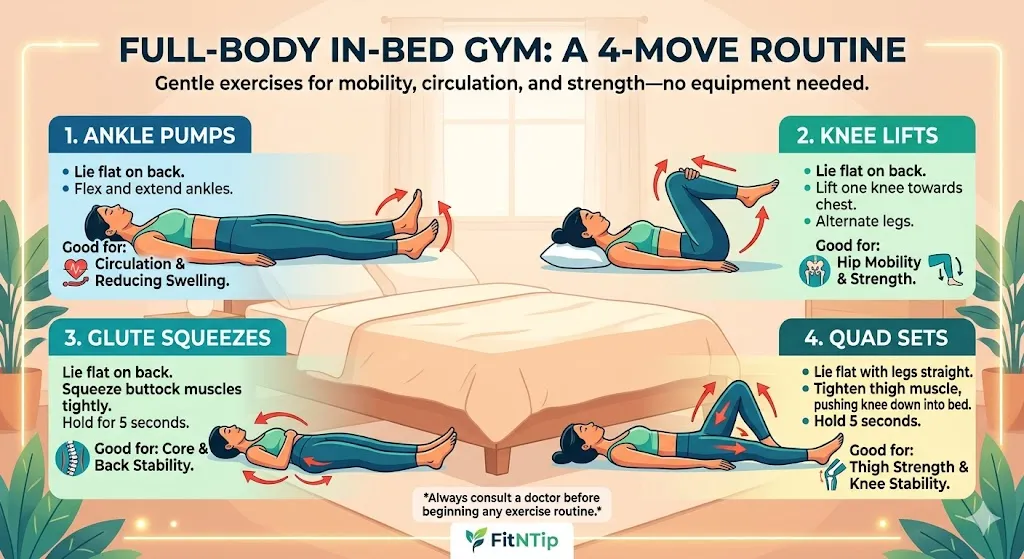
A 2023 case report published in the European Journal of Translational Myology highlighted the value of daily home-based exercise for people with fatigue syndromes. The study introduced the Full-Body In-Bed Gym, a safe and accessible program designed for individuals who struggle with traditional workouts due to fatigue or mobility issues. Participants reported improved muscle strength, reduced fatigue, and greater confidence in their ability to move. This underscores a key point: even minimal daily movement can have profound effects when done consistently.
3. How long should a daily home workout routine be?
The ideal duration of a daily home workout routine depends on your fitness level, goals, and available time. For beginners, even 10 to 15 minutes can be highly effective. The American Heart Association recommends at least 150 minutes of moderate-intensity aerobic activity per week, which breaks down to about 20–30 minutes per day, five days a week. However, shorter, more frequent sessions can be just as beneficial, especially when consistency is prioritized.
If your goal is general fitness and health maintenance, 20–30 minutes of daily activity is a solid target. This could include a mix of cardio (like jumping jacks, dancing, or brisk walking in place), strength training (bodyweight squats, push-ups, planks), and flexibility work (stretching or yoga). For those aiming for weight loss or muscle building, longer sessions (45–60 minutes) may be necessary, but they should be balanced with rest and recovery.
It’s important to listen to your body. Overtraining can lead to injury or burnout, especially if you’re new to exercise. A 2024 study in Supportive Care in Cancer found that structured, moderate exercise programs—such as pelvic floor muscle training—were well-tolerated and beneficial when performed consistently over time. This suggests that regularity and proper form matter more than duration alone.
4. What equipment do I need for a daily home workout?
One of the biggest advantages of a home workout routine is that it requires minimal equipment. In fact, many effective exercises use only your body weight. For beginners, a yoga mat, a water bottle, and comfortable clothing are often sufficient. As you progress, you might consider adding a few affordable tools to increase variety and challenge.
Resistance bands are lightweight, portable, and versatile. They can be used for strength training, stretching, and even rehabilitation exercises. Dumbbells or household items like water bottles or canned goods can serve as weights for arm exercises. A stability ball can enhance core workouts, while a jump rope offers a high-calorie-burning cardio option.
For individuals with limited mobility or chronic fatigue, specialized equipment may not be necessary at all. The Full-Body In-Bed Gym program, described in a 2023 study, requires no equipment and can be performed entirely from a lying position. This makes it an excellent option for older adults, people recovering from surgery, or those managing conditions like fibromyalgia or long COVID.
5. Can I do a home workout routine if I’m a beginner?
Absolutely. A daily home workout routine is one of the most beginner-friendly ways to start exercising. The key is to begin at your current fitness level and progress gradually. Many people feel intimidated by gyms or complex routines, but home workouts allow you to learn at your own pace in a comfortable environment.
Start with simple movements like marching in place, wall push-ups, seated leg lifts, or gentle stretching. Focus on proper form rather than speed or intensity. As your confidence and strength grow, you can incorporate more challenging exercises. There are countless free online resources—YouTube videos, fitness apps, and guided programs—that offer beginner-friendly routines tailored to different goals and abilities.
It’s also important to set realistic expectations. Progress takes time, and consistency matters more than perfection. A 2024 study on pelvic floor muscle training found that even women recovering from pelvic radiotherapy—many of whom were dealing with incontinence and fatigue—were able to successfully complete a 3-month home-based program with or without physiotherapist support. This highlights how accessible and effective home workouts can be, even for those with significant health challenges.
6. Is it safe to do a home workout routine every day?
For most healthy individuals, doing a home workout routine every day is safe—provided you vary the intensity and type of exercise. The human body needs movement, and daily activity supports cardiovascular health, joint mobility, and mental well-being. However, “every day” doesn’t mean “high intensity every day.” Overtraining can lead to injury, fatigue, or burnout.
A balanced daily routine should include a mix of activities: some days focused on strength, others on cardio, and others on flexibility or active recovery (like walking, stretching, or yoga). This variation allows different muscle groups to recover while keeping you active. For example, you might do strength training on Monday, cardio on Tuesday, and a restorative yoga session on Wednesday.
Certain populations—such as older adults, people with chronic illnesses, or those recovering from injury—should consult a healthcare provider before starting a daily routine. The Full-Body In-Bed Gym program, designed for individuals with fatigue syndromes, emphasizes safety and gradual progression. It’s a reminder that even gentle, daily movement can be therapeutic when done correctly.
7. What are the best exercises for a daily home workout?
The best exercises for a daily home workout are those that target multiple muscle groups, improve cardiovascular health, and can be modified to suit your fitness level. Full-body movements are especially efficient because they maximize results in minimal time.
Bodyweight squats strengthen your legs and glutes. Push-ups (or modified versions like knee push-ups) build upper body and core strength. Planks improve core stability and posture. Lunges enhance balance and lower body power. Jumping jacks or high knees provide a quick cardio boost. For flexibility and relaxation, incorporate stretches for the hamstrings, hips, shoulders, and spine.
Yoga and Pilates are also excellent additions, offering both physical and mental benefits. They improve flexibility, balance, and mindfulness—key components of overall wellness. For those with limited mobility, seated or bed-based exercises can be just as effective. The Full-Body In-Bed Gym program includes movements like ankle pumps, knee lifts, and arm circles, all performed while lying down.
8. How do I stay motivated to work out at home every day?
Staying motivated for a daily home workout routine can be challenging, especially when there’s no external accountability like a gym class or personal trainer. The key is to build habits that make exercise feel automatic and rewarding.
Start by setting clear, achievable goals. Instead of “get fit,” aim for “do 15 minutes of exercise every morning for two weeks.” Track your progress in a journal or app. Celebrate small wins—like completing a week without skipping—to reinforce positive behavior.
Environment also plays a role. Designate a specific area for exercise, free from distractions. Lay out your workout clothes the night before. Use music, podcasts, or videos to make sessions more enjoyable. Some people find it helpful to schedule workouts at the same time each day, creating a routine that becomes second nature.
Social support can boost motivation too. Share your goals with a friend, join an online fitness community, or do virtual workouts with others. Even if you’re exercising alone, knowing others are on the same journey can provide encouragement.
9. Can a daily home workout help with weight loss?
Yes, a daily home workout routine can support weight loss when combined with a healthy diet and lifestyle. Exercise increases calorie expenditure, builds lean muscle (which boosts metabolism), and helps regulate appetite hormones. However, weight loss is most effective when physical activity is part of a broader strategy that includes nutrition, sleep, and stress management.
Cardio-based home workouts—like dancing, jumping jacks, or stair climbing—are particularly effective for burning calories. Strength training helps preserve muscle mass during weight loss, which is important because muscle tissue burns more calories at rest than fat tissue. Even short bursts of activity throughout the day can contribute to a calorie deficit over time.
It’s important to set realistic expectations. Sustainable weight loss typically occurs at a rate of 1–2 pounds per week. Rapid results are often temporary and can lead to rebound weight gain. A 2023 study on bed-based exercise programs showed that even individuals with severe fatigue could improve their physical function and energy levels through consistent movement—highlighting that progress isn’t always measured on the scale.
10. What if I don’t have much space at home?
Limited space is no barrier to a daily home workout routine. Many effective exercises require only a small area—enough to lie down, stand, or move your arms freely. You don’t need a home gym; a corner of your bedroom, living room, or even hallway can work.
Bodyweight exercises like squats, lunges, and planks take up minimal space. Chair-based workouts are ideal for small apartments or shared living spaces. Even bed-based routines, like the Full-Body In-Bed Gym, require no extra room and can be done in complete privacy.
If you’re concerned about noise or disturbing others, opt for low-impact movements or use a yoga mat to cushion sound. Many online workouts are designed specifically for small spaces, with modifications for tight quarters.
11. How do I create a balanced daily home workout plan?
A balanced daily home workout plan includes components of cardiovascular fitness, strength training, flexibility, and recovery. Aim to incorporate each element throughout the week, even if not every day.
For example, you might structure your week like this:
- Monday: Full-body strength (squats, push-ups, planks)
- Tuesday: Cardio (dancing, jump rope, or brisk walking)
- Wednesday: Yoga or stretching
- Thursday: Lower body strength (lunges, glute bridges)
- Friday: Upper body and core (push-ups, rows, crunches)
- Saturday: Active recovery (walking, light stretching)
- Sunday: Rest or gentle movement
This variety prevents boredom, reduces injury risk, and ensures all muscle groups are engaged. Listen to your body and adjust based on how you feel. Some days you may need more rest; others, you might feel energized for a longer session.
12. Can I do a home workout if I have chronic pain or injury?
Yes, but with caution and proper guidance. Many people with chronic pain or injuries can benefit from gentle, consistent movement—especially when done at home, where they can control the environment and pace. However, it’s essential to consult a healthcare provider or physical therapist before starting any new routine.
Low-impact exercises like swimming (if accessible), walking, yoga, or bed-based movements are often recommended. The Full-Body In-Bed Gym program, designed for individuals with fatigue and mobility challenges, is a prime example of how safe, structured exercise can be adapted for sensitive populations. It emphasizes slow, controlled movements that improve circulation and muscle tone without strain.
Pelvic floor muscle training, as studied in a 2024 paper, also demonstrates how targeted, home-based exercises can help manage symptoms like incontinence after medical treatments. These programs are typically taught by physiotherapists but can be performed independently at home with proper instruction.
13. How do I track progress in a home workout routine?
Tracking progress helps maintain motivation and ensures you’re moving toward your goals. There are many ways to measure improvement beyond the scale.
Keep a workout journal to record exercises, duration, intensity, and how you felt. Note improvements like being able to do more push-ups, holding a plank longer, or feeling less sore after workouts. Take weekly photos or measurements to visually track changes in your body.
Use fitness apps or wearable devices to monitor heart rate, steps, or calories burned. Some apps offer progress charts and reminders to keep you on track. Even simple tools like a calendar where you mark off completed workouts can reinforce consistency.
Remember, progress isn’t always linear. Some days you’ll feel stronger; others, you may need rest. Celebrate non-scale victories—better sleep, improved mood, increased energy—as signs of success.
14. What are common mistakes to avoid in a daily home workout?
One of the most common mistakes is skipping warm-ups and cool-downs. These are essential for preventing injury and improving flexibility. Always spend 5–10 minutes warming up (e.g., marching, arm circles) and cooling down (e.g., stretching).
Another pitfall is doing the same routine every day without variation. This can lead to plateaus and boredom. Rotate exercises, increase intensity gradually, and try new activities to keep your body challenged.
Poor form is another issue. Without a trainer to correct you, it’s easy to develop bad habits. Watch instructional videos, record yourself, or use mirrors to check alignment. If something feels off, stop and reassess.
Finally, many people underestimate the importance of rest. Overtraining can lead to fatigue, injury, and burnout. Schedule rest days and listen to your body’s signals.
15. How do I modify workouts for different fitness levels?
Modifying workouts ensures they’re safe and effective for your current ability. Beginners can start with easier versions of exercises—like knee push-ups instead of full push-ups, or seated marches instead of jumping jacks.
As you improve, increase difficulty by adding reps, sets, resistance, or speed. For example, progress from wall push-ups to knee push-ups to standard push-ups. Use resistance bands or weights to challenge muscles further.
For advanced exercisers, incorporate compound movements (like burpees or mountain climbers), increase workout duration, or add intervals (e.g., 30 seconds high intensity, 30 seconds rest).
Even highly fit individuals can benefit from low-intensity days. Active recovery helps the body heal and prevents overuse injuries.
16. Can children and seniors do a daily home workout routine?
Yes, with appropriate modifications. Children benefit from active play and movement that supports growth, coordination, and cardiovascular health. Simple games, dancing, or family yoga sessions can make exercise fun and engaging.
Seniors can greatly benefit from daily movement to maintain strength, balance, and independence. Chair exercises, gentle stretching, and balance drills are excellent options. The Full-Body In-Bed Gym program is particularly relevant for older adults with limited mobility, offering a safe way to stay active.
Both groups should focus on enjoyment and consistency rather than intensity. Always consult a healthcare provider if there are underlying health concerns.
A daily home workout routine is more than just a fitness trend—it’s a sustainable, accessible way to improve your physical and mental health. Whether you’re building strength, managing a health condition, or simply looking to move more, consistency and adaptability are your greatest allies. With the right approach, your living room can become your most effective gym.
Why Trust FitNTip?
- Our content is AI-assisted and reviewed for factual accuracy against established health science
- We reference trusted organizations (WHO, CDC, Mayo Clinic, Harvard Health) for health claims
- Our editorial process verifies that all cited facts are well-established and widely accepted
- We recommend always consulting qualified healthcare professionals for medical decisions
The information provided on FitNTip.com is for general informational and educational purposes only. It is not intended as, and should not be construed as, professional medical advice, diagnosis, or treatment. Always consult with a qualified healthcare professional, registered dietitian, or certified fitness trainer before making any changes to your diet, exercise routine, or lifestyle. Individual results may vary, and what works for one person may not be suitable for another. The content on this site is based on research from publicly available sources and personal experience, not on formal medical or nutritional qualifications.
Founder’s Note
As someone managing multiple platforms and long workdays, I personally use these techniques to stay sharp and focused. The methods we share here are the ones that have actually worked for me and the team at FitNTip. We test everything before recommending it to our readers.
References & Trusted Sources
This article is based on research and information from the following sources:
- Lindgren A, et al. – Female pelvic cancer survivors’ experiences of pelvic floor muscle training after pelvic radiotherapy.. Supportive care in cancer : official journal of the Multinational Association of Supportive Care in Cancer [doi.org]
- Ravara B, et al. – Optimized progression of Full-Body In-Bed Gym workout: an educational case report.. European journal of translational myology [doi.org]
- World Health Organization (WHO) – Health Topics [www.who.int]
- Centers for Disease Control and Prevention (CDC) – Diseases & Conditions [www.cdc.gov]
- Mayo Clinic – Diseases & Conditions [www.mayoclinic.org]
- American Heart Association [www.heart.org]
Note: We strive to link to authoritative sources. If you notice any outdated or incorrect information, please contact us.
This article is for informational and educational purposes only. It does not constitute medical advice, diagnosis, or treatment. The information presented is researched from trusted sources including peer-reviewed scientific journals, CDC, NIH, WHO, and recognized health organizations. Always consult a qualified healthcare professional before making any changes to your diet, exercise routine, or health regimen.