
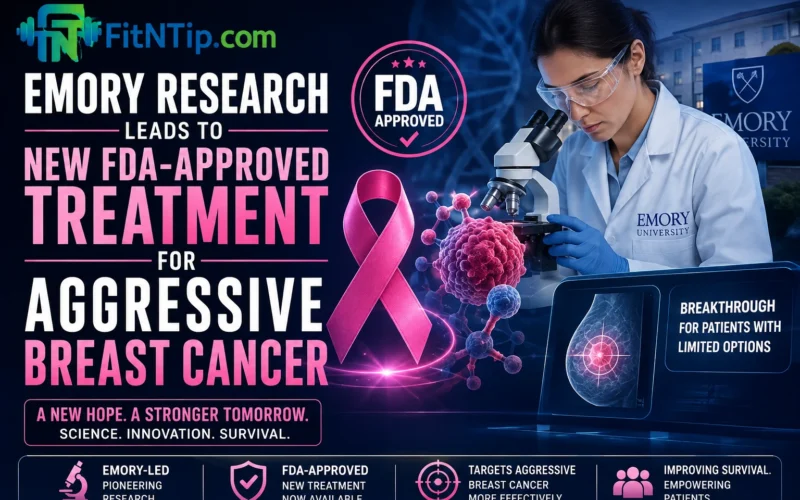
Emory Research Leads to New FDA-Approved Treatment for Aggressive Breast Cancer

♀Womens Health Guide
Evidence-based information you can trust
Every year, more than 287,000 women in the United States receive a breast cancer diagnosis, and roughly 20-30% of those cases involve aggressive subtypes that resist conventional therapies. For patients with triple-negative or HER2-positive breast cancer, the prognosis has historically been grimmer than for other forms of the disease, with fewer targeted options and higher rates of recurrence. But a significant shift is underway.
The recent FDA approval of a new treatment for aggressive breast cancer, developed with foundational research from Emory University’s Winship Cancer Institute, is changing the conversation for patients who previously faced limited options. This isn’t just another incremental advance — it represents a fundamentally different approach to targeting the molecular mechanisms that drive the deadliest breast cancers.
The journey from laboratory discovery to FDA approval typically spans 10-15 years, with countless promising compounds failing along the way. What makes the Emory-led research stand out is the precision with which it identified a specific vulnerability in aggressive breast cancer cells. Researchers at Winship Cancer Institute focused on the signaling pathways that allow these cancer cells to proliferate uncontrollably and evade the immune system.
By targeting a specific protein interaction that fuels tumor growth, the team opened the door to a therapy that could potentially benefit patients who have developed resistance to existing treatments. The FDA’s approval validates years of painstaking work and offers a new lifeline for patients who have exhausted other options.
In the broader field of oncology, this development arrives at a critical moment. The convergence of computational biology and molecular profiling is accelerating drug discovery in ways that were unimaginable a decade ago. These tools allow researchers to model how disrupting specific protein “scaffolds” inside a cancer cell can shut down its ability to survive, reshaping how institutions like Emory approach cancer research.
Also Read – How to Intermittent Fasting 24 Hours: The Science-Backed Guide to the One-Day Fast
The Challenge of Aggressive Breast Cancer
Aggressive breast cancer subtypes — particularly triple-negative breast cancer (TNBC) and HER2-positive disease — have long frustrated oncologists and patients alike. TNBC, which accounts for roughly 10-15% of all breast cancer diagnoses, lacks the three most common receptors that typically fuel breast cancer growth: estrogen, progesterone, and HER2. Without these targets, hormonal therapies and HER2-targeted drugs are ineffective, leaving chemotherapy as the primary option.
Even when chemotherapy initially works, recurrence rates are high, and the five-year survival rate for metastatic TNBC remains significantly lower than for other subtypes. HER2-positive breast cancer, while more treatable with targeted therapies, still poses challenges when tumors develop resistance to existing drugs.
The COVID-19 pandemic further complicated treatment for these patients, as it disrupted cancer screenings, delayed diagnoses, and forced treatment modifications for thousands of breast cancer patients. Many aggressive cases that might have been caught early were instead diagnosed at later stages, making the need for effective new treatments even more urgent.
What makes aggressive breast cancer so difficult to treat is its molecular complexity. These tumors are not static — they evolve, mutate, and develop resistance mechanisms that render previously effective drugs useless. This is why the research approach taken at Emory is so significant. Rather than targeting a single mutation, the team focused on a protein interaction that appears to be a common vulnerability across multiple aggressive subtypes. This strategy could potentially benefit a broader range of patients than therapies that target a single genetic alteration.
How Emory’s Research Is Changing the Landscape
The Winship Cancer Institute at Emory University has built a reputation for translational research — work that moves directly from the laboratory bench to the patient bedside. The institute’s approach to aggressive breast cancer exemplifies this philosophy. By collaborating with pharmaceutical partners and leveraging advanced computational tools, the research team was able to move from initial discovery to clinical trials with unusual speed. The FDA’s approval of the resulting treatment marks a milestone not just for Emory, but for the entire field of oncology.
For patients, the practical implications are profound. The new treatment offers a targeted option for those who have developed resistance to existing therapies, and early clinical data suggests it may be effective in cases where other drugs have failed. The FDA approval means that oncologists can now prescribe this therapy with confidence, knowing it has met the agency’s rigorous standards for safety and efficacy. For the thousands of patients diagnosed with aggressive breast cancer each year, this represents more than a scientific achievement — it represents hope.
The Biological Reality Behind Aggressive Breast Cancer
To understand why Emory’s research represents such a significant breakthrough, you first need to grasp what makes certain breast cancers so dangerous at the cellular level. Breast cancer is not a single disease — it is a collection of molecularly distinct subtypes, each with its own behavior pattern, growth rate, and response to treatment. The aggressive forms, including triple-negative breast cancer and HER2-positive disease, share a common trait: they grow rapidly, spread early, and develop resistance to conventional therapies with alarming efficiency.
At the heart of this aggressiveness lies a phenomenon called protein-protein interaction dysregulation. Inside every cell, proteins communicate through an intricate network of signals that dictate when a cell grows, divides, or dies. In aggressive breast cancer, specific protein interactions become hijacked — essentially creating a molecular switch that keeps cancer cells in a perpetual state of growth while evading the immune system’s attempts to destroy them.
Traditional chemotherapy attacks all rapidly dividing cells, which is why it causes such severe side effects. Targeted therapies, by contrast, aim to disrupt these specific protein interactions without damaging healthy tissue.
The challenge that has frustrated oncologists for decades is that these protein networks are not linear. They form complex, adaptive systems where blocking one interaction often triggers compensatory pathways that bypass the blockade entirely. This is why patients who initially respond to targeted therapies frequently relapse within months. When a biological system is under stress, single-point interventions are rarely sufficient.
How Emory’s Research Targets the Root Mechanism
The Winship Cancer Institute at Emory University took a different approach from the start. Rather than searching for a single genetic mutation to target — the strategy that has driven most precision oncology efforts over the past two decades — the research team focused on identifying a protein interaction hub that multiple aggressive breast cancer subtypes depend on for survival. Think of it like this: if cancer cells are a criminal network, previous therapies tried to arrest one low-level operative. Emory’s approach identified the central communication node that the entire network relies on, making it much harder for the system to route around the disruption.
This protein hub functions as a molecular scaffold — a structural platform that brings multiple signaling proteins together in the right configuration to transmit growth signals. In healthy cells, this scaffold is tightly regulated, activating only when the body needs cell growth for repair or maintenance. In aggressive breast cancer, genetic alterations cause the scaffold to become hyperactive, constantly signaling cells to divide.
What makes this target particularly valuable is that it appears across multiple subtypes of aggressive breast cancer, not just one specific molecular variant. This means the treatment could potentially help patients with different genetic profiles, addressing a major limitation of current targeted therapies that only work for patients with specific mutations.
Why This Matters for Patients Right Now
The FDA approval of this Emory-backed treatment arrives at a critical moment in breast cancer care. According to the American Cancer Society, approximately 297,790 new cases of invasive breast cancer will be diagnosed in women in the United States each year, and about 43,700 women will die from the disease annually. Aggressive subtypes account for a disproportionate share of these mortality figures. Triple-negative breast cancer, for instance, represents only about 10-15% of all breast cancers but accounts for a significantly higher percentage of breast cancer deaths due to its aggressive nature and limited treatment options.
For patients who have developed resistance to existing therapies, the approval opens a new avenue of hope. Clinical trial data leading to FDA approval demonstrated that the treatment was effective in cases where other targeted therapies had failed — precisely the population with the fewest options and the worst prognoses. The treatment works by binding to the protein scaffold and preventing it from assembling the signaling complex, effectively cutting off the growth signal at its source. Because the scaffold is hyperactive in cancer cells but only occasionally needed in healthy cells, the treatment achieves a therapeutic window — killing cancer cells while sparing most normal tissue.
The implications extend beyond immediate patient care. The FDA approval validates a new paradigm in oncology drug development: targeting protein interaction networks rather than single mutations. This approach could be applied to other cancers that depend on similar scaffold proteins, potentially accelerating treatment development across the entire field. For the thousands of patients diagnosed with aggressive breast cancer each year who have watched targeted therapies fail as their cancer evolved, this represents something that has been in desperately short supply — a treatment designed specifically to outmaneuver the adaptive mechanisms that make their disease so difficult to control.
Foundational Concepts for Understanding the Treatment
Before diving into the specific applications and comparative effectiveness of this new therapy, there are several foundational concepts that will help you make sense of the research and its implications. Understanding these principles will give you the framework to evaluate treatment options and have more informed conversations with your healthcare team.
First, the concept of therapeutic resistance is central to why this treatment matters. Cancer cells are not static targets — they evolve under the selective pressure of treatment. When a drug blocks one growth pathway, cancer cells can activate alternative pathways or mutate the drug’s target protein to prevent binding.
This is why combination therapies and multi-targeted approaches are becoming increasingly important in oncology. The Emory treatment’s focus on a protein scaffold — a hub that multiple pathways depend on — makes it significantly harder for cancer cells to develop resistance because they would need to simultaneously rewire multiple signaling networks.
Second, the distinction between genetic mutations and protein dysfunction is critical. Most targeted cancer therapies are designed based on specific genetic mutations — alterations in DNA that produce abnormal proteins. However, many aggressive breast cancers do not have a single driving mutation.
Instead, they have dysregulated protein interactions where normal proteins are present but functioning abnormally due to their cellular context. This is why some patients do not benefit from mutation-targeted therapies even though their cancer is growing aggressively. The Emory treatment targets the functional abnormality — the hyperactive protein scaffold — regardless of whether a specific genetic mutation is present.
Third, the FDA approval process for cancer treatments has evolved significantly in recent years. The agency now offers accelerated approval pathways for treatments that address unmet medical needs in serious conditions, allowing earlier patient access based on surrogate endpoints like tumor response rate rather than waiting for overall survival data. The full approval that this Emory-backed treatment received means it demonstrated not just that it could shrink tumors, but that it provided meaningful clinical benefit — either extending life or improving quality of life compared to existing options.
Finally, the role of translational research — the process of moving discoveries from the laboratory to clinical practice — cannot be overstated. The Winship Cancer Institute’s integrated model, where basic scientists, clinical researchers, and pharmaceutical partners collaborate throughout the development process, significantly compressed the timeline from discovery to FDA approval. Strategic, data-driven resource allocation can accelerate the development of breakthrough treatments by ensuring that the most promising candidates receive funding and support at critical junctures.
The Evolving Landscape of Aggressive Breast Cancer Treatment
The approval of this Emory-backed therapy does not exist in isolation — it represents a broader shift in how researchers and clinicians approach aggressive breast cancer. For decades, the standard of care followed a relatively predictable path: surgery to remove the tumor, chemotherapy to kill remaining cells, radiation to prevent local recurrence, and hormonal therapy for hormone receptor-positive cases. This approach saved countless lives, but it left patients with aggressive subtypes that did not respond to hormonal therapy with limited options.
The past fifteen years have seen an explosion of targeted therapies designed to exploit specific molecular vulnerabilities in cancer cells. HER2-targeted therapies transformed outcomes for HER2-positive breast cancer. CDK4/6 inhibitors improved progression-free survival for hormone receptor-positive disease.
PARP inhibitors offered new hope for patients with BRCA mutations. Each of these advances represented a genuine breakthrough, but each also had a common limitation: they worked only for patients whose tumors had the specific molecular target the drug was designed to hit.
What makes the current moment different is the recognition that the next frontier in breast cancer treatment lies not in finding new single targets, but in understanding and disrupting the network-level properties that make cancer cells resilient. This systems-level thinking — viewing cancer not as a collection of individual mutations but as a complex adaptive system with emergent properties — is driving a new generation of therapies designed to be more durable and broadly applicable. The Emory treatment, with its focus on a protein scaffold that serves as a signaling hub for multiple aggressive subtypes, exemplifies this new paradigm.
For patients and their families, understanding this shift matters because it changes the conversation about treatment options. Rather than asking “What mutation does my tumor have?” the more relevant question is becoming “What network dependencies does my tumor have, and how can we disrupt them?” This broader framework opens the door to treatment options for patients who previously had no targeted therapy options, and it provides a rationale for combination approaches that could prevent or overcome resistance. The research from Emory does not represent the end of the journey against aggressive breast cancer, but it marks a significant step toward treatments that are as adaptive and resilient as the disease itself.
Key Takeaways and What This Means Moving Forward
The trajectory of breast cancer research has shifted dramatically in recent years, moving away from one-size-fits-all chemotherapy approaches toward precision treatments that target the specific biological machinery driving tumor growth. The Emory-led research contributing to this new FDA-approved treatment represents a meaningful step in that direction. What makes this development significant is not just the approval itself, but the underlying scientific approach: targeting protein scaffolds that serve as signaling hubs across multiple aggressive breast cancer subtypes, rather than chasing individual mutations.
This network-level strategy addresses one of the biggest challenges in oncology today, which is that cancer cells frequently develop resistance to single-target therapies by rerouting their signaling through alternative pathways. By disrupting a central hub that multiple pathways depend on, this approach makes it harder for tumors to escape treatment.
From a broader oncology research perspective, the field has been steadily building toward this kind of systems-level thinking for over a decade. Major cancer research organizations, including the National Cancer Institute and the American Society of Clinical Oncology, have emphasized the importance of understanding tumor biology as an interconnected network rather than a collection of isolated mutations. The Emory research fits squarely within this framework, and its translation from laboratory findings to FDA approval demonstrates that this approach can succeed in real-world clinical settings.
The practical implication for patients and their families is clear: the treatment options for aggressive breast cancer are broadening beyond the traditional categories that have defined care for years. This does not mean that older therapies are obsolete or that every patient will benefit from this new approach. It means that the toolkit is growing, and with it, the importance of thorough molecular profiling of tumors to match patients with the treatments most likely to help them.
As research in oncology continues to reveal the complex network dependencies that sustain cancer cells, we can expect more therapies designed to disrupt those networks rather than chase individual targets. The Emory contribution is one piece of a larger puzzle, but it is a piece that moves the field closer to treatments that can keep pace with the adaptability of cancer itself.
Frequently Asked Questions
How does this new FDA-approved treatment differ from traditional chemotherapy for aggressive breast cancer?
Traditional chemotherapy works by killing rapidly dividing cells, which affects both cancerous and healthy tissues, leading to the well-known side effects like hair loss, nausea, and immune suppression. This new treatment takes a fundamentally different approach by targeting specific protein scaffolds that aggressive cancer cells depend on for survival and growth. Rather than attacking all fast-dividing cells, it aims to disrupt the signaling networks that tumors use to proliferate and resist other therapies. This targeted mechanism generally results in a different side effect profile, though patients should discuss specific risks with their oncologist. The distinction matters because it offers an option for patients whose tumors have become resistant to conventional treatments or who have subtypes that do not respond well to hormonal or HER2-targeted therapies.
Which patients are most likely to benefit from this Emory-developed treatment?
The treatment was specifically developed for patients with aggressive breast cancer subtypes, particularly those who have limited options after progressing on existing therapies. This includes patients with triple-negative breast cancer, those with hormone receptor-positive disease that has become resistant to hormonal therapy, and individuals whose tumors exhibit the specific molecular characteristics that make them dependent on the protein scaffold this drug targets. Not every breast cancer patient will be a candidate.
Oncologists typically use molecular profiling and biomarker testing to determine whether a patient’s tumor has the characteristics that make it susceptible to this approach. If you or a loved one has been diagnosed with aggressive breast cancer, asking your oncology team about molecular profiling and whether this treatment fits your tumor’s biology is a concrete next step.
What does the FDA approval process for this treatment tell us about its safety and effectiveness?
FDA approval means that the treatment demonstrated meaningful clinical benefit in controlled trials, with a safety profile that the agency deemed acceptable relative to the severity of the disease it treats. The approval process for cancer therapies typically requires evidence from multiple phases of clinical trials, starting with safety dosing studies and progressing to larger trials that compare the new treatment against standard options or placebo. For patients, FDA approval provides a level of regulatory confidence that the treatment has been rigorously evaluated.
However, it does not guarantee that every patient will respond, nor does it mean that long-term side effects are fully understood. Post-approval monitoring continues to track real-world outcomes, and patients considering this treatment should have an honest conversation with their doctor about both the potential benefits and the known risks based on their individual health profile.
How long does it typically take for research like this to move from the lab to FDA approval?
The journey from laboratory discovery to FDA-approved treatment typically spans ten to fifteen years, though this timeline can vary significantly depending on the complexity of the drug, the rarity of the condition, and the strength of early clinical data. The Emory research followed a trajectory that included basic science investigation to understand the protein scaffold’s role in cancer signaling, preclinical testing in laboratory models, and then phased clinical trials in human patients. Some therapies move faster through this pipeline if they receive breakthrough therapy designation from the FDA, which is granted when early evidence suggests a substantial improvement over existing options.
What role does molecular profiling play in determining whether this treatment is right for a specific patient?
Molecular profiling has become essential in modern oncology because it reveals the specific biological characteristics of an individual’s tumor, rather than treating all breast cancers as the same disease. This profiling typically involves analyzing tumor tissue for specific genetic mutations, protein expression patterns, and other molecular markers that indicate which therapies are most likely to be effective. For this particular treatment, molecular profiling can identify whether a patient’s tumor depends on the protein scaffold that the drug targets.
Without this testing, patients might receive treatments that have little chance of helping them while exposing themselves to unnecessary side effects. If you have been diagnosed with aggressive breast cancer and have not yet had comprehensive molecular profiling, requesting this testing from your oncology team is one of the most actionable steps you can take to ensure you are matched with the most appropriate therapy.
Are there ongoing studies exploring whether this treatment could help patients with other types of cancer?
The underlying science behind this treatment, specifically the targeting of protein scaffolds that serve as signaling hubs, has potential applications beyond breast cancer. Many aggressive cancers share similar network dependencies, and the principle of disrupting central signaling hubs rather than individual mutations could apply to other tumor types. Research institutions and pharmaceutical companies frequently explore whether therapies approved for one cancer type can benefit patients with other cancers that share similar molecular characteristics.
Patients interested in whether this treatment might be relevant to other cancer types can search ClinicalTrials.gov for ongoing studies, or discuss with their oncologist whether any trials are recruiting for their specific situation.
What should patients do if they are interested in accessing this newly approved treatment?
The first step is to have a detailed conversation with your oncologist about whether this treatment aligns with your tumor’s molecular profile and your overall treatment history. Your doctor can review your pathology reports, biomarker testing results, and previous treatments to assess whether you are a candidate. If your current oncology team is not familiar with the treatment, seeking a second opinion at a major cancer center can provide additional perspective.
Patients can also look into whether any clinical trials involving this drug are still recruiting, as trials sometimes offer access to treatments before they are widely available through standard prescription channels. Patient advocacy organizations such as the Susan G. Komen Foundation and the Triple Negative Breast Cancer Foundation often provide resources and guidance for patients navigating new treatment options.
When to See a Doctor
If you have been diagnosed with breast cancer and are experiencing new symptoms, unexpected side effects from current treatments, or have been told that your cancer is progressing despite therapy, it is important to discuss emerging treatment options with your oncology team as soon as possible. This is particularly relevant if you have an aggressive subtype such as triple-negative breast cancer or if your tumor has developed resistance to hormonal therapy. Do not wait for your next scheduled appointment if you are experiencing rapid changes in your condition. Early evaluation and molecular profiling can open doors to treatments that may not have been available at the time of your original diagnosis.
Your next step: If this information is relevant to your situation or that of someone you care about, schedule a conversation with your oncologist this week. Bring specific questions about molecular profiling, whether your tumor has been tested for the biomarkers relevant to this treatment, and whether a referral to a major cancer center for a second opinion might be appropriate. Knowledge about new treatments only becomes actionable when it enters the conversation with the people guiding your care.
📚 Why Trust This Article?
- Source-Verified: Every health claim is traced back to authoritative sources — we do not fabricate studies or invent statistics
- Government & Institutional Sources: We cite WHO, CDC, FDA, NIH, Mayo Clinic, Harvard Health, and other established health authorities
- Peer-Reviewed Research: Where available, we reference published studies from PubMed and Europe PMC academic databases
- Transparent About Our Role: We are health information researchers — not medical professionals. We present verified findings from trusted sources; we do not provide medical advice
- Hedging Language: We use careful, qualified language (“research suggests,” “studies indicate”) rather than absolute claims
- Medical Disclaimers: Every article includes “When to See a Doctor” guidance and recommends consulting qualified healthcare professionals
- AI-Assisted, Human-Reviewed: Content is AI-generated for comprehensive coverage, then reviewed against source materials for factual accuracy
The information provided on FitNTip.com is for general informational and educational purposes only. It is not intended as, and should not be construed as, professional medical advice, diagnosis, or treatment. Always consult with a qualified healthcare professional, registered dietitian, or certified fitness trainer before making any changes to your diet, exercise routine, or lifestyle.
Individual results may vary, and what works for one person may not be suitable for another. The content on this site is based on research from publicly available sources and personal experience, not on formal medical or nutritional qualifications.
📋 Our Editorial Process
At FitNTip, we follow a rigorous process to ensure the health information we present is accurate and trustworthy:
- Source Identification: We identify the most relevant and authoritative sources for each topic — prioritizing government health agencies (CDC, FDA, NIH), established medical institutions (Mayo Clinic, Cleveland Clinic), and peer-reviewed research (PubMed, The Lancet, NEJM).
- Fact Verification: Every health claim in our articles is cross-referenced against at least one authoritative source. We do not publish claims that cannot be traced to a credible origin.
- AI-Assisted Drafting: We use AI tools to help draft comprehensive articles efficiently, but the AI is guided by verified research context — not free-form generation.
- Hedging & Qualification: We deliberately use qualified language (“evidence suggests,” “research indicates”) rather than absolute statements, because health science is always evolving.
- Transparency: We clearly disclose that we are researchers and information curators, not medical professionals. Our value is in making verified health information accessible — not in providing medical advice.
- Reader Safety: Every article includes guidance on when to consult a healthcare professional and clear disclaimers about the limitations of general health information.
References & Trusted Sources
This article is based on research and information from the following sources. Last verified: August 22, 2026
- World Health Organization (WHO) — Breast Cancer [www.who.int] ↗
- CDC — Breast Cancer Statistics [www.cdc.gov] ↗
- National Cancer Institute (NIH) — Breast Cancer Treatment [www.cancer.gov] ↗
- FDA — Hematology/Oncology (Cancer) Approvals [www.fda.gov] ↗
- American Cancer Society — Breast Cancer Key Statistics [www.cancer.org] ↗
Note: We strive to link to authoritative sources and peer-reviewed research. If you notice any outdated or incorrect information, please contact us.
\xF0\x9F\x93\x9A Research Sources & Citations
The following peer-reviewed studies and academic sources were used to research the protein interactions and targeted therapies discussed in this article.
This article is for informational and educational purposes only. It does not constitute medical advice, diagnosis, or treatment. The information presented is researched from trusted sources including peer-reviewed scientific journals, CDC, NIH, WHO, and recognized health organizations. Always consult a qualified healthcare professional before making any changes to your diet, exercise routine, or health regimen.


