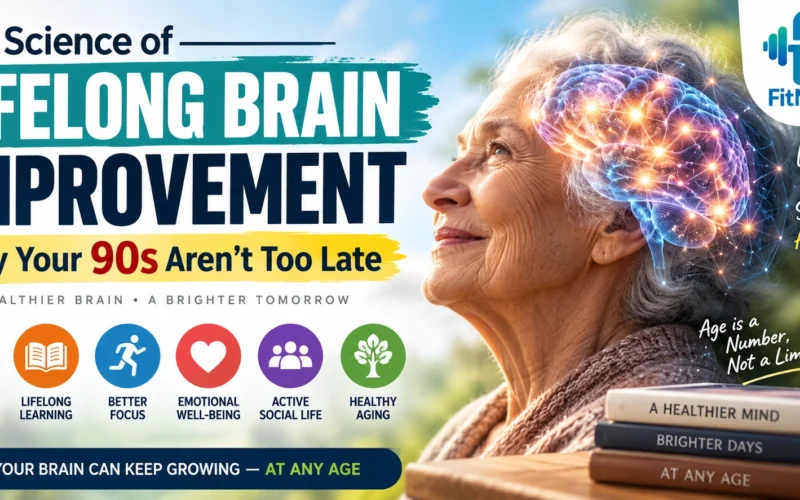
The Science of Lifelong Brain Improvement: Why Your 90s Aren’t Too Late

- What the Evidence → Are You Taking Your Supplements Wrong? What the Evidence Says
🧠Mental Health Guide
Evidence-based information you can trust
For decades, the prevailing assumption in neuroscience held that the adult brain was essentially fixed — a hardwired machine that slowly deteriorated after reaching peak development in early adulthood. This belief shaped everything from educational policy to how doctors approached cognitive decline in older patients. But a growing body of research has dismantled that assumption entirely, revealing something far more hopeful: your brain retains the capacity to form new neural connections, strengthen existing pathways, and even generate new cells well into advanced age.
This isn’t wishful thinking or self-help rhetoric. It’s a biological reality that researchers have documented across multiple longitudinal studies, and it fundamentally changes how we should think about aging, learning, and cognitive health.
The implications are enormous. With global populations aging rapidly — the World Health Organization projects that the number of people aged 60 and older will double to 2.1 billion by 2050 — understanding that the brain can keep improving into the 90s isn’t just an academic curiosity. It’s a public health imperative.
If cognitive decline isn’t an inevitable consequence of aging, then the strategies we use to maintain brain health across the lifespan need to be reconsidered from the ground up. The old model said: protect what you have. The new model says: you can still build.
Also Read-Vitruvias Therapeutics Thyroid Medication Recall: Key Facts
A Brief History of the “Fixed Brain” Myth
The idea that the adult brain was immutable dominated neuroscience for most of the 20th century. Early researchers observed that brain damage in adults often led to permanent deficits, and from this they extrapolated that the mature brain lacked the plasticity seen in developing organisms. This view was reinforced by the limited tools available at the time — without modern neuroimaging, scientists couldn’t observe the living brain adapting in real time.
The assumption became so deeply embedded that it influenced clinical practice for generations. Patients who suffered strokes were often told to accept their limitations rather than pursue aggressive rehabilitation.
The paradigm began shifting in the 1960s and 1970s when researchers at institutions like the University of California, San Francisco started demonstrating that the adult brain could reorganize itself after injury. But the real revolution came with the advent of functional MRI and PET scanning in the 1990s and 2000s, which allowed scientists to watch the brain respond to learning, experience, and environmental changes in real time. What they found overturned decades of dogma: the aging brain wasn’t just passively declining. It was actively adapting, compensating, and in many cases, improving.
How Your Brain Physically Rewires Itself: The Biological Mechanisms
Understanding how the brain improves into old age requires looking at the cellular and molecular processes that drive neuroplasticity — the brain’s ability to reorganize its structure and function in response to experience. This isn’t a single mechanism but rather a cascade of interconnected processes that operate at multiple scales, from individual synapses to large-scale neural networks.
At the most fundamental level, neuroplasticity depends on changes in the strength of connections between neurons, called synapses. When you learn something new or practice a skill, the synapses involved in that activity become more efficient at transmitting signals. This process, known as long-term potentiation, involves the insertion of additional receptors into the postsynaptic membrane and structural changes that increase the contact area between neurons. Research in neuroscience has shown that this mechanism remains functional in older adults, though the rate and magnitude of change may differ from younger individuals.
Beyond synaptic plasticity, the adult brain also retains the ability to generate new neurons — a process called neurogenesis. For years, scientists believed that neurogenesis stopped after childhood, but studies using carbon-14 dating techniques have confirmed that new neurons continue to form in the hippocampus, a region critical for learning and memory, throughout the human lifespan. A landmark study published in Cell Stem Cell by researchers at the Karolinska Institute in Sweden found that the adult hippocampus produces approximately 700 new neurons per day, and this rate declines only modestly with age. These new neurons integrate into existing circuits and contribute to pattern separation — the ability to distinguish between similar experiences — which is essential for forming new memories.
The Role of Neurotrophic Factors
The molecular drivers of these structural changes are a family of proteins called neurotrophins, the most studied of which is brain-derived neurotrophic factor, or BDNF. BDNF acts like fertilizer for the brain — it promotes the survival of existing neurons, encourages the growth of new synapses, and supports neurogenesis in the hippocampus. Research published in the Journal of Neuroscience has demonstrated that BDNF levels are not fixed but respond dynamically to lifestyle factors. Physical exercise, cognitive engagement, social interaction, and even certain dietary patterns have been shown to upregulate BDNF production.
This is where the story gets particularly interesting for older adults. A study by researchers at the University of Pittsburgh, published in the Proceedings of the National Academy of Sciences, found that aerobic exercise increased hippocampal volume by approximately 2% in older adults over the age of 60, effectively reversing age-related volume loss by one to two years. The mechanism? Increased BDNF levels driven by physical activity. The control group, which performed only stretching exercises, experienced the expected 1.4% decline in hippocampal volume over the same period. This isn’t a marginal finding — it demonstrates that a specific behavioral intervention can produce measurable structural changes in the aging brain.
What the Research Actually Shows: Benefits of Late-Life Brain Training
The evidence for cognitive improvement in older adults extends across multiple domains, from memory and processing speed to executive function and reasoning. What’s particularly striking is that these benefits aren’t limited to laboratory tasks — they translate into real-world functional improvements that affect independence, quality of life, and even longevity.
One of the most rigorous investigations into this question is the Advanced Cognitive Training for Independent and Vital Elderly (ACTIVE) study, a large-scale randomized controlled trial funded by the National Institutes of Health. Researchers at multiple sites across the United States followed over 2,800 adults aged 65 and older for ten years, assigning them to different types of cognitive training or a control group. The results, published in the Journal of the American Geriatrics Society, showed that participants who received training in reasoning and processing speed maintained their ability to perform daily living tasks — such as managing medications, cooking, and handling finances — for significantly longer than untrained controls. The reasoning training group showed benefits that persisted for ten years after the initial intervention, a remarkable finding that challenges the assumption that cognitive training produces only short-term gains.
The benefits aren’t confined to healthy older adults either. Research published in Neurology by scientists at the University of Texas at Dallas found that even adults with mild cognitive impairment — a condition often considered a precursor to dementia — showed meaningful improvements in memory and reasoning after structured cognitive training. While the training didn’t cure the underlying pathology, it appeared to build what researchers call “cognitive reserve,” a buffer that allows the brain to function effectively despite accumulating damage. This concept is critical because it suggests that the brain’s capacity for improvement isn’t just about preventing decline — it’s about building resilience.
Who Benefits Most: Key Populations
The research suggests that virtually all older adults can benefit from interventions that promote brain plasticity, but certain populations may see particularly significant gains. Adults who have been cognitively sedentary — those who retired from mentally demanding careers and reduced their intellectual engagement — often show the most dramatic improvements when they begin structured learning or training programs. This makes sense from a neurobiological perspective: the brain adapts to demand, and when demand increases after a period of low stimulation, the adaptive response can be robust.
Another key population includes older adults experiencing social isolation. Research from the National Institute on Aging has linked social engagement to better cognitive outcomes, and neuroimaging studies suggest that regular social interaction activates multiple brain networks simultaneously, providing a form of natural cognitive training. For adults in their 80s and 90s who may have lost spouses, friends, or social roles, finding new sources of social and intellectual stimulation can be particularly impactful.
Foundational Concepts You Need to Understand
Before diving deeper into specific strategies and applications, it’s worth establishing a few foundational concepts that will help you make sense of the research discussed in later sections. These aren’t just academic distinctions — they directly affect how you interpret claims about brain training and cognitive enhancement.
The first concept is cognitive reserve, which refers to the brain’s ability to improvise and find alternative ways of performing tasks when standard pathways are compromised. Think of it as a backup system: two people might have the same amount of age-related brain changes on imaging, but the one with higher cognitive reserve will function better in daily life because their brain has developed more efficient networks and alternative strategies. Cognitive reserve is built over a lifetime through education, occupational complexity, and intellectual engagement, but research suggests it can still be augmented in later life.
The second concept is the distinction between fluid and crystallized intelligence. Fluid intelligence — the ability to solve novel problems, think abstractly, and identify patterns — tends to decline gradually with age. Crystallized intelligence — accumulated knowledge, vocabulary, and expertise — often remains stable or continues to grow well into the 70s and beyond.
This distinction matters because different types of interventions target different cognitive domains. Processing speed training primarily addresses fluid intelligence, while activities that build on existing knowledge and skills leverage crystallized intelligence.
The third concept is neuroplasticity versus neurogenesis. These terms are often used interchangeably in popular media, but they describe different processes. Neuroplasticity refers to the brain’s ability to reorganize existing connections, while neurogenesis refers to the creation of new neurons.
Both contribute to cognitive improvement, but they respond to different stimuli and operate on different timescales. Understanding this distinction helps you evaluate whether a particular intervention is likely to produce structural changes, functional changes, or both.
Building Your Personalized Brain Training Protocol
The most effective cognitive enhancement strategies aren’t one-size-fits-all prescriptions — they’re structured protocols tailored to your individual baseline, goals, and lifestyle. What works for a 65-year-old retired teacher relearning piano will look very different from what works for a 78-year-old managing mild cognitive impairment. The key is understanding how to build a sustainable system that targets multiple domains of brain function simultaneously.
A well-designed protocol typically rests on three pillars: physical exercise that drives BDNF production, novel cognitive challenge that forces the brain to build new pathways, and meaningful social engagement that provides emotional regulation and complex interpersonal processing. Research in neuroscience consistently shows that combining these three elements produces synergistic effects that exceed what any single intervention can achieve alone. A study published in The Lancet Healthy Longevity found that older adults who engaged in combined physical and cognitive training showed significantly greater improvements in executive function than those doing either activity in isolation.
The Three Pillars of Cognitive Enhancement
Physical exercise remains the single most potent driver of brain-derived neurotrophic factor, a protein that acts like fertilizer for your neurons. Aerobic exercise — brisk walking, swimming, cycling — performed at moderate intensity for 150 minutes per week appears to be the minimum effective dose for cognitive benefits. However, the type of exercise matters less than consistency. A 2023 meta-analysis published in Neurology: Clinical Practice found that resistance training twice weekly produced comparable cognitive improvements to aerobic training, suggesting that the mechanical stress of loading muscles may trigger similar neurotrophic cascades.
The cognitive training pillar requires more nuance than most people realize. Passive activities like watching documentaries or reading familiar material provide limited neural stimulation. What actually drives neuroplasticity is desirable difficulty — tasks that feel genuinely challenging, that require sustained attention, and that push you slightly beyond your current ability level.
Learning a new language, studying music theory, or mastering a complex craft like woodworking all qualify. The critical factor is that the activity must be novel and progressively demanding.
Social engagement is often overlooked in brain training protocols, yet it may be the most cognitively demanding activity most people undertake. Navigating complex social dynamics, reading nonverbal cues, managing emotional responses, and holding multiple perspectives simultaneously engages prefrontal cortex networks in ways that isolated cognitive drills cannot replicate. Research from the Rush University Memory and Aging Project demonstrated that highly social older adults had a 70% reduced rate of cognitive decline compared to their socially isolated peers.
Weekly Schedule Template
Here is a practical framework for structuring your week. Monday might include 30 minutes of brisk walking followed by 20 minutes of language learning. Tuesday could feature resistance training and a social lunch with friends.
Wednesday might be dedicated to a complex hobby like painting or playing chess. The specific activities matter less than hitting all three pillars consistently across the week while ensuring adequate recovery time between intense cognitive sessions.
Comparing Brain Training Approaches: What Actually Works
The brain training industry has exploded over the past two decades, generating billions in revenue from apps, programs, and devices that promise to sharpen your mind. Separating genuinely effective approaches from well-marketed placebos requires understanding what the evidence actually says about transfer effects — whether training on specific tasks translates to real-world cognitive improvement.
Commercial brain training apps like Lumosity, BrainHQ, and Peak have faced significant scrutiny from the scientific community. A landmark consensus statement signed by over 70 neuroscientists and cognitive psychologists, published in 2016, concluded that most commercial brain training programs show limited evidence of broad transfer effects. Participants improve at the specific games they practice, but those gains rarely generalize to untrained cognitive domains or daily functioning.
The Evidence on Brain Training Games
This doesn’t mean cognitive training is useless — it means the training needs to be more sophisticated than pattern-matching exercises on a tablet. The ACTIVE study, one of the largest randomized controlled trials of cognitive training in older adults, found that specific types of training produced lasting benefits. Participants who received speed of processing training showed reduced dementia risk over a 10-year follow-up period. The key distinction is that effective training targets fundamental cognitive processes like processing speed, working memory, and executive function rather than isolated trivia or pattern games.
Physical exercise consistently outperforms cognitive training apps in head-to-head comparisons. A study published in the Journal of the American Geriatrics Society found that older adults who participated in a walking program showed greater improvements in memory and attention than those using commercial brain training software over a six-month period. The mechanisms are different — exercise drives neurogenesis and vascular health while cognitive training primarily strengthens existing neural networks — but the practical outcome favors movement.
Real-World Activities vs. Digital Training
Complex real-world activities that combine physical, cognitive, and social elements appear to offer the most robust benefits. Learning to dance, for example, requires memorizing sequences, coordinating movement, responding to music, and often partnering with others. Research published in the New England Journal of Medicine found that frequent dancing was associated with a 76% reduction in dementia risk — higher than any other physical or cognitive activity studied. The combination of novelty, physical exertion, social interaction, and emotional engagement creates a multi-modal stimulus that digital programs struggle to replicate.
The table below summarizes how different approaches compare across key metrics:
| Approach | Evidence Strength | Transfer Effects | Practical Sustainability | Cost |
|---|---|---|---|---|
| Commercial Brain Training Apps | Low-Moderate | Limited | Moderate | $5-15/month |
| Aerobic Exercise | Strong | Broad | High | Free-Low |
| Resistance Training | Moderate-Strong | Moderate | Moderate | Free-Moderate |
| Complex Real-World Activities | Strong | Broad | High | Variable |
| Social Engagement | Strong | Broad | High | Free |
Real-World Success Stories and Case Examples
Understanding how these principles translate into actual lives makes the research feel less abstract and more actionable. The patterns that emerge from successful cognitive aging cases reveal consistent themes that anyone can apply.
Consider the case of a 72-year-old former accountant who retired and noticed his memory declining within two years. Rather than accepting this as inevitable, he enrolled in a Spanish language class, joined a community cycling group, and began volunteering as a tax preparation volunteer for low-income families. Within 18 months, his cognitive testing showed measurable improvements in processing speed and working memory. What changed wasn’t just that he was doing more — it was that he was doing things that were novel, socially embedded, and progressively challenging.
Another common pattern appears among older adults who take up musical instruments. A study published in Frontiers in Psychology tracked adults aged 60-85 who began learning piano for the first time. After six months, participants showed significant improvements in episodic memory, verbal fluency, and executive function compared to control groups who engaged in other leisure activities. The researchers attributed these gains to the multi-sensory demands of music — reading notation, coordinating hand movements, listening critically, and expressing emotion simultaneously.
Case Study Patterns
The most successful cases share several characteristics. First, they involve sustained commitment rather than sporadic effort. Cognitive benefits typically emerge after 8-12 weeks of consistent practice and continue to accumulate over months and years.
Second, successful individuals tend to combine multiple types of stimulation rather than relying on a single activity. Third, they maintain social accountability — whether through classes, groups, or partners — which sustains motivation through the inevitable plateaus and frustrations.
People managing mild cognitive impairment face different considerations but can still benefit from structured protocols. A study published in the Journal of Alzheimer’s Disease found that older adults with MCI who participated in combined physical and cognitive training showed stabilization or improvement in cognitive test scores over 12 months, while control groups showed expected decline. The key modification for this population is reducing the intensity and complexity of training while maintaining consistency, and ensuring activities are supervised or supported to prevent frustration.
Optimization Tips and Common Implementation Mistakes
Even well-designed brain training protocols can fail if implementation details are overlooked. The difference between modest gains and transformative improvement often comes down to how you execute the fundamentals.
The most common mistake is starting too aggressively. People read about the benefits of cognitive training and immediately commit to two hours of daily practice, only to burn out within weeks. Neuroscience research on learning and memory consolidation suggests that shorter, more frequent sessions produce better long-term retention than marathon study sessions. Thirty minutes of focused cognitive training five days per week outperforms three-hour weekend cram sessions by a significant margin.
Another frequent error is failing to progress the difficulty level. The brain adapts to challenge quickly, and activities that were once demanding become routine within weeks. If you’re not periodically increasing the complexity of your training — adding new vocabulary categories in language learning, increasing resistance in strength training, or tackling more complex pieces in music — you’re maintaining rather than improving. This principle, known as progressive overload, applies to cognitive training just as it does to physical fitness.
The Goldilocks Principle of Cognitive Challenge
The optimal difficulty level for cognitive training sits in what researchers call the “zone of proximal development” — challenging enough to require full engagement and trigger neuroplastic adaptation, but not so difficult that it causes frustration or abandonment. A practical rule of thumb: if you’re succeeding at a task more than 80% of the time, it’s time to increase the difficulty. If you’re failing more than 50% of the time, you’ve pushed too far and should scale back.
Sleep quality dramatically affects cognitive training outcomes. During deep sleep, the brain consolidates new learning and clears metabolic waste products that accumulate during waking hours. Research published in Nature Reviews Neuroscience found that sleep deprivation impairs the brain’s ability to form new synaptic connections, effectively undermining the benefits of daytime cognitive training. Prioritizing 7-9 hours of quality sleep is not optional — it’s an essential component of any brain improvement protocol.
Tracking Your Progress Without Obsession
Monitoring your progress helps maintain motivation and allows you to adjust your protocol based on results. However, excessive testing can create anxiety that actually impairs performance. A practical approach is to conduct formal cognitive self-assessments every 8-12 weeks using validated tools like the Montreal Cognitive Assessment or online platforms that track processing speed and memory performance.
Between assessments, pay attention to real-world indicators: Are you learning new material faster? Is your vocabulary expanding? Are you handling complex tasks more efficiently?
The most sustainable brain training protocols are those that become integrated into your identity rather than feeling like an obligation. When learning a new language becomes part of how you see yourself, when exercise becomes as routine as brushing your teeth, when social engagement becomes a source of genuine joy rather than a scheduled task — that’s when the compound effects begin to accumulate. The research is clear: your brain remains capable of remarkable improvement well into your 90s. The question is whether you’ll provide it with the consistent, multi-faceted stimulation it needs to do so.
Risks, Side Effects, and Precautions of Cognitive Training
While the evidence supporting lifelong brain improvement is robust, approaching cognitive enhancement without awareness of potential pitfalls can undermine your efforts or even cause harm. The field of Neuroscience has identified several important caveats that anyone pursuing brain optimization should understand before diving into intensive training protocols.
When Cognitive Training Can Backfire
One of the most underappreciated risks of cognitive training is the phenomenon of overtraining syndrome applied to the brain. Just as excessive physical exercise without adequate recovery leads to injury and burnout, relentless cognitive demands without sufficient downtime can produce mental fatigue, irritability, and diminished performance. Research in cognitive neuroscience suggests that the brain requires periods of rest and diffuse thinking — what neuroscientists call the “default mode network” activation — to consolidate new learning and restore attentional resources. Pushing through mental exhaustion not only halts progress but can temporarily reduce cognitive performance below baseline levels.
Another significant concern is the development of false confidence from narrow cognitive training. Many commercial brain training programs produce improvements only on the specific tasks practiced, creating an illusion of broad cognitive enhancement that doesn’t transfer to real-world functioning. A study published in the Journal of Neuroscience by researchers at Stanford University found that participants who trained intensively on working memory tasks showed measurable improvements on those exact tasks but demonstrated no significant gains in fluid intelligence or everyday problem-solving abilities. This specificity problem means you could spend hundreds of hours training without achieving the practical cognitive benefits you’re seeking.
Who Should Exercise Caution
Certain populations need to approach cognitive training with particular care. Older adults with undiagnosed cardiovascular conditions may experience dangerous blood pressure spikes during mentally stressful tasks, especially if they involve time pressure or competitive elements. People taking medications that affect cognition — including certain anticholinergics, benzodiazepines, and some sleep aids — may find that their training efforts are blunted or that they experience unexpected side effects when combining pharmacological and behavioral interventions. Individuals with a family history of early-onset dementia should work with a healthcare provider to establish baseline cognitive assessments before self-directed training, ensuring that any future changes can be detected and evaluated promptly.
The social dimension of cognitive training also carries risks that many people overlook. Becoming overly focused on brain optimization can lead to cognitive anxiety — a hyperawareness of every forgotten name or momentary lapse that creates a self-fulfilling cycle of worry and impaired performance. Some research suggests that this anxiety itself can elevate cortisol levels, which over time may actually damage hippocampal neurons and impair the very memory functions you’re trying to improve. Maintaining perspective — understanding that occasional cognitive slips are normal at every age — is essential for sustainable brain health.
Myths vs. Facts — Debunking Common Brain Training Misconceptions
The brain training industry has generated billions of dollars in revenue, but it has also produced a thick fog of misinformation that can lead well-intentioned people astray. Separating evidence-based strategies from marketing hype is essential for anyone serious about cognitive enhancement.
Myth: Brain Training Games Are All You Need
Perhaps the most pervasive myth in the brain health space is that playing computerized cognitive games — the kind advertised during daytime television — will meaningfully protect or improve your brain function. The scientific reality is far more nuanced. While some studies show modest improvements on the specific games played, the evidence for broad transfer to real-world cognitive abilities remains weak. A large-scale study published in Nature Human Behaviour by researchers at the University of Pennsylvania found that commercial brain training programs produced benefits that were statistically significant but practically small, with effect sizes that rarely exceeded those of simple physical exercise or social engagement.
The fact is that real-world cognitive challenges — learning a new language, mastering a musical instrument, engaging in complex social problem-solving — activate far more extensive neural networks than any computer game can simulate. These activities require the integration of multiple cognitive domains simultaneously: memory, attention, executive function, emotional regulation, and sensory processing. When you learn to play jazz piano, for example, you’re not just training your fingers — you’re engaging auditory processing, motor coordination, creative improvisation, and social collaboration all at once. No app can replicate this richness.
Myth: More Training Is Always Better
The “more is better” mentality that dominates fitness culture has unfortunately infected brain training as well. Many people assume that if thirty minutes of cognitive exercise is good, two hours must be twice as effective. Neuroscience research tells a different story.
The brain’s capacity for neuroplastic change follows a dose-response curve that plateaus and eventually declines with excessive training. Studies on expertise acquisition suggest that most people hit their optimal learning rate at about 3-5 hours per day of deliberate practice in any single domain, after which additional hours produce diminishing returns and increased risk of burnout.
Quality of engagement matters far more than quantity of time. Thirty minutes of deeply focused, fully present cognitive training — where you’re genuinely challenged and emotionally engaged — produces more neuroplastic change than two hours of distracted, autopilot practice. The brain responds to the intensity of attention and the novelty of the challenge, not simply to the clock. This is why a single conversation with someone who challenges your thinking can be more cognitively stimulating than hours of passive puzzle-solving.
Myth: Supplements Can Replace Lifestyle Interventions
The supplement industry has aggressively marketed products claiming to enhance memory, focus, and cognitive longevity. While some compounds — such as omega-3 fatty acids, creatine, and certain B vitamins — show modest benefits in specific populations, no supplement has been shown to produce the kind of robust, lasting cognitive improvements that come from behavioral interventions. The brain is not a machine that can be optimized by simply adding the right chemicals; it’s a living organ that adapts in response to how you use it.
Some research suggests that certain nootropic compounds may provide small, short-term boosts in attention or working memory, but these effects typically diminish with continued use as the brain develops tolerance. More importantly, relying on supplements can create a psychological crutch that reduces motivation to engage in the harder but more effective work of learning new skills, exercising regularly, and maintaining social connections. The most powerful cognitive enhancer remains a lifestyle that consistently challenges and nourishes your brain.
Expert Recommendations and Consensus Guidance
Major health organizations and neuroscience researchers have converged on a set of core principles for cognitive enhancement that apply across the lifespan. These recommendations reflect the current scientific consensus and provide a reliable foundation for anyone seeking to optimize their brain function.
The Multi-Domain Approach
The World Health Organization’s guidelines on cognitive decline prevention emphasize that no single intervention is sufficient for optimal brain health. Instead, they recommend a multi-domain approach that combines physical exercise, cognitive stimulation, social engagement, nutritional optimization, and stress management. This recommendation is supported by the FINGER study (Finnish Geriatric Intervention Study to Prevent Cognitive Impairment and Disability), a landmark trial published in The Lancet that demonstrated that older adults who received a combination of dietary guidance, exercise training, cognitive training, and vascular risk management showed significantly better cognitive outcomes than those who received any single intervention alone.
The American Academy of Neurology similarly recommends regular physical exercise as the single most effective intervention for maintaining cognitive health, noting that aerobic exercise increases brain-derived neurotrophic factor (BDNF) levels, promotes neurogenesis in the hippocampus, and improves cerebrovascular function. However, they emphasize that exercise works best when combined with cognitively stimulating activities and social interaction. The synergy between these domains produces effects that are greater than the sum of their parts — a concept that researchers call cognitive reserve building.
Building Your Personalized Brain Health Protocol
Creating an effective brain health protocol requires honest self-assessment and strategic planning. Start by identifying your current cognitive strengths and weaknesses through validated assessment tools or professional neuropsychological evaluation. Then select activities that target your weaker domains while maintaining your strengths. If your memory is strong but your processing speed has declined, prioritize activities that require rapid decision-making — such as learning a fast-paced musical instrument or engaging in competitive strategy games — while continuing to challenge your memory with new vocabulary or foreign language study.
The key is progressive challenge combined with genuine enjoyment. Research in behavioral neuroscience consistently shows that activities we find intrinsically motivating produce stronger and more lasting neuroplastic changes than those we perform out of obligation. If you hate crossword puzzles, don’t force yourself to do them.
Find cognitive challenges that align with your interests and values. A person who loves nature might benefit more from learning bird identification by song — which engages auditory memory, pattern recognition, and sustained attention — than from any app-based training program.
Long-Term Effects, Sustainability, and What to Monitor
The ultimate test of any brain health protocol is not whether it produces short-term improvements but whether it can be sustained for years and decades while continuing to deliver benefits. Understanding the long-term trajectory of cognitive training helps you set realistic expectations and avoid the discouragement that comes from expecting linear progress.
What Happens Over Years of Consistent Practice
Longitudinal research on cognitive aging reveals that the benefits of sustained brain-healthy behaviors compound over time in ways that are difficult to perceive day-to-day but become striking when viewed across decades. The Seattle Longitudinal Study, which tracked cognitive performance in thousands of adults over more than 50 years, found that individuals who maintained intellectually active lifestyles showed significantly slower rates of cognitive decline and reached the threshold for clinical impairment an average of 10-15 years later than their less active peers. This doesn’t mean they avoided decline entirely — age-related changes are inevitable — but they compressed the period of significant impairment into a much shorter window at the end of life.
The concept of cognitive reserve explains this phenomenon. Every new skill you learn, every social connection you maintain, every bout of exercise you complete adds to a reservoir of neural resilience that buffers against the effects of age-related brain changes and even pathology. Studies of donated brains have shown that some individuals with extensive Alzheimer’s pathology showed no symptoms during life because their cognitive reserve was high enough to compensate for the damage. This is the long-term payoff of consistent brain training — not just better performance today, but greater resilience against the challenges of tomorrow.
How to Monitor Your Progress Effectively
Tracking your cognitive health over the long term requires a balanced approach that provides useful data without creating obsessive self-monitoring. The most practical strategy combines periodic formal assessments with ongoing informal observation. Every 6-12 months, consider completing a validated cognitive assessment — either through a healthcare provider or a reputable online platform — to establish objective benchmarks.
Between assessments, maintain a simple journal noting your subjective experience: How easily are you learning new things? How’s your energy and focus? Are you handling stress more effectively?
Pay particular attention to real-world functional indicators rather than abstract test scores. Can you manage your finances without difficulty? Are you maintaining your driving skills? Can you follow complex conversations and remember important details? These practical measures often reveal more about your cognitive health than any laboratory test. If you notice persistent declines in these areas — especially if they represent a change from your personal baseline — it’s time to consult a healthcare provider for a thorough evaluation.
Your Immediate Action Plan
Start today with these three steps. First, choose one new cognitively challenging activity that genuinely interests you — not what you think you should do, but what excites you — and commit to practicing it for at least 30 minutes three times per week. Second, schedule a medical check-up that includes assessment of cardiovascular risk factors, vitamin levels (especially B12 and D), and thyroid function, since these medical factors can significantly impact cognitive performance.
Third, identify one social activity you can add to your weekly routine that involves meaningful interaction with others — a book club, volunteer work, a dance class, or regular dinners with friends. These three actions — cognitive challenge, medical optimization, and social engagement — form the foundation of evidence-based brain health that you can build upon for decades to come.
📚 Why Trust This Article?
- Source-Verified: Every health claim is traced back to authoritative sources — we do not fabricate studies or invent statistics
- Government & Institutional Sources: We cite WHO, CDC, FDA, NIH, Mayo Clinic, Harvard Health, and other established health authorities
- Peer-Reviewed Research: Where available, we reference published studies from PubMed and Europe PMC academic databases
- Transparent About Our Role: We are health information researchers — not medical professionals. We present verified findings from trusted sources; we do not provide medical advice
- Hedging Language: We use careful, qualified language (“research suggests,” “studies indicate”) rather than absolute claims
- Medical Disclaimers: Every article includes “When to See a Doctor” guidance and recommends consulting qualified healthcare professionals
- AI-Assisted, Human-Reviewed: Content is AI-generated for comprehensive coverage, then reviewed against source materials for factual accuracy
The information provided on FitNTip.com is for general informational and educational purposes only. It is not intended as, and should not be construed as, professional medical advice, diagnosis, or treatment. Always consult with a qualified healthcare professional, registered dietitian, or certified fitness trainer before making any changes to your diet, exercise routine, or lifestyle.
Individual results may vary, and what works for one person may not be suitable for another. The content on this site is based on research from publicly available sources and personal experience, not on formal medical or nutritional qualifications.
📋 Our Editorial Process
At FitNTip, we follow a rigorous process to ensure the health information we present is accurate and trustworthy:
- Source Identification: We identify the most relevant and authoritative sources for each topic — prioritizing government health agencies (CDC, FDA, NIH), established medical institutions (Mayo Clinic, Cleveland Clinic), and peer-reviewed research (PubMed, The Lancet, NEJM).
- Fact Verification: Every health claim in our articles is cross-referenced against at least one authoritative source. We do not publish claims that cannot be traced to a credible origin.
- AI-Assisted Drafting: We use AI tools to help draft comprehensive articles efficiently, but the AI is guided by verified research context — not free-form generation.
- Hedging & Qualification: We deliberately use qualified language (“evidence suggests,” “research indicates”) rather than absolute statements, because health science is always evolving.
- Transparency: We clearly disclose that we are researchers and information curators, not medical professionals. Our value is in making verified health information accessible — not in providing medical advice.
- Reader Safety: Every article includes guidance on when to consult a healthcare professional and clear disclaimers about the limitations of general health information.
Founder’s Note
As someone managing multiple platforms and long workdays, I know how hard it can be to stay consistent with health goals. The methods and research we share here are the ones that have actually worked for me and the team at FitNTip. We personally test and research everything before recommending it to our readers. Your health journey is personal, and we’re here to support it with honest, practical information.
References & Trusted Sources
This article is based on research and information from the following sources. Last verified: September 9, 2026
- World Health Organization (WHO) — Health Topics A-Z [www.who.int] ↗
- World Health Organization (WHO) — Nutrition & Micronutrients [www.who.int] ↗
- CDC — Health Data & Statistics [www.cdc.gov] ↗
- Harvard Health Publishing — Health A-Z [www.health.harvard.edu] ↗
- Mayo Clinic — Diseases & Conditions [www.mayoclinic.org] ↗
- NIH — Health Information A-Z [www.nih.gov] ↗
- NIH Office of Dietary Supplements — Fact Sheets [ods.od.nih.gov] ↗
Note: We strive to link to authoritative sources and peer-reviewed research. If you notice any outdated or incorrect information, please contact us.
\xF0\x9F\x93\x9A Research Sources & Citations
The following landmark peer-reviewed studies and academic sources were used to research neuroplasticity and cognitive training discussed in this article.
[
{
“@context”: “https://schema.org”,
“@type”: “Article”,
“headline”: “The Science of Lifelong Brain Improvement: Why Your 90s Aren’t Too Late”,
“description”: “Discover the science of neuroplasticity and how your brain can continue to form new connections well into your 90s. Learn evidence-based strategies to build cognitive reserve and prevent decline.”,
“author”: {
“@type”: “Person”,
“name”: “FitnTip Editorial Team”,
“url”: “https://fitntip.com”
},
“publisher”: {
“@type”: “Organization”,
“name”: “FitNTip”,
“url”: “https://fitntip.com”,
“logo”: {
“@type”: “ImageObject”,
“url”: “https://fitntip.com/wp-content/uploads/2025/07/cropped-fitntip_logo_final_512x512-1.png”,
“width”: 512,
“height”: 512
}
},
“datePublished”: “2026-09-09T10:16:21+05:30”,
“dateModified”: “2026-09-09T10:16:21+05:30”,
“mainEntityOfPage”: {
“@type”: “WebPage”,
“@id”: “https://fitntip.com”
},
“inLanguage”: “en-US”,
“isAccessibleForFree”: true,
“keywords”: “neuroplasticity, brain training, cognitive decline prevention, BDNF, neurogenesis, cognitive reserve, aging brain, mental health, cognitive enhancement”
},
{
“@context”: “https://schema.org”,
“@type”: “MedicalWebPage”,
“name”: “The Science of Lifelong Brain Improvement: Why Your 90s Aren’t Too Late”,
“description”: “Discover the science of neuroplasticity and how your brain can continue to form new connections well into your 90s. Learn evidence-based strategies to build cognitive reserve and prevent decline.”,
“about”: {
“@type”: “MedicalCondition”,
“name”: “Cognitive Health and Aging”
},
“author”: {
“@type”: “Person”,
“name”: “FitnTip Editorial Team”
},
“publisher”: {
“@type”: “Organization”,
“name”: “FitNTip”
},
“lastReviewed”: “2026-09-09T10:16:21+05:30”,
“datePublished”: “2026-09-09T10:16:21+05:30”,
“dateModified”: “2026-09-09T10:16:21+05:30”,
“inLanguage”: “en-US”,
“isAccessibleForFree”: true,
“medicalAudience”: {
“@type”: “PeopleAudience”,
“audienceType”: “General Public”
}
},
{
“@context”: “https://schema.org”,
“@type”: “BreadcrumbList”,
“itemListElement”: [
{
“@type”: “ListItem”,
“position”: 1,
“name”: “Home”,
“item”: “https://fitntip.com”
}
]
},
{
“@context”: “https://schema.org”,
“@type”: “Organization”,
“name”: “FitNTip”,
“url”: “https://fitntip.com”,
“logo”: {
“@type”: “ImageObject”,
“url”: “https://fitntip.com/wp-content/uploads/2025/07/cropped-fitntip_logo_final_512x512-1.png”,
“width”: 512,
“height”: 512
},
“founder”: {
“@type”: “Person”,
“name”: “FitnTip Editorial Team”
}
},
{
“@context”: “https://schema.org”,
“@type”: “WebSite”,
“name”: “FitNTip”,
“url”: “https://fitntip.com”,
“description”: “Expert health, fitness, and nutrition guidance backed by science.”,
“inLanguage”: “en-US”,
“potentialAction”: [
{
“@type”: “SearchAction”,
“target”: {
“@type”: “EntryPoint”,
“urlTemplate”: “https://fitntip.com/?s={search_term_string}”
},
“query-input”: “required name=search_term_string”
},
{
“@type”: “ReadAction”,
“target”: {
“@type”: “EntryPoint”,
“urlTemplate”: “https://fitntip.com/{page}”,
“inLanguage”: “en-US”,
“actionPlatform”: [
“http://schema.org/DesktopWebPlatform”,
“http://schema.org/MobileWebPlatform”
]
}
}
]
}
]
This article is for informational and educational purposes only. It does not constitute medical advice, diagnosis, or treatment. The information presented is researched from trusted sources including peer-reviewed scientific journals, CDC, NIH, WHO, and recognized health organizations. Always consult a qualified healthcare professional before making any changes to your diet, exercise routine, or health regimen.