PCOS and Diet: What Research Says About Eating Patterns and Lifestyle

Medical Disclaimer: This article is for general information only. It is not medical advice, and it does not replace evaluation, diagnosis, or treatment by a qualified clinician. It does not prescribe any diet, supplement, medication, or treatment plan. Talk to your clinician before making changes to your eating, activity, medication, or supplement routine.
By C.K. Gupta, research writer. I am a research writer, not a doctor or other medical professional. This article summarises what authoritative health organisations and peer-reviewed reviews report about polycystic ovary syndrome (PCOS) and eating patterns. It is a research summary, not personal experience, and it makes no promise that any eating pattern will reverse, cure, or treat PCOS.
If you searched for a plan that promises to reverse PCOS, this article will not give you one – because no diet has been shown to do that. What research does offer is more modest and more useful: evidence about how eating patterns and other lifestyle factors relate to the metabolic and hormonal features that often accompany PCOS, what that evidence can and cannot prove, and which questions are worth raising with a clinician.
Key Research Points at a Glance
| Topic | What Research Says |
|---|---|
| How common is PCOS? | WHO estimates PCOS affects 10–13% of reproductive-aged women; up to 70% of women with PCOS worldwide are undiagnosed. The U.S. Office on Women’s Health puts it at about 1 in 10 women of childbearing age. |
| Is there a cure? | According to WHO, there is currently no cure for PCOS. Management focuses on symptoms and metabolic health. |
| Is there one best diet? | No single diet is proven best. Researchers study broad, balanced eating patterns; the evidence is low quality. |
| Does lifestyle change help? | A 2019 Cochrane review found lifestyle intervention may improve free androgen index, weight, and BMI (low-quality evidence); its effect on glucose tolerance is uncertain. |
| Are cysts required for diagnosis? | No. Ovarian cysts are not required for a PCOS diagnosis; the Rotterdam criteria require 2 of 3 features. |
What PCOS Is
Polycystic ovary syndrome (PCOS) is a common hormonal condition that affects people with ovaries, most often during the reproductive years. The World Health Organization (WHO) estimates that PCOS affects 10-13% of women of reproductive age, and that up to 70% of cases worldwide remain undiagnosed. The U.S. Office on Women’s Health puts it similarly: PCOS affects about 1 in 10 women of childbearing age.
PCOS is not a single symptom, and it does not look the same in everyone. Its name can be misleading. Many people with PCOS do not have cysts on their ovaries, and ovarian cysts alone do not mean someone has PCOS. The polycystic in the name refers to small, immature follicles that can appear on an ultrasound when ovulation does not complete normally.
How PCOS Is Diagnosed
There is no single blood test or scan that by itself diagnoses PCOS. Clinicians generally use the Rotterdam criteria: a diagnosis is made when at least two of three features are present after other causes have been ruled out.
- Irregular or absent ovulation – menstrual cycles that are irregular, infrequent, or absent, reflecting cycles in which ovulation does not reliably occur.
- Signs of higher-than-typical androgen levels – such as excess facial or body hair growth, acne, or scalp hair thinning, or laboratory findings of elevated androgen levels.
- Polycystic-appearing ovaries on ultrasound – many small follicles, or an enlarged ovary, seen on imaging.
Diagnosis also involves ruling out other conditions that can cause similar symptoms, such as thyroid disorders or certain adrenal conditions. The American College of Obstetricians and Gynecologists (ACOG) notes that a clinician may use a physical exam, blood tests, and pelvic ultrasound as part of the evaluation, and that treatment depends on a person’s symptoms and goals, including whether pregnancy is desired.
Features That Often Accompany PCOS
Androgens. Androgens are hormones present in everyone, but people with PCOS often have higher-than-typical levels or greater sensitivity to them. Higher androgen activity is linked to several visible symptoms, including excess hair growth and acne, and it can interfere with the regular development and release of eggs.
Ovulation. In a typical cycle, a follicle matures and releases an egg. In PCOS, hormonal signals can stall that process, so ovulation happens irregularly or not at all. That is one reason cycles may be unpredictable and fertility can be affected. Irregular ovulation also means the uterine lining may not shed on a regular schedule, which is why clinicians monitor menstrual patterns and endometrial health.
Insulin resistance. Many – though not all – people with PCOS have insulin resistance: cells respond less efficiently to insulin, the hormone that helps move glucose from blood into cells, and the pancreas may compensate by producing more insulin. Higher insulin levels are thought to influence androgen production and ovulation. Insulin resistance is also associated with a higher long-term likelihood of type 2 diabetes and cardiovascular risk factors, which is why clinicians often check blood sugar, blood pressure, and cholesterol in people with PCOS.
Not everyone with PCOS has all of these features. PCOS occurs across body sizes, and assuming weight causes PCOS – or that weight loss is the whole answer – misreads the evidence. The condition is influenced by a mix of genetic, hormonal, and environmental factors researchers are still working to untangle.
Is There a Cure?
According to WHO, there is no cure for PCOS. Management focuses on symptoms, metabolic health, and individual goals – for example, regularising menstrual cycles, addressing hair growth or acne, supporting fertility when desired, and reducing long-term metabolic risk. Any article, product, or influencer promising to reverse or cure PCOS with a diet is making a claim authoritative sources do not support. Improvement in some measures is possible, and symptom management is real – but that is not the same as reversing the condition.
What Research Says About Eating Patterns and PCOS
There is no single, proven PCOS diet. No major guideline endorses one named diet as the treatment for PCOS, and the trials that exist are smaller and shorter than the trials behind more settled nutrition questions. What researchers have studied is whether broad eating patterns and combined lifestyle programmes – usually diet plus physical activity, sometimes with behavioural support – are associated with changes in weight, insulin sensitivity, androgen levels, and menstrual regularity. The honest summary: the evidence is suggestive but limited, some patterns are associated with modest improvements in certain measures, the quality of evidence is generally low, and results vary considerably.
What a Cochrane Review Found About Lifestyle Change
A Cochrane systematic review by Lim and colleagues (2019) pooled 15 studies involving 498 participants, comparing lifestyle intervention – diet, exercise, or behavioural programmes, alone or in combination – with minimal treatment or no treatment in women with PCOS. It found lifestyle intervention may improve the free androgen index (reflecting testosterone not bound to carrier proteins), and may reduce weight and body mass index (BMI), compared with minimal treatment. The authors rated this evidence as low quality. They were uncertain whether lifestyle intervention improved glucose tolerance, and found no clear evidence it improved live birth, miscarriage, or pregnancy rates. Adverse events were not well reported. A may improve finding from low-quality evidence is a reason to keep studying a question – not a basis for promising results to any individual.
What a 2022 Review Found About Dietary Patterns
A systematic review and meta-analysis by Kazemi and colleagues (2022), published in Human Reproduction Update, examined 19 studies involving 1,658 participants and looked at dietary patterns rather than single foods. It reported that a balanced, healthy dietary pattern was associated with improvements in BMI, fasting glucose, insulin resistance, androgen levels, inflammatory markers, and some reproductive measures. Low-carbohydrate and low-glycaemic-index patterns were also associated with improvements in anthropometric, metabolic, and reproductive outcomes. At the same time, the authors rated the overall quality of evidence as low and called for higher-quality randomised trials. In small trials with heterogeneous designs, an association does not prove the diet caused the improvement: people who change their eating often change other behaviours at the same time.
Eating Patterns Researchers Actually Study
Because no single diet has been proven best for PCOS, researchers study broad patterns rather than rigid menus. Several recur, and they share more than they differ:
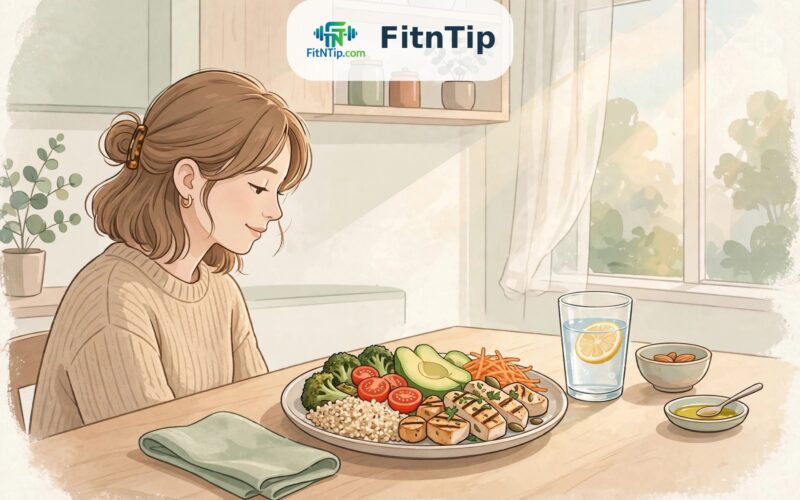
- Balanced, minimally processed eating. Meals built around vegetables, fruits, whole grains, legumes, lean protein, and unsaturated fats, with less reliance on ultra-processed foods, sugary drinks, and large amounts of added sugar.
- Mediterranean-style patterns. Vegetables, fruits, legumes, whole grains, fish, olive oil, and nuts, with modest dairy and poultry and less red and processed meat. Studied extensively for cardiometabolic health in the general population, though PCOS-specific trials are fewer.
- Low-glycaemic-index (low-GI) patterns. Favouring carbohydrate foods that raise blood glucose more slowly – legumes, intact whole grains, many vegetables – over refined, quickly digested carbohydrates. Some PCOS trials show mixed but generally favourable signals on metabolic measures.
- Calorie-aware patterns. For people whose clinicians advise working toward weight change, some trials use a modest energy deficit within an otherwise balanced pattern. Evidence does not show severe restriction is better, and very-low-calorie approaches carry risks requiring medical supervision.
What these patterns share is instructive: variety, fibre, adequate protein, unsaturated rather than saturated fat, and fewer sugary drinks and heavily processed foods. None requires eliminating entire food groups, buying special products, or following a rigid 10-step protocol, and none can be described as a PCOS treatment on its own.
Weight, Insulin, and PCOS – Without Oversimplification
Weight is not the cause of PCOS, and PCOS is not simply caused by eating too much. Hormonal and metabolic features of PCOS can themselves make weight regulation harder, and many people with PCOS have weight in the typical range. Blaming a person’s eating for their condition is not supported by evidence. At the same time, for people with PCOS who have higher body weight and wish to pursue weight change, research suggests modest weight change can be associated with improvements in ovulation and metabolic measures for some people. ACOG notes weight loss can help restore ovulation for some people with PCOS who have higher weight. The key words are can and some: it is not guaranteed, not the only path to better health, and not an appropriate goal for everyone. Crash diets and severe restriction can harm physical and mental health. Any intentional weight change is best discussed with a clinician or registered dietitian, particularly for adolescents, people trying to conceive, people with a history of disordered eating, and people with diabetes or other conditions.
Physical Activity, Sleep, and Stress
Most lifestyle trials in PCOS combine diet with physical activity rather than testing diet alone, so it is difficult to separate the effect of eating from the effect of movement. Regular activity is associated in the general population with better insulin sensitivity, cardiovascular health, mood, and sleep – all relevant to PCOS. That does not mean exercise treats PCOS by itself, or that a specific type or amount is proven best for PCOS. Poor sleep and chronic stress are associated with metabolic and hormonal disruption in general, but claims that a specific breathing routine, sleep supplement, or stress protocol will balance hormones in PCOS are not established by the research reviewed here.
What the Evidence Does NOT Establish
- That any diet reverses or cures PCOS. WHO states there is no cure. Lifestyle change may improve some measures for some people; that is not reversing the condition.
- That one named diet is best for PCOS. Reviews find signals for several patterns and rate the evidence low quality. No head-to-head trial has established a single winner.
- That specific foods, detoxes, or supplements treat PCOS. Supplements sometimes discussed online – including inositol, vitamin D, and herbal products – have limited, mixed, or preliminary evidence, and trials are often small or short. Supplements can interact with medications and are not risk-free. Do not start one on the basis of an article; discuss it with a clinician.
- That cutting out gluten, dairy, or sugar entirely is necessary. No established evidence that blanket elimination improves PCOS for most people. Some individuals have separate reasons – such as coeliac disease or lactose intolerance – to avoid specific foods, a matter for clinical evaluation, not a general PCOS rule.
- That results on a fixed timeline are typical. Trials vary from weeks to months, and individual responses vary widely. Promises of results in 12 weeks or 30 days are marketing, not science.
- That the same approach works for everyone. PCOS is heterogeneous. Age, fertility goals, metabolic profile, medications, cultural food practices, budget, and personal history all shape what is appropriate – which is why individualised clinical advice matters.
It is also worth naming a common source of confusion: personal stories. Someone who changed their eating and felt better is describing a real experience, but one experience does not show the same change will help someone else, or that the diet caused the improvement. Symptoms fluctuate, other factors change at the same time, and people who improve are more likely to share their stories. Reviews pooling many studies are a more reliable guide than any single testimonial – and even they are limited, as the reviews cited here acknowledge.
Thinking About Food in Practice – Without a Prescription
This section offers general information about how researchers describe balanced eating patterns. It is not a meal plan, prescription, or recommendation for any individual. Use it, if at all, as background for a conversation with your clinician or a registered dietitian.
- Build meals around nutrient-dense foods. A high proportion of vegetables, fruits, legumes, whole grains, and lean protein, with unsaturated fats such as olive oil and nuts.
- Pay attention to carbohydrate quality, not just quantity. Choose fibre-rich, minimally processed carbohydrate foods – lentils, chickpeas, oats, brown rice, vegetables – over sugary drinks and refined snacks. The goal is steadier energy and satiety, not eliminating carbohydrates.
- Include adequate protein and fibre. Both are associated with satiety in the general nutrition literature. Practical sources include legumes, dairy or fortified alternatives, eggs, fish, poultry, tofu, and nuts, as fits your preferences and needs.
- Limit sugary drinks and ultra-processed foods. These contribute added sugar and energy with little nutrition; reducing them is one of the least controversial steps in general dietary guidance.
- Keep meals regular enough to avoid long gaps that lead to overhunger. Meal-timing research in PCOS is preliminary, so there is no proven ideal schedule. Regular, satisfying meals are a reasonable starting point for discussion with a clinician or dietitian.
- Consider the whole pattern, not single foods. No single food causes or cures PCOS. What matters most is the overall pattern over weeks and months, alongside activity, sleep, and medical care.
Questions to bring to a clinician or dietitian: Which features of PCOS do I have, and what should be monitored – blood sugar, lipids, blood pressure, thyroid, mood? What are my fertility goals, if any, and how do they affect treatment options? Are medications appropriate for my symptoms, and how do they interact with diet or supplements? Would a referral to a registered dietitian help me build an eating pattern I can sustain, given my food preferences, budget, and culture? What kind of physical activity is appropriate for me, and how should I build up gradually? You do not need an expensive programme or branded product to have a good conversation about eating and PCOS.
When to Talk to a Clinician
Seek medical advice promptly if you experience any of the following, and do not try to manage them with diet alone:
- Very heavy, prolonged, or very frequent menstrual bleeding, or bleeding between periods.
- Severe pelvic or abdominal pain.
- Symptoms of high blood sugar, such as excessive thirst, frequent urination, or unexplained fatigue.
- Difficulty conceiving after trying for the length of time your clinician advises, or concerns about fertility.
- Persistent low mood, anxiety, or distress – mental health is part of PCOS care, and support is available.
- Rapidly worsening hair growth, acne, or hair loss, or any new, severe, or unexplained symptom.
Also talk to a clinician before starting or stopping any medication, supplement, or restrictive diet, and before beginning a vigorous exercise programme if you have a medical condition. If you have an eating disorder or a history of one, discuss any planned eating changes with your clinician first, because restrictive approaches can be harmful.
Frequently Asked Questions
Can diet cure or reverse PCOS?
No. WHO states there is no cure for PCOS. Eating patterns and lifestyle change may improve some measures for some people – such as weight, insulin sensitivity, or androgen markers in small trials – but that is not a cure, and it is not guaranteed. Be sceptical of anyone promising reversal.
Is there one best diet for PCOS?
No proven single best diet exists. Reviews find signals for several balanced patterns – including Mediterranean-style, low-glycaemic-index, and balanced calorie-aware patterns – but the evidence is low quality and no pattern has been established as superior for everyone with PCOS.
Do I need to cut out gluten, dairy, or sugar completely?
There is no established evidence that most people with PCOS need to eliminate these food groups entirely. Reducing sugary drinks and ultra-processed foods is consistent with general dietary guidance, but blanket elimination diets are not a proven PCOS treatment. If you suspect a specific food intolerance or allergy, discuss testing and next steps with a clinician rather than self-imposing a restrictive diet.
Can people with PCOS who have typical body weight still benefit from attention to eating patterns?
Yes – PCOS occurs across body sizes, and metabolic health matters independently of weight. Research on eating patterns is not only about weight change; it also examines insulin sensitivity and androgen measures. A clinician or dietitian can help tailor advice to your situation rather than assuming weight is the issue.
Will losing weight fix my PCOS?
Not necessarily. For some people with PCOS and higher body weight, modest weight change is associated with improvements in ovulation and metabolic measures, but it does not cure PCOS, does not help everyone, and is not an appropriate or safe goal for everyone. Weight-focused advice should be individualised and discussed with a clinician.
Should I take inositol or other supplements for PCOS?
Supplements marketed for PCOS have limited, mixed, or preliminary evidence, and their quality, dosing, and safety are not well standardised. Some may interact with medications or be inappropriate during pregnancy or when trying to conceive. Do not start a supplement based on online claims; ask your clinician whether there is evidence relevant to your situation and whether it is safe for you.
How quickly will eating changes help?
There is no reliable timeline. Trials range from weeks to months, and individual responses vary. Anyone promising a fixed result in a fixed number of days is selling something, not summarising research. A more realistic frame is sustained, balanced habits plus medical follow-up, evaluated over time with your clinician.
Does PCOS mean I cannot get pregnant?
No. PCOS is a common cause of infertility because ovulation can be irregular, but many people with PCOS do conceive, including with medical support when needed. If you are trying to conceive, talk to your clinician early rather than relying on diet alone. ACOG notes that treatment depends on symptoms and goals, and clinicians can discuss options for inducing ovulation when appropriate.
The Bottom Line
PCOS is a common, lifelong hormonal condition with no cure, but it can be managed. Research on eating patterns is encouraging in a limited way: balanced patterns – rich in vegetables, fruits, legumes, whole grains, lean protein, and unsaturated fats, with fewer sugary drinks and ultra-processed foods – are associated with modest improvements in some metabolic and hormonal measures in small, mostly low-quality trials. Low-glycaemic-index and low-carbohydrate patterns have also shown signals of benefit, but the evidence is not strong enough to crown any one diet, promise any individual result, or replace medical care. The most defensible approach is also the least sensational: learn what PCOS is, use research as background rather than prescription, build sustainable eating and activity habits that fit your life, and work with a clinician – and, where possible, a registered dietitian – on the parts needing individual judgement: diagnosis, monitoring, medications, fertility goals, and any supplement or restrictive diet you are considering.
Interesting Facts
- WHO estimates that PCOS affects an estimated 10–13% of reproductive-aged women — and up to 70% of women with PCOS worldwide are undiagnosed.
- The U.S. Office on Women’s Health (HHS) puts PCOS at about 1 in 10 women of childbearing age, and notes that hirsutism affects up to 70% of women with PCOS.
- According to WHO, there is currently no cure for PCOS — management focuses on symptoms and metabolic health.
- WHO notes that healthy lifestyle behaviours are important for all women with PCOS, even when they do not lead to weight loss.
- Ovarian cysts are not required for a PCOS diagnosis — the Rotterdam criteria need 2 of 3 features.
- A 2022 review by Kazemi and colleagues (39,471 women) found that women with PCOS had lower overall diet quality and lower total physical activity than women without PCOS. On activity, see what research says about walking 10,000 steps a day.
- A 2019 Cochrane review found lifestyle intervention may improve free androgen index, weight, and BMI (low-quality evidence); its effect on glucose tolerance is uncertain, and no studies looked at live birth or miscarriage.
Myths vs Facts
| Myth | Fact |
|---|---|
| A diet can reverse or cure PCOS. | WHO states there is currently no cure. Lifestyle change may improve some measures (low-quality evidence) — but that is not a cure. |
| You must have ovarian cysts to have PCOS. | Cysts are not required; the Rotterdam criteria require 2 of 3 features. |
| Lifestyle changes only matter if you lose weight. | WHO says healthy lifestyle behaviours are important for all women with PCOS, even without weight loss — PCOS occurs across body sizes. See why weight loss plateaus happen. |
| PCOS is rare. | WHO estimates 10–13% of reproductive-aged women (HHS: about 1 in 10); up to 70% are undiagnosed. |
| Lifestyle changes are proven to fix hormones and blood sugar. | The Cochrane review found lifestyle may improve some measures (low-quality evidence); its effect on glucose tolerance is uncertain. |
Medical Disclaimer: This article is for general information only and is not medical advice. It does not diagnose, treat, cure, or prevent any condition. Always seek the advice of your clinician or another qualified health professional with any questions about PCOS, eating patterns, supplements, medications, or fertility. Never disregard professional medical advice or delay seeking it because of something you read here.
Sources
- World Health Organization. Polycystic ovary syndrome. Fact sheet. who.int/news-room/fact-sheets/detail/polycystic-ovary-syndrome
- Office on Women’s Health, U.S. Department of Health and Human Services. Polycystic ovary syndrome. womenshealth.gov/a-z-topics/polycystic-ovary-syndrome
- American College of Obstetricians and Gynecologists. Polycystic Ovary Syndrome (PCOS). FAQ. acog.org/womens-health/faqs/polycystic-ovary-syndrome-pcos
- Lim SS, Hutchison SK, Van Ryswyk E, et al. Lifestyle changes in women with polycystic ovary syndrome. Cochrane Database of Systematic Reviews (2019). PubMed. pubmed.ncbi.nlm.nih.gov/30921477
- Kazemi M, et al. Dietary patterns and polycystic ovary syndrome: a systematic review and meta-analysis. Human Reproduction Update (2022). PubMed. pubmed.ncbi.nlm.nih.gov/35639552
Sources were opened and verified during preparation of this article. The CDC’s former PCOS pages were not cited because they returned a Page Not Found error when checked. Claims in this article reflect the sources listed above; where those sources describe evidence as low quality or uncertain, this article says so.
This article is for informational and educational purposes only. It does not constitute medical advice, diagnosis, or treatment. The information presented is researched from trusted sources including peer-reviewed scientific journals, CDC, NIH, WHO, and recognized health organizations. Always consult a qualified healthcare professional before making any changes to your diet, exercise routine, or health regimen.