Dal Nutrition Chart: Protein, Calories & Health Benefits (Per 100g)

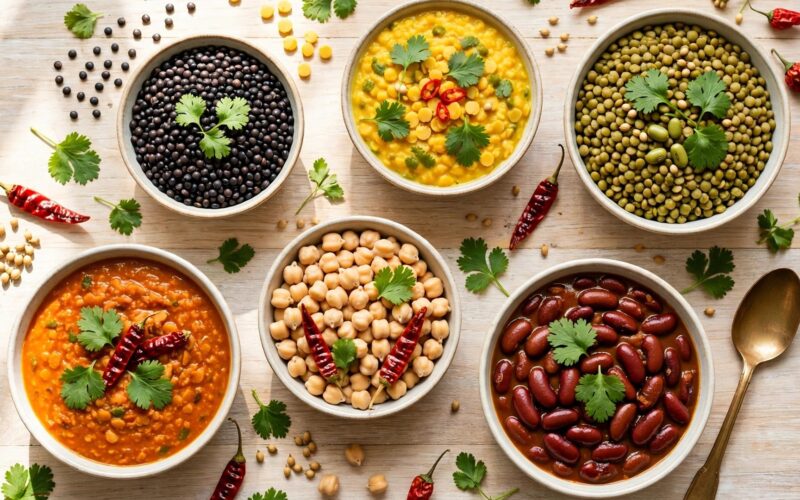
Dal is one of the most important foods in Indian kitchens — affordable, versatile, and packed with nutrition. Whether it’s a simple toor dal tadka, a bowl of moong dal khichdi, or rajma-chawal on a Sunday, dal provides plant-based protein, fibre, and essential micronutrients that support muscle, digestion, and overall health.
But not all dals are equal. Some are higher in protein, others in iron or fibre, and their calories vary too. This dal nutrition chart gives you the full picture per 100g (uncooked) for the most common Indian dals and legumes, based on IFCT 2017 and USDA data.
Dal Nutrition Chart (Per 100g, Uncooked)
| Dal / Legume | Calories | Protein | Carbs | Fibre | Fat |
|---|---|---|---|---|---|
| Urad dal (black gram) | 347 | 24.0 g | 59.6 g | 9.9 g | 1.4 g |
| Toor dal (pigeon pea) | 335 | 22.3 g | 57.6 g | 9.1 g | 1.5 g |
| Moong dal (green gram) | 334 | 24.5 g | 55.8 g | 11.5 g | 1.1 g |
| Masoor dal (red lentil) | 352 | 25.1 g | 59.0 g | 10.8 g | 1.1 g |
| Chana dal (Bengal gram) | 372 | 20.8 g | 58.1 g | 10.3 g | 5.6 g |
| Rajma (kidney beans) | 333 | 22.9 g | 60.0 g | 10.5 g | 1.1 g |
| Chole (chickpeas) | 360 | 20.5 g | 61.0 g | 10.5 g | 5.9 g |
Values are approximate and vary by variety, brand, and cooking method. Cooked dal values are lower per 100g because water is absorbed during cooking.
Which Dal Has the Highest Protein?
Masoor dal leads with about 25.1 g protein per 100g, followed closely by moong dal (24.5 g) and urad dal (24.0 g). For vegetarians, combining dal with rice or roti provides a complete amino acid profile — this is why dal-chawal and dal-roti are such smart traditional pairings.
Health Benefits of Dal
- Rich in plant protein: Supports muscle maintenance and growth, especially for vegetarians.
- High in fibre: Aids digestion, prevents constipation, and helps control blood sugar.
- Good for heart health: Low in fat and rich in potassium and folate.
- Weight management: High protein and fibre keep you full longer, reducing overeating.
- Iron and folate: Important for energy, blood health, and pregnancy.
Dal for Weight Loss
Dal is excellent for weight loss because it is high in protein and fibre but relatively low in calories (when cooked without excess ghee or oil). A bowl of cooked dal (about 150g) provides roughly 120–150 calories and 7–9g protein — filling enough to prevent snacking, without derailing a calorie deficit.
For more ideas, see our guide on weight loss tips that actually work and high-protein foods for vegetarians.
Frequently Asked Questions
Which dal is best for daily eating?
Moong dal is often recommended for daily eating because it is easy to digest, high in protein, and gentle on the stomach. Rotating between moong, toor, and masoor gives you a good nutrient mix.
Is dal a complete protein?
On its own, dal is not a complete protein because it is low in methionine. Combined with rice or wheat (dal-chawal, dal-roti), it provides all essential amino acids.
How much dal should I eat per day?
One to two bowls of cooked dal per day (about 150–300g cooked) is a good target for most adults, providing 15–20g protein along with fibre and micronutrients.
Key Takeaways
- Masoor, moong, and urad dals are highest in protein (24–25g per 100g uncooked).
- All dals are high in fibre (9–11g per 100g) and low in fat.
- Combine dal with rice or roti for complete protein.
- Dal supports weight loss, heart health, and digestion.
Dal is proof that healthy eating doesn’t have to be expensive or complicated. A simple bowl of dal, rice, and vegetables delivers protein, fibre, and micronutrients that rival far more expensive “superfoods” — and it tastes great too.
This article is for informational and educational purposes only. It does not constitute medical advice, diagnosis, or treatment. The information presented is researched from trusted sources including peer-reviewed scientific journals, CDC, NIH, WHO, and recognized health organizations. Always consult a qualified healthcare professional before making any changes to your diet, exercise routine, or health regimen.