Dal Nutrition Chart: Protein, Calories & Health Benefits (Per 100g)

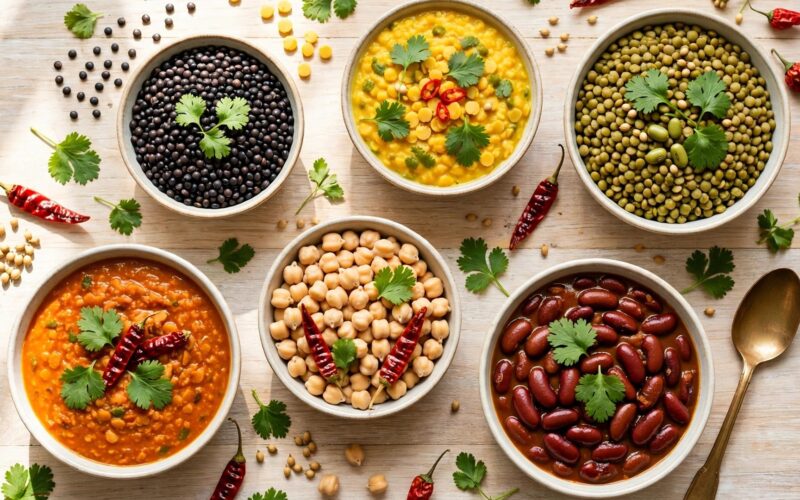
Dal Nutrition Chart: Protein, Calories & Health Benefits (Per 100g)
By the C.K. Gupta · Last updated: 4 November 2026 · Values below are for 100g uncooked dal, based on the Indian Food Composition Tables (IFCT 2017) and USDA FoodData Central. Cooking changes the numbers — cooked dal absorbs water, so it has fewer calories and less protein per 100g. Sources are linked at the end of this article.
Quick answer: Masoor dal and moong dal are the protein leaders, with 25.1g and 24.5g protein per 100g (uncooked) respectively. Soyabean tops the chart overall with 34.5g protein, and kabuli chana is the most calorie-dense at 378 calories per 100g. A bowl of cooked dal (about 150g) gives roughly 120–150 calories and 7–9g protein.
Dal is one of the most important foods in Indian kitchens — affordable, versatile, and packed with nutrition. Whether it is a simple toor dal tadka, a bowl of moong dal khichdi, or rajma-chawal on a Sunday, dal provides plant-based protein, fibre, and essential micronutrients that support muscle, digestion, and overall health.
But not all dals are equal. Some are higher in protein, others in iron or fibre, and their calories vary too. This dal nutrition chart gives you the full picture per 100g (uncooked) for the most common Indian dals and legumes, based on IFCT 2017 and USDA data.
Dal Nutrition Chart (Per 100g, Uncooked)
| Dal / Legume | Calories | Protein | Carbs | Fibre | Fat |
|---|---|---|---|---|---|
| Soyabean | 371 | 34.5 g | 21.0 g | 11.5 g | 16.6 g |
| Masoor dal (red lentil) | 352 | 25.1 g | 59.0 g | 10.8 g | 1.1 g |
| Moong dal (split green gram) | 334 | 24.5 g | 55.8 g | 11.5 g | 1.1 g |
| Moong dal (whole green gram) | 348 | 24.0 g | 57.0 g | 12.0 g | 1.2 g |
| Urad dal (black gram) | 347 | 24.0 g | 59.6 g | 9.9 g | 1.4 g |
| Toor dal (pigeon pea) | 335 | 22.3 g | 57.6 g | 9.1 g | 1.5 g |
| Chana dal (Bengal gram) | 372 | 20.8 g | 58.1 g | 10.3 g | 5.6 g |
| Rajma (kidney beans) | 333 | 22.9 g | 60.0 g | 10.5 g | 1.1 g |
| Kabuli chana (chickpeas) | 378 | 20.5 g | 63.0 g | 12.0 g | 6.0 g |
Values are approximate and vary by variety, brand, and cooking method. Cooked dal values are lower per 100g because water is absorbed during cooking.
Which Dal Has the Highest Protein?
Soyabean leads with about 34.5g protein per 100g, followed by masoor dal with 25.1g and moong dal (split) with 24.5g. If you exclude soyabean, masoor and moong are the top choices for everyday protein. Toor dal, urad dal and rajma also provide over 22g protein per 100g uncooked.
Health Benefits of Dal
- Rich in plant protein: Supports muscle maintenance and growth, especially for vegetarians.
- High in fibre: Aids digestion, prevents constipation, and helps control blood sugar.
- Good for heart health: Low in fat and rich in potassium and folate.
- Weight management: High protein and fibre keep you full longer, reducing overeating.
- Iron and folate: Important for energy, blood health, and pregnancy.
Dal for Weight Loss
Dal is excellent for weight loss because it is high in protein and fibre but relatively low in calories (when cooked without excess ghee or oil). A bowl of cooked dal (about 150g) provides roughly 120–150 calories and 7–9g protein — filling enough to prevent snacking, without derailing a calorie deficit.
For more ideas, see our guide on weight loss tips that actually work.
How to Choose the Right Dal
For daily eating, moong dal is often the easiest to digest and a great all-rounder. For maximum protein, choose masoor or soyabean. For iron, choose urad or chana dal. For fibre, choose moong (whole) or kabuli chana. Rotating different dals through the week gives you the widest range of nutrients.
Frequently Asked Questions
Which dal is best for daily eating?
Moong dal is often recommended for daily eating because it is easy to digest, high in protein, and gentle on the stomach.
Is dal a complete protein?
On its own, dal is not a complete protein because it is low in methionine. Combined with rice or roti, however, it provides all essential amino acids.
How much dal should I eat per day?
One to two bowls of cooked dal per day (about 150–300g cooked) is a good target for most adults, as part of a balanced diet.
Which dal has the most fibre?
Moong dal (whole) and kabuli chana are highest in fibre, with about 12g per 100g uncooked.
Key Takeaways
- Soyabean, masoor, and moong dals are highest in protein.
- All dals are high in fibre and low in fat (except soyabean, which is higher in fat).
- Combine dal with rice or roti for complete protein.
- Dal supports weight loss, heart health, and digestion.
Dal is proof that healthy eating does not have to be expensive or complicated. A simple bowl of dal, with rice or roti and vegetables, is a complete, balanced meal.
This guide is educational and is not medical advice. If you have a health condition, are pregnant, or are planning a large change in weight or training, talk to your doctor or a registered dietitian first.
Medical Disclaimer
This article is for general information only. It is not medical advice, and it is not a recommendation for any person. Talk to a qualified clinician before changing diet, exercise, or supplement habits, especially with a health condition, pregnancy or breastfeeding, or regular medication use. This article was written by C.K. Gupta, a health and science writer who summarises published research; it is not written by a licensed medical clinician, and it does not replace professional evaluation, diagnosis, or treatment.
Sources
- Indian Food Composition Tables (IFCT 2017) – National Institute of Nutrition, ICMR.
- USDA FoodData Central – U.S. Department of Agriculture.
Related guides
- 7-Day Indian Diet Chart for Weight Loss (Veg Meal Plan)
- Top 10 High Protein Vegetarian Foods You Should Include in Your Diet
- Quinoa – A Complete Protein Source for Vegetarians
By the C.K. Gupta · Last updated: 4 November 2026
How FitNTip builds its guides: our articles are compiled from official public sources — including the Indian Food Composition Tables (ICMR–National Institute of Nutrition), USDA FoodData Central and the WHO healthy diet guidance — and reviewed against them when updated.
This article is educational and is not medical advice. If you have a medical condition, are pregnant, or plan a major change in diet or training, talk to your doctor first.
This article is for informational and educational purposes only. It does not constitute medical advice, diagnosis, or treatment. The information presented is researched from trusted sources including peer-reviewed scientific journals, CDC, NIH, WHO, and recognized health organizations. Always consult a qualified healthcare professional before making any changes to your diet, exercise routine, or health regimen.