
Are Supplements Harmful? What NIH and FDA Guidance Says — FitnTip

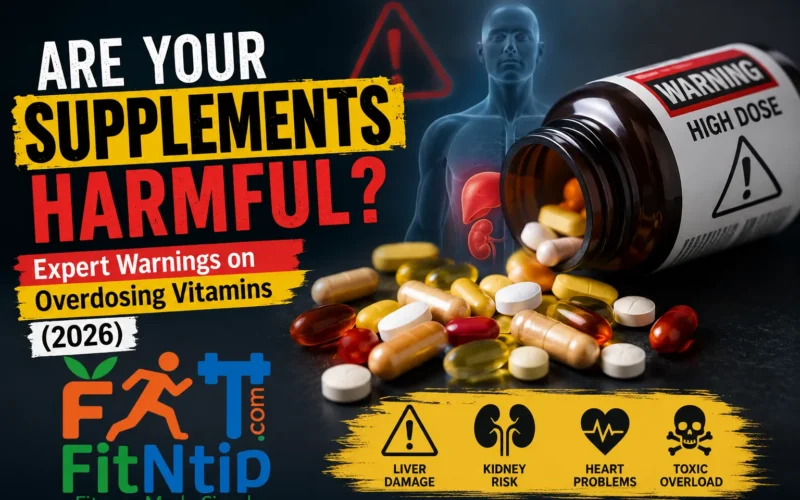
General Information Only — Not Medical Advice. This article summarises public guidance from NIH and FDA. Talk to your clinician or pharmacist before starting, changing, or stopping any supplement.
By C.K. Gupta, research writer. C.K. Gupta is a research writer with no medical degree and no professional medical experience. This article summarises published guidance. It is not medical advice, and it does not describe the author’s personal experience.
A question with no single yes-or-no answer
Are supplements harmful? The honest answer from public guidance is that it depends — on the product, the amount, the person taking it, and what else that person takes. A bottle on a pharmacy shelf can contain a single vitamin, a mineral, a herb, an amino acid, or a blend of several ingredients. Some products are used for a short period for a specific reason. Others are taken daily for years. Guidance does not give one verdict that covers all of them.
This article does not try to label your supplements harmful or safe. It cannot do that. What it can do is lay out how supplements are regulated in the United States, where risk can come from in general terms, what the National Institutes of Health (NIH) Office of Dietary Supplements (ODS) says about multivitamins and long-term disease, and what practical steps official guidance suggests before you decide anything with a clinician or pharmacist.
That distinction matters. Marketing often sounds certain. Guidance is more cautious. It separates what is known from what is still unclear, and it points readers back to a clinician or pharmacist for decisions about their own situation.
How supplements are regulated in the United States
Under U.S. law, dietary supplements are regulated as a category of food, not as drugs. That is a central point in FDA guidance on dietary supplements. A prescription drug generally must be shown to be safe and effective before it can be sold. A dietary supplement does not go through the same pre-market approval process.
The law that sets this framework is the Dietary Supplement Health and Education Act of 1994, known as DSHEA. Under DSHEA, the manufacturer is responsible for making sure a product is safe before it is sold and that label claims are truthful and not misleading. The FDA generally acts after a product is on the market — for example, if it receives reports of harm, finds a product is adulterated or misbranded, or finds that a claim is not supported.
There is one notable exception. For certain new dietary ingredients — ingredients not marketed in the United States before DSHEA took effect — a manufacturer is generally expected to notify the FDA before marketing, with information supporting a conclusion that the ingredient is reasonably expected to be safe. That notification is not the same as FDA approval of the product. The FDA consumer page on using dietary supplements explains that the FDA does not approve dietary supplements for safety or effectiveness before they are sold, apart from this notification route for certain new ingredients.
The practical result is that a supplement on sale is not, by itself, proof that the FDA has tested it, endorsed it, or confirmed it is safe for you. The label may list ingredients, a serving size, and directions. It does not carry the same pre-market review that a new drug receives.
Where risk can come from
Guidance groups supplement risk into a few broad patterns. None of these means every supplement causes harm. They explain why harm is possible and why the same product can affect people differently.
First, high doses. Taking much more than the body needs, especially over a long period, can increase the chance of unwanted effects. This can happen when someone takes several products that contain the same ingredient, or when a supplement is combined with fortified foods and drinks. A person may not realise the total amount adds up across products.
Second, interactions. Supplements can interact with prescription medicines, over-the-counter medicines, other supplements, and sometimes with foods. An interaction can change how a medicine works, raise the chance of side effects, or make a treatment less effective. Because supplements are often bought without a prescription, a clinician or pharmacist may not know about them unless the person mentions them. That gap is one reason guidance keeps returning to the same advice: bring a full list.
Third, quality variation and hidden ingredients. Products can differ in what they actually contain. A supplement may contain less of an ingredient than the label states, more than the label states, or an ingredient that is not listed at all. Some products sold for weight loss, bodybuilding, or sexual performance have, in FDA enforcement cases, been found to contain hidden drug ingredients. Those cases are not typical of every supplement, but they show why source and label alone do not settle safety.
Fourth, misleading claims. A product that promises rapid weight loss, a cure, or a dramatic change in a short time should be treated with care. Guidance warns that such claims are often a sign of a product that is misbranded or adulterated. A claim on a website, a social post, or a bottle is not evidence.
What NIH says about multivitamins and long-term disease
Multivitamin/mineral supplements, often shortened to MVMs, are among the most widely used supplements. People take them for many reasons, including the hope of lowering the chance of chronic disease. The NIH Office of Dietary Supplements reviews that research in its fact sheets for health professionals and consumers.
According to the NIH ODS health professional fact sheet on multivitamin/mineral supplements and the NIH ODS consumer fact sheet on multivitamin/mineral supplements, most research shows that taking an MVM does not result in living longer, slowing cognitive decline, or lowering the chance of cancer, heart disease, or diabetes. That finding is about patterns across research studies. It is not a statement about one person’s health.
The same guidance adds a second point that is often missed. Taking an MVM is unlikely to pose risks for most people. In other words, the research reviewed by ODS does not show a broad benefit for preventing chronic disease in general populations, and it also does not show a broad pattern of harm from ordinary MVM use for most people. Both halves matter. A product can be low-risk for most people and still not deliver the long-term disease benefit that marketing suggests.
The National Center for Complementary and Integrative Health (NCCIH) makes a similar point in Using Dietary Supplements Wisely: evidence for many supplements is limited, and claims often run ahead of the research. That page also notes that even supplements with some supporting evidence may not help every person, and that quality and interactions still need attention.
Short sentences help here. Research looks at groups. You are one person. A study result does not predict your outcome.
Labels, and what third-party testing can and cannot tell you
Reading a label helps, but it has limits. A Supplement Facts panel lists the serving size, the amount of each listed ingredient per serving, and sometimes other ingredients. It does not list every possible interaction. It does not tell you whether the product will help you. And a label alone cannot prove that the bottle contains exactly what the panel says.
That is where third-party testing comes in. Guidance describes programs run by organisations such as USP, NSF, and ConsumerLab. These programs test products against their own standards, which can include checking that the product contains the ingredients listed on the label, in the stated amounts, and that it does not contain certain harmful contaminants at levels the program sets. Some programs also check that the product breaks down in a way that allows the body to absorb it.
A seal or listing from one of these programs is not an endorsement by NIH or FDA, and it is not a guarantee that the product is safe for you. It is a quality signal. It does not replace a conversation with a clinician or pharmacist, and it does not mean the product is effective for a particular purpose. A product without a seal may still meet label claims, and a product with a seal can still interact with a medicine or be unsuitable for a particular person. Use the seal as one piece of information, not as a final verdict.
If a label is hard to read, if the ingredient list uses unfamiliar names, or if the product makes a strong health claim, that is a reason to pause and ask a clinician, pharmacist, or another qualified source — not a reason to guess.
Practical steps from official guidance
The steps below come from the FDA, NIH ODS, and NCCIH guidance linked in Sources. They are general steps, not a personal plan.
- Talk to your clinician or pharmacist before you start a new supplement, change a dose, or combine products. Mention every supplement, vitamin, mineral, herbal product, and over-the-counter medicine you use.
- Make a written list. Include product names, ingredients, serving sizes, and how often you take each one. Bring that list to appointments and to the pharmacy. Update it when anything changes.
- Ask about interactions. Ask whether a supplement could interact with a medicine you take, with another supplement, or with a condition you have. Ask what symptoms should prompt you to seek care promptly.
- Read the label each time you buy a product. Check the Supplement Facts panel, the ingredient list, the serving size, and any warnings. Do not assume a new bottle of the same brand is identical to the last one.
- Be cautious with products that promise fast, dramatic, or guaranteed results, or that claim to treat or cure a disease. Those claims are a warning sign in FDA consumer guidance.
- Look for third-party testing information if you want a quality signal, as described above. Remember that a seal is not an endorsement and does not mean the product is right for you.
- Report a bad reaction. In the United States, you can report a serious adverse event linked to a supplement to the FDA. Keep the product packaging, if you can, and tell your clinician or pharmacist what happened.
- Keep supplements out of reach of children, store them as the label directs, and do not share prescription products or products prescribed for someone else.
One more habit helps: if you buy supplements online, use a seller you can verify, keep the order record, and check that the product you received matches what you ordered. Counterfeit and mislabelled products are harder to spot online.
Who should be especially careful
Some groups face higher uncertainty or higher risk from supplements in general. Guidance singles out the following groups for extra caution. This is not a list of people who must avoid all supplements. It is a list of people who should speak with a clinician or pharmacist before using them.
- People who are pregnant or nursing. Some ingredients may affect pregnancy or pass into breast milk. A clinician can discuss what is known and what is not known for a specific product.
- Children. Children are not small adults. Amounts, ingredients, and risks can differ by age and weight. A paediatric clinician or pharmacist should be involved before a child uses a supplement.
- People with a chronic disease. Conditions that affect the liver, kidneys, heart, or blood clotting, among others, can change how a supplement behaves in the body. A clinician who knows the condition can weigh that in general terms.
- People taking medication. This includes prescription medicines, over-the-counter medicines, and other supplements. Interactions can be easy to miss without a full list.
- People planning surgery. Some supplements can affect bleeding, blood pressure, or anaesthesia. Guidance advises telling the surgical team about all supplements well before a planned procedure, so they can advise on timing in general terms.
If you belong to more than one of these groups, the need for a conversation is stronger, not weaker. A short check-in can surface an interaction or a timing issue that is easy to overlook.
Frequently asked questions
Does “natural” mean a supplement is safer?
No. “Natural” describes where an ingredient comes from, not whether it is safe at a given amount for a given person. Many natural substances can cause harm, especially in high amounts or in combination with medicines. The label word “natural” is not a safety finding by FDA or NIH.
Can supplements interact with medicines?
Yes, in general. Interactions are one of the main risks described in guidance. The risk depends on the supplement, the medicine, the amounts, and the person. The only reliable way to check is to give your clinician or pharmacist the full list and ask.
Does a third-party seal mean a product is safe for me?
No. A seal from USP, NSF, or ConsumerLab, as described by guidance, speaks to quality testing against that program’s standards. It does not mean the product is safe for you, effective for your purpose, or free of interactions. Treat it as a quality signal, not a personal recommendation. This article does not endorse any testing program.
Should I stop taking my supplements?
This article cannot tell you that. Stopping or continuing a supplement is a decision for you and your clinician or pharmacist, based on your health, your medicines, and the specific products you use. Do not stop a prescribed medicine because of a supplement article. If you are worried about a product, contact your clinician or pharmacist promptly and describe what you take and any symptoms.
Are multivitamins a waste of money?
Guidance does not use that phrase. What ODS guidance says is narrower: most research does not show that MVMs lower the chance of cancer, heart disease, or diabetes, or result in living longer or slowing cognitive decline, and MVM use is unlikely to pose risks for most people. Whether an MVM makes sense for a particular person is a question for that person’s clinician or pharmacist.
What should I do if I think a supplement made me feel unwell?
Seek care promptly if symptoms are severe or worrying. Tell your clinician or pharmacist what you took, how much, and when. Keep the packaging if you can. You can also report a serious event to the FDA, as described in FDA consumer guidance. Do not try to test the product again on your own to see if the same reaction happens.
What this article cannot tell you
This article cannot tell you whether your supplements are harmful or safe. It cannot recommend a dose, a brand, or a combination. It cannot diagnose a deficiency, a side effect, or a condition. It cannot say whether a supplement will help you live longer, improve memory, prevent disease, or change a lab result.
It also cannot cover every supplement. The market includes thousands of products, and research changes over time. The guidance linked below reflects what NIH ODS, FDA, and NCCIH have published for consumers and clinicians. If a product you use is not discussed here, that absence is not a judgment about it.
Use this article as a starting point for a conversation, not as a substitute for one. A clinician or pharmacist who knows your history can discuss general risks, interactions, and options in a way that a general article cannot.
Sources
- NIH Office of Dietary Supplements — “Multivitamin/mineral Supplements: Fact Sheet for Health Professionals.” https://ods.od.nih.gov/factsheets/MVMS-HealthProfessional/
- NIH Office of Dietary Supplements — “Multivitamin/mineral Supplements: Fact Sheet for Consumers.” https://ods.od.nih.gov/factsheets/MVMS-Consumer/
- U.S. Food and Drug Administration — “Dietary Supplements.” https://www.fda.gov/food/dietary-supplements
- U.S. Food and Drug Administration — “Information for Consumers on Using Dietary Supplements.” https://www.fda.gov/food/dietary-supplements/information-consumers-using-dietary-supplements
- National Center for Complementary and Integrative Health (NCCIH) — “Using Dietary Supplements Wisely.” https://www.nccih.nih.gov/health/using-dietary-supplements-wisely
- NIH Office of Dietary Supplements — “What You Need To Know: Dietary Supplements.” https://ods.od.nih.gov/factsheets/WYNTK-Consumer/
General Information Only — Not Medical Advice. This article summarises public guidance from NIH and FDA. Talk to your clinician or pharmacist before starting, changing, or stopping any supplement.
This article is for informational and educational purposes only. It does not constitute medical advice, diagnosis, or treatment. The information presented is researched from trusted sources including peer-reviewed scientific journals, CDC, NIH, WHO, and recognized health organizations. Always consult a qualified healthcare professional before making any changes to your diet, exercise routine, or health regimen.


