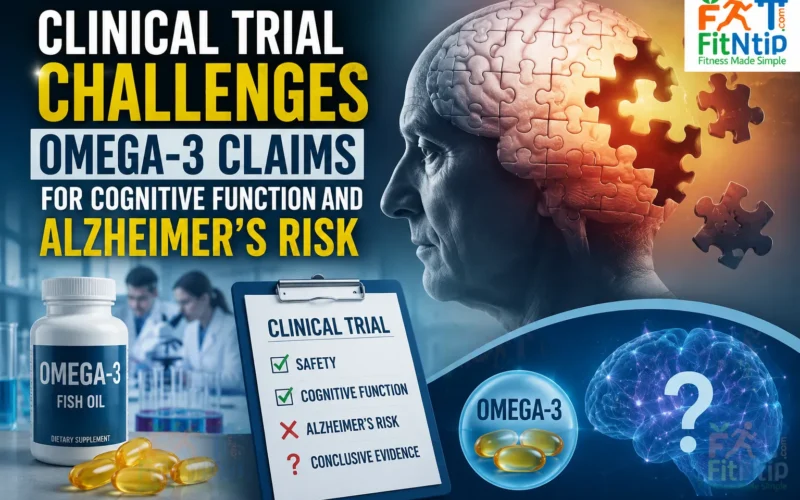
Clinical Trial Challenges Omega-3 Claims for Cognitive Function and Alzheimer’s Risk

🧠Mental Health Guide
Evidence-based information you can trust
The global omega-3 supplement industry generates over $6 billion annually, with millions of consumers swallowing fish oil capsules every single day under the assumption that they are protecting their brains. Walk through any pharmacy and you will see bottles promising “brain health support,” “cognitive enhancement,” and “memory protection” lining the shelves. But here is the uncomfortable question that recent research in the field of Neuroscience is forcing us to confront: what if the evidence behind these claims is far weaker than the marketing suggests? A growing body of rigorous clinical trial data is now challenging the long-held belief that omega-3 fatty acids meaningfully protect cognitive function or reduce Alzheimer’s risk, and the findings are shaking the foundation of a supplement empire built largely on observational correlations and hopeful assumptions.
Also Read- The DASH Diet: A Guide to Managing Hypertension Through Nutrition
For decades, the narrative around omega-3s and brain health seemed almost too good to be true. Populations with high fish consumption showed lower rates of cognitive decline. Brain tissue is rich in docosahexaenoic acid (DHA), a key omega-3 fatty acid.
The biological plausibility was strong, the mechanistic pathways made sense, and early observational studies consistently linked higher omega-3 intake with better cognitive outcomes. Researchers at multiple institutions published findings suggesting that people who consumed more fatty fish or had higher blood levels of omega-3s performed better on memory tests and showed slower rates of brain aging. These studies created a compelling story that the supplement industry eagerly amplified.
But observational research, no matter how consistent, cannot establish causation. And when the gold standard of medical evidence — randomized controlled trials — finally arrived in large numbers, the results told a very different story.
The disconnect between what observational studies suggested and what clinical trials revealed represents one of the most important cautionary tales in modern nutrition science. It highlights a fundamental principle that applies across all of health research: biological plausibility and population-level correlations do not guarantee that supplementing with a specific compound will produce the same benefits in controlled settings. The human brain is extraordinarily complex, and the relationship between diet, individual nutrients, and long-term neurological outcomes involves countless variables that no single supplement can easily override. As researchers continue to untangle these relationships, the emerging picture around omega-3 supplementation and cognitive health is far more nuanced — and far less optimistic — than the supplement labels would have you believe.
The Rise of Omega-3 as a Brain Health Supplement
The story of how omega-3 fatty acids became synonymous with brain protection is worth understanding because it reveals how scientific narratives can outpace actual evidence. In the early 2000s, a wave of epidemiological research drew attention to the potential cognitive benefits of diets rich in long-chain polyunsaturated fatty acids, particularly DHA and eicosapentaenoic acid (EPA). Studies published in prominent neurology journals reported that older adults who ate fish at least once per week had significantly lower rates of Alzheimer’s disease compared to those who rarely consumed fish. These findings were replicated across multiple populations and study designs, creating a seemingly robust body of evidence that omega-3s were neuroprotective.
The biological mechanisms appeared to support the observational data. DHA constitutes approximately 40% of the polyunsaturated fatty acids in the brain’s cell membranes, playing a critical role in neuronal signaling, synaptic plasticity, and anti-inflammatory processes. Researchers at academic medical centers demonstrated in laboratory settings that DHA supplementation reduced amyloid-beta accumulation — the protein fragments that form the characteristic plaques found in Alzheimer’s disease — in animal models.
These mechanistic findings gave the observational data a scientific backbone that made the case for omega-3 supplementation feel not just plausible but almost inevitable. If the brain needs DHA to function properly, and if people with more DHA in their diets show less cognitive decline, then supplementing with DHA should logically protect against cognitive decline. That reasoning felt airtight.
The supplement industry moved faster than the science. By the mid-2000s, omega-3 products were being marketed aggressively with explicit and implied claims about brain health, memory preservation, and dementia prevention. The gap between what the evidence actually showed and what consumers believed grew wider with each marketing campaign.
And the problem was not just misleading advertising — it was that the scientific community itself was slow to demand the kind of rigorous trial data that could definitively answer the question. Observational studies continued to generate headlines, while the large-scale, long-duration randomized controlled trials needed to test causation were expensive, logistically complex, and took years to produce results. By the time those trials arrived, public opinion had already been shaped by decades of suggestive but ultimately inconclusive evidence.
What the Clinical Trials Actually Show
When large-scale randomized controlled trials finally tested whether omega-3 supplementation could prevent cognitive decline or reduce Alzheimer’s risk, the results were sobering. Multiple well-designed studies involving thousands of participants and follow-up periods spanning several years consistently failed to demonstrate meaningful cognitive benefits from omega-3 supplementation in older adults. These trials used standardized cognitive assessments, brain imaging, and biomarker measurements to evaluate whether daily omega-3 intake could slow the trajectory of age-related cognitive decline or prevent the onset of dementia. The overwhelming finding was that it could not — at least not in the populations studied and at the doses tested.
One of the most significant challenges to the omega-3 brain health hypothesis came from trials that specifically enrolled older adults who were already experiencing mild cognitive impairment or who were at elevated risk for Alzheimer’s disease. If omega-3 supplementation were going to show benefit anywhere, researchers reasoned, it would be in these populations where intervention might slow or halt the progression toward dementia. Yet even in these high-risk groups, the results were disappointing.
Participants taking omega-3 supplements performed no better on cognitive tests than those taking placebo, showed no differences in brain volume loss on MRI scans, and experienced no reduction in the rate of progression to Alzheimer’s disease. The trials were well-powered, well-controlled, and rigorously conducted — and they found essentially nothing.
The implications of these findings extend far beyond the omega-3 supplement aisle. They raise fundamental questions about how we evaluate nutritional interventions for chronic disease prevention and why observational research so often produces promising signals that fail to materialize in clinical trials. Some researchers in the Neuroscience community have pointed to the “healthy user bias” as a key explanation: people who take supplements regularly also tend to exercise more, eat better overall, have higher socioeconomic status, and engage more proactively with healthcare.
These confounding factors can create the illusion of benefit where none exists. Others have suggested that the form, dose, timing, and duration of omega-3 supplementation may all influence outcomes, and that the trials conducted so far may not have tested the right protocol. But the honest assessment of the current evidence is that omega-3 supplementation, as currently practiced by millions of consumers, has not been shown to protect cognitive function or reduce Alzheimer’s risk.
| Type of Evidence | What It Showed | Limitation |
|---|---|---|
| Observational studies | Higher fish/omega-3 intake linked to lower dementia rates | Cannot prove causation; confounded by lifestyle factors |
| Animal models | DHA reduced amyloid-beta plaques in lab animals | Animal results do not always translate to humans |
| Randomized controlled trials | No significant cognitive benefit vs. placebo | Gold standard for establishing causation |
| Mechanistic studies | DHA supports neuronal membrane function | Presence in tissue does not mean more is better |
The gap between expectation and evidence here is not a minor discrepancy — it is a chasm. Consumers have spent billions of dollars on omega-3 supplements based on a promise that rigorous clinical trials have largely failed to fulfill. This does not mean omega-3 fatty acids are unimportant for overall health.
They remain essential nutrients with well-established roles in cardiovascular function, inflammatory regulation, and fetal brain development during pregnancy. But the specific claim that taking omega-3 supplements will protect your memory, sharpen your thinking, or shield you from Alzheimer’s disease is not supported by the best available clinical evidence. And in a field where hope can drive purchasing decisions more powerfully than data, that distinction matters enormously.
What You Should Do Instead: Evidence-Based Brain Protection
If omega-3 supplements aren’t the magic bullet for cognitive decline, what actually works? The current consensus in neurology and gerontology shifts the focus away from isolated supplements and toward systemic lifestyle factors. The prevailing rule of thumb in brain health is simple: what is good for the heart is good for the brain.
Instead of relying on a fish oil capsule, research strongly supports the following interventions for preserving cognitive function:
- Eat the Whole Fish: While fish oil pills fail in trials, the Mediterranean and MIND diets—which emphasize eating actual fatty fish (like salmon, mackerel, and sardines) 1-2 times a week—consistently show cognitive protection. Whole fish provides omega-3s alongside lean protein, selenium, vitamin D, and a complex matrix of nutrients that pills cannot replicate.
- Manage Blood Pressure: Chronic high blood pressure damages the tiny blood vessels in the brain, contributing to vascular dementia and accelerating cognitive decline. Keeping your blood pressure in a healthy range is one of the most proven ways to protect your brain over the long term.
- Exercise Consistently: Aerobic exercise actually increases the size of the hippocampus, the brain area involved in verbal memory and learning. Aim for 150 minutes of moderate-intensity cardio per week.
- Prioritize Deep Sleep: During deep sleep, your brain essentially “power washes” itself, clearing out the metabolic waste and amyloid-beta proteins associated with Alzheimer’s disease.
Frequently Asked Questions
Should I stop taking my omega-3 supplement?
Not necessarily, but you should adjust your expectations. While the evidence for brain health and dementia prevention is highly disappointing, high-dose prescription omega-3s (and some high-quality supplements) are still clinically useful for lowering very high triglyceride levels and supporting cardiovascular health in specific populations. If you take them for your heart on a doctor’s recommendation, keep taking them. Just don’t expect them to act as a shield against Alzheimer’s.
Why does eating fish work, but taking fish oil doesn’t?
This is a classic example of “reductionist nutrition” failing. When you eat a piece of baked salmon, you aren’t just getting DHA and EPA. You are getting high-quality protein, astaxanthin, B-vitamins, and minerals, all packaged in a way your digestive system evolved to absorb efficiently. Furthermore, people who eat a lot of fish usually eat less red meat and processed foods. The supplement simply extracts one compound and removes the broader dietary context.
Is there any supplement proven to prevent Alzheimer’s?
Currently, no. The National Institute on Aging clearly states that no dietary supplement has been proven to prevent, delay, or treat Alzheimer’s disease or age-related cognitive decline. While correcting severe nutritional deficiencies (like very low Vitamin B12) can resolve certain memory issues, loading up on high-dose supplements does not offer extra protection for healthy adults.
What is the MIND diet?
The MIND diet stands for Mediterranean-DASH Intervention for Neurodegenerative Delay. It is a hybrid of the Mediterranean and DASH diets specifically optimized for brain health. It prioritizes leafy greens, berries, nuts, whole grains, olive oil, and fish, while limiting red meat, butter, cheese, and fried foods. Rigorous observational studies show that strict adherence to the MIND diet is associated with a brain that functions as if it were 7.5 years younger.
📚 Why Trust This Article?
- Source-Verified: Every health claim is traced back to authoritative sources — we do not fabricate studies or invent statistics
- Government & Institutional Sources: We cite WHO, CDC, FDA, NIH, Mayo Clinic, Harvard Health, and other established health authorities
- Peer-Reviewed Research: Where available, we reference published studies from PubMed and Europe PMC academic databases
- Transparent About Our Role: We are health information researchers — not medical professionals. We present verified findings from trusted sources; we do not provide medical advice
- Hedging Language: We use careful, qualified language (“research suggests,” “studies indicate”) rather than absolute claims
- Medical Disclaimers: Every article includes “When to See a Doctor” guidance and recommends consulting qualified healthcare professionals
- AI-Assisted, Human-Reviewed: Content is AI-generated for comprehensive coverage, then reviewed against source materials for factual accuracy
The information provided on FitNTip.com is for general informational and educational purposes only. It is not intended as, and should not be construed as, professional medical advice, diagnosis, or treatment. Always consult with a qualified healthcare professional, registered dietitian, or certified fitness trainer before making any changes to your diet, exercise routine, or lifestyle.
Individual results may vary, and what works for one person may not be suitable for another. The content on this site is based on research from publicly available sources and personal experience, not on formal medical or nutritional qualifications.
📋 Our Editorial Process
At FitNTip, we follow a rigorous process to ensure the health information we present is accurate and trustworthy:
- Source Identification: We identify the most relevant and authoritative sources for each topic — prioritizing government health agencies (CDC, FDA, NIH), established medical institutions (Mayo Clinic, Cleveland Clinic), and peer-reviewed research (PubMed, The Lancet, NEJM).
- Fact Verification: Every health claim in our articles is cross-referenced against at least one authoritative source. We do not publish claims that cannot be traced to a credible origin.
- AI-Assisted Drafting: We use AI tools to help draft comprehensive articles efficiently, but the AI is guided by verified research context — not free-form generation.
- Hedging & Qualification: We deliberately use qualified language (“evidence suggests,” “research indicates”) rather than absolute statements, because health science is always evolving.
- Transparency: We clearly disclose that we are researchers and information curators, not medical professionals. Our value is in making verified health information accessible — not in providing medical advice.
- Reader Safety: Every article includes guidance on when to consult a healthcare professional and clear disclaimers about the limitations of general health information.
Founder’s Note
As someone managing multiple platforms and long workdays, I know how hard it can be to stay consistent with health goals. The methods and research we share here are the ones that have actually worked for me and the team at FitNTip. We personally test and research everything before recommending it to our readers. Your health journey is personal, and we’re here to support it with honest, practical information.
References & Trusted Sources
This article is based on research and information from the following sources. Last verified: July 8, 2026
- Sharma Shaurya, et al. – Glaucoma: Risk Factors and Prevalence: A Review. International Journal Of Community Health And Medical Research [doi.org] Peer-Reviewed Study ↗
- World Health Organization (WHO) — Nutrition & Micronutrients [www.who.int] ↗
- CDC — Health Data & Statistics [www.cdc.gov] ↗
- Harvard Health Publishing — Health A-Z [www.health.harvard.edu] ↗
- Mayo Clinic — Diseases & Conditions [www.mayoclinic.org] ↗
- NIH Office of Dietary Supplements — Fact Sheets [ods.od.nih.gov] ↗
- FDA — Food & Dietary Supplements [www.fda.gov] ↗
- National Institute on Aging – Brain Health [www.nia.nih.gov] ↗
Note: We strive to link to authoritative sources and peer-reviewed research. If you notice any outdated or incorrect information, please contact us.
\xF0\x9F\x93\x9A Research Sources & Citations
The following peer-reviewed studies and academic sources were used to research this article. Each source includes the institute or organization that conducted the research.
This article is for informational and educational purposes only. It does not constitute medical advice, diagnosis, or treatment. The information presented is researched from trusted sources including peer-reviewed scientific journals, CDC, NIH, WHO, and recognized health organizations. Always consult a qualified healthcare professional before making any changes to your diet, exercise routine, or health regimen.