7-Day Indian Diet Chart for Weight Loss (Veg Meal Plan)

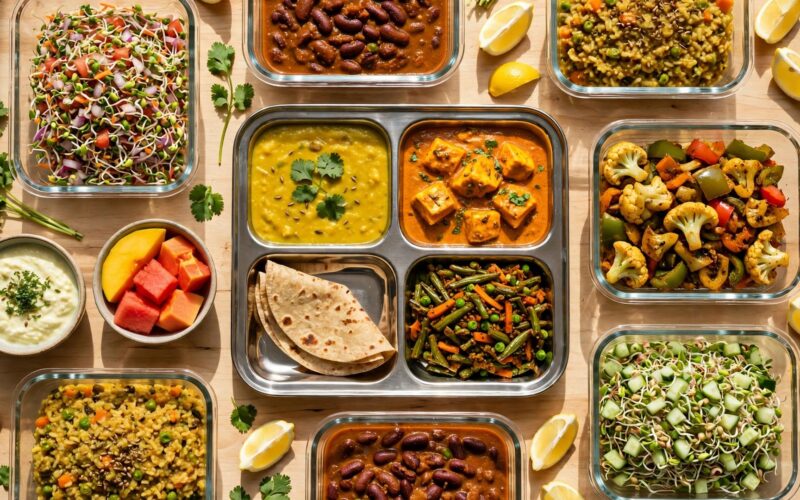
7-Day Indian Diet Chart for Weight Loss: A Complete Veg Meal Plan
Quick answer: This 7-day Indian diet chart for weight loss gives you five small meals a day — breakfast, mid-morning snack, lunch, evening snack and dinner — built from everyday vegetarian Indian food: poha, idli, dal, roti, sabzi, curd, sprouts, paneer. Each day lands at roughly 1,500–1,700 kcal with about 55–65g of protein — a gentle calorie deficit, without giving up the food you actually eat. All numbers are approximations from standard food values (IFCT 2017 / USDA); adjust portions to your body, activity and doctor’s advice.
Most diet charts fail Indian kitchens for one simple reason: they were not written for them. Quinoa bowls, grilled chicken breast and avocado toast are fine foods, but they are not what comes out of a home kitchen in Indore, Patna or Coimbatore on a Tuesday. People follow a foreign meal plan for four hungry days, then return to dal-chawal feeling like failures — when the plan was the problem, not the person.
This indian meal plan for weight loss takes the opposite approach. It keeps the food you already cook — poha, dal-roti, khichdi — and fixes the two things that decide weight loss: how much you eat, and whether protein shows up at every meal. Below: how the plan works, the full chart, a grocery list, common mistakes, and FAQs.
How This Indian Diet Chart Works
Weight loss comes down to a calorie deficit: eating a little less energy than your body burns, consistently, for weeks. This chart lands most moderately active adults at about 1,500–1,700 kcal a day. For someone whose maintenance is around 1,900–2,200 kcal, that is a deficit of roughly 300–500 kcal a day — the modest, sustainable kind, not a crash diet. Estimate your own maintenance with the free tools on our fitness and health calculators page, and if it is much higher or lower, scale portions slightly (an extra roti, a bigger katori of dal) rather than abandoning the structure.
Four ideas hold the whole plan together:
- Protein at every meal. Dal, curd, paneer, sprouts, soya, milk or chana appear in every meal, adding up to roughly 55–65g of protein a day. Protein keeps you full and protects muscle while the fat comes off.
- Half the plate is vegetables and salad. Sabzi and salad give volume and fibre for very few calories — you finish feeling fed, not deprived.
- Oil is measured, not poured. The plan assumes about 3–4 teaspoons of oil or ghee across the day’s cooking. A free-poured tadka can silently add 200–300 kcal.
- Nothing is banned. There is a paratha day. There is chai. A plan you can hold for twelve weeks beats a perfect plan you quit in five days.
An honest note before you start: this is a general, educational meal plan for healthy adults — not medical advice, not a personalised prescription. Calorie and protein figures are estimates; your home portions will differ a little, and that is fine. If you have diabetes, thyroid trouble, kidney disease, PCOS under treatment, are pregnant or breastfeeding, or take regular medication, talk to your doctor or a registered dietitian first.
The 7-Day Indian Diet Chart for Weight Loss
Portion guide: 1 katori ≈ 150 ml; 1 medium roti uses about 30g of flour; “1 plate” is a normal home serving. Timings that suit most people: breakfast 8–9 am, mid-morning 11 am, lunch 1–2 pm, evening snack 4:30–5:30 pm, dinner 7:30–8:30 pm. Drink roughly 2–2.5 litres of water through the day.
| Day | Breakfast | Mid-Morning | Lunch | Evening Snack | Dinner |
|---|---|---|---|---|---|
| Day 1 ≈1,550 kcal ~60g protein | Vegetable poha (1 plate) with peanuts & lemon | 1 apple + 1 glass buttermilk | 2 roti + masoor dal (1 katori) + lauki sabzi + salad + curd (100g) | Roasted chana (40g) + masala chai (little/no sugar) | 2 roti + palak paneer (100g paneer) + salad |
| Day 2 ≈1,690 kcal ~57g protein | 3 idli + sambar (1 katori) + coconut chutney (1 tbsp) | Papaya bowl (200g) | Steamed rice (1.5 katori) + rajma curry (1 katori) + beans–carrot sabzi + salad + curd (100g) | Sprouted moong chaat (1 bowl) | Moong dal khichdi (1 plate) + mixed-veg raita + salad |
| Day 3 ≈1,600 kcal ~60g protein | 2 moong dal chilla + mint chutney + skimmed milk (200 ml) | 1 orange + roasted makhana (20g) | 2 roti + chole (1 katori) + salad + curd (100g) | Masala corn chaat (1 bowl) | Vegetable daliya (1 big bowl) + moong dal soup (1 katori) |
| Day 4 ≈1,550 kcal ~62g protein | Vegetable upma (1 plate) + sambar (small katori) | 1 banana + 1 glass buttermilk | 2 roti + toor dal tadka + bhindi sabzi + salad + curd (100g) | Roasted soya nuts (30g) + green tea | 2 roti + lauki chana dal (1.5 katori) + salad + veg raita |
| Day 5 ≈1,570 kcal ~64g protein | Oats (40g) cooked in low-fat milk (250 ml) + nuts & seeds (15g) | Coconut water + roasted chana (30g) | 2 roti + urad dal + seasonal sabzi + salad + curd (100g) | Mixed fruit bowl (200g) + 5 soaked almonds | 2 roti + soya granules curry + salad + curd (100g) |
| Day 6 ≈1,580 kcal ~61g protein | Besan chilla (2) + mint chutney + curd (100g) | 1 guava + roasted chana (30g) | 2 roti + palak dal + cabbage sabzi + salad + curd (100g) | Buttermilk + roasted makhana (20g) | Vegetable khichdi (1 plate) + kaddu raita + salad |
| Day 7 ≈1,620 kcal ~63g protein | Idli (3) + sambar (1 katori) + tomato chutney | Coconut water + 1 banana | Steamed rice (1.5 katori) + sambar + bhindi sabzi + salad + curd (100g) | Sprouted moong chaat (1 bowl) + green tea | 2 roti + paneer bhurji (100g paneer) + salad |
How to Use This Chart for Real Life
Prep once, eat twice. Cook dal in a larger batch and use it for lunch and the next day’s soup. Soak chana and moong overnight; sprouting takes two days, so start on Sunday for Tuesday’s chaat. Chop onions, tomatoes and salad vegetables for two days at a time. Most people fail not on willpower but on a 7 pm “there’s nothing ready” moment — and that moment is fixed on Sunday, not on Tuesday evening.
Easy swaps (keep the structure, change the dish). Poha can become upma; masoor dal can become moong or toor; palak paneer can become matar paneer; rice can become daliya. What matters is the pattern — a grain, a protein, a sabzi and a salad — not the exact recipe. If a dish is not available, swap it for something similar in calories and protein, not for a packet of biscuits.
If protein is low, add curd first. The cheapest protein upgrade in Indian food is 100g of curd or a glass of buttermilk with lunch and dinner. Next cheapest: sprouts, chana and soya. Paneer is excellent but calorie-dense, so keep it to about 100g and pair it with salad, not extra ghee. Our dal nutrition chart and high-protein vegetarian foods guides show the numbers per 100g if you want to compare options.
A note on chai and sugar: chai itself is not the problem; three teaspoons of sugar, three times a day, is. Use little or no sugar, or switch one cup to green tea. The same applies to fruit juice — eat the fruit, don’t drink it. A whole orange fills you; a glass of juice does not, and it costs twice the calories.
Eating out or at a family function: choose the dal, sabzi, salad and roti first, skip the fried starter, and stop at satisfied, not stuffed. One meal does not decide a week. Get back to the chart at the next meal, not on Monday. For more on making this automatic, see how to meal prep for beginners.
What to Buy for the Week: Grocery List
Buy once a week; fresh vegetables and curd twice a week. Quantities are for one person following the chart; scale up for a family.
| Category | Buy for the week |
|---|---|
| Grains & flours | Whole wheat atta (1.5–2 kg), poha (500g), rice (500g), oats (300g), daliya (300g), suji/rava (300g), besan (300g) |
| Dals & legumes | Masoor, toor, moong, urad, chana, rajma, chole — 250g each (or 500g of your three most-used dals) |
| Protein & dairy | Paneer (300g), curd/dahi (1.5–2 kg for the week), low-fat milk (2–3 litres), buttermilk, skimmed milk powder if used |
| Vegetables | Lauki, bhindi, cabbage, beans, carrots, palak, kaddu/pumpkin, cauliflower, tomatoes, onions, cucumber, carrots for salad, lemons, green chillies, ginger, coriander and mint |
| Fruits | Apples, bananas, papaya, oranges, guava, seasonal mixed fruit (about 2–3 kg total) |
| Snacks & nuts | Roasted chana (300g), makhana (150g), roasted soya nuts (150g), peanuts (100g), mixed nuts & seeds (150g), almonds (small pack), corn for chaat |
| Pantry | Oil or ghee (measured: about 250 ml for the week), salt, haldi, jeera, mustard seeds, garam masala, sambar powder, chutney ingredients, green tea, chai leaves, spices as usual |
Buy once a week, restock fresh vegetables and curd mid-week, and keep roasted chana and makhana visible — snacks you can see are snacks you will actually eat instead of biscuits.
Common Mistakes That Stall Weight Loss
- Skipping breakfast, then overeating at lunch. Hunger is not willpower training. A proper breakfast makes the rest of the day easier, not harder.
- Salad with a river of dressing. A salad is low-calorie until it is drowned in mayonnaise or sweet dressing. Lemon, salt and chaat masala are enough.
- Counting only meals, not drinks and bites. Sweet chai, lassi with sugar, juice and “just one” biscuit while cooking are real calories, even if they never appear on a plate.
- Weighing yourself every morning. Weight fluctuates with water, salt and your cycle. Weigh once a week, same time, same clothes — and also track waist, energy and how your clothes fit.
- Treating a bad day as a failed plan. A wedding, a festival or a tired evening is part of life, not proof the chart does not work. Return at the next meal.
Frequently Asked Questions
Can I repeat this 7-day chart for a second week?
Yes. It is designed to repeat. Swap two or three dishes in week two so you don’t get bored, keep the portions and protein pattern the same, and adjust only if your weight stalls for three weeks or you feel constantly hungry.
Is this chart suitable for vegetarians and vegans?
It is vegetarian as written. For a vegan version, replace paneer with tofu or soya, curd with soy curd or a calcium-fortified alternative, and milk with soy or oat milk; protein totals will be similar if you keep the dal and soya portions.
Can I eat rice every day on this plan?
Yes, in the portion shown — about 1.5 katori cooked rice with dal, sabzi, salad and curd. Rice alone is not fattening; rice with no protein, no vegetables and a second helping is where the calories pile up.
What if I am hungry between meals?
First drink water and wait ten minutes; thirst often feels like hunger. If you are still hungry, add salad, buttermilk or a small bowl of sprouts rather than skipping ahead to the next meal. Persistent hunger for days means your portions are too small — add a roti or an extra katori of dal, don’t abandon the plan.
Do I need to exercise for this to work?
Weight loss is mostly food, but walking 7,000–10,000 steps a day and two or three short strength sessions a week protect muscle, improve insulin sensitivity and make maintenance far easier. For general, evidence-based habits, see our weight loss tips that actually work.
How fast will I lose weight?
A realistic pace is about 0.5 kg a week for most people, sometimes faster in the first two weeks as water weight drops. Faster than 1 kg a week usually means you are losing muscle or under-eating, not doing better. Track your progress with tools like our ideal body fat percentage guide rather than the scale alone.
The Bottom Line
A 7-day Indian diet chart for weight loss does not need imported superfoods or a separate kitchen. It needs the food you already love, in measured portions, with protein at every meal, vegetables on half the plate, and oil measured rather than poured. Follow this chart for two weeks, note what works for your routine, swap dishes you dislike, and keep the structure. That is how a diet chart becomes a habit — and habits, not seven perfect days, are what change weight.
Sources and Further Reading
- IFCT 2017 — Indian Food Composition Tables, National Institute of Nutrition (ICMR)
- USDA FoodData Central — standard values for oats, nuts, seeds, milk and fruits
- dal nutrition chart with protein and calories per 100g
- high-protein vegetarian foods
- how to meal prep for beginners
- high-protein breakfast ideas for busy mornings
Key Takeaways
- A 7-day Indian diet chart for weight loss works when it is built on food you already eat, protein at every meal and a modest calorie deficit.
- Keep breakfast, lunch and dinner roughly on time, measure oil, and make half the plate vegetables and salad.
- Prep dal, sprouts and chopped vegetables once or twice a week so busy days stay on plan.
- Repeating the chart for a second week is fine; adjust portions, swap dishes, and keep the structure.
This article is for informational and educational purposes only. It does not constitute medical advice, diagnosis, or treatment. The information presented is researched from trusted sources including peer-reviewed scientific journals, CDC, NIH, WHO, and recognized health organizations. Always consult a qualified healthcare professional before making any changes to your diet, exercise routine, or health regimen.