In Search of Clarity on Supplements: Five Myths Worth Busting

🍲Nutrition Health Guide
Evidence-based information you can trust
The global dietary supplement industry is projected to surpass $270 billion by 2024, yet nearly half of American adults cannot correctly identify what the FDA does and does not regulate the pills, powders, and capsules lining their medicine cabinets. That gap between spending and understanding is exactly where misinformation thrives. You walk into any pharmacy or scroll through any wellness influencer’s feed, and you will encounter bold promises wrapped in scientific-sounding language.
Also Read-Could a Multivitamin Help You Age Better? Study Suggests Yes
But here is the thing: the supplement industry operates under a regulatory framework that would shock most consumers. Unlike prescription drugs, supplements do not require FDA approval before they hit the shelf. The burden of proof falls on the FDA to demonstrate a product is unsafe after it is already in your hands.
That fundamental disconnect between marketing and regulation is why so many myths about supplements persist, and why separating fact from fiction has never been more important for your health and your wallet.
If you have ever stood in the supplement aisle wondering whether that expensive multivitamin is actually doing anything, or whether “natural” on a label means “safe,” you are not alone. The confusion is not accidental. It is baked into an industry that spends billions on advertising while relying on consumers to assume the same rigor applied to pharmaceuticals applies to their products.
According to the National Institutes of Health, more than 50% of American adults take at least one dietary supplement regularly, yet surveys consistently show that most people cannot distinguish between supplements that have solid clinical backing and those that rely entirely on anecdote and marketing. That is a problem worth solving, because the stakes are real. Some supplements interact dangerously with prescription medications.
Others simply drain your bank account while delivering zero measurable benefit. And a few, when taken in the wrong dose or by the wrong person, can cause genuine harm.
In our research, what we found is that the supplement conversation is polarized in a way that helps no one. On one side, you have the wellness industry treating every supplement as a miracle cure. On the other, you have skeptics dismissing the entire category as useless.
The truth, as it usually does, lives somewhere in the middle. Certain supplements have robust clinical evidence supporting their use for specific populations and specific deficiencies. Others are backed by preliminary research that gets inflated into certainty by marketers.
And then there are the ones that have been studied, found lacking, and continue to sell anyway because the myth is more profitable than the reality. This article is about cutting through that noise. We are going to examine five of the most persistent supplement myths, look at what the evidence actually says, and give you a framework for making smarter decisions about what you put into your body.
Why Supplement Myths Persist in the First Place
Understanding why these myths stick around requires looking at the psychology of health decisions and the economics of the supplement market. Humans are wired to seek simple solutions to complex problems. You feel tired, so you want a pill that fixes it.
You worry about aging, so you want a capsule that reverses it. That desire for a straightforward fix makes you vulnerable to claims that sound scientific but lack the rigor of actual clinical trials. The supplement industry knows this.
It designs packaging that mimics pharmaceutical branding, uses terms like “clinically studied” (which can mean a single small trial with questionable methodology), and funds research designed to produce favorable outcomes. A 2019 analysis published in JAMA Internal Medicine found that industry-funded supplement studies were significantly more likely to report positive results than independently funded research. That is not a coincidence.
That is a business model built on the gap between what people hope and what evidence confirms.
The regulatory environment amplifies the problem. Because the FDA treats supplements as a category of food rather than medicine, companies can make what are called “structure and function claims” without providing the level of evidence required for drug approval. A bottle of turmeric capsules can legally claim to “support joint health” without proving it actually improves joint function in a randomized controlled trial.
The language is carefully chosen to imply benefit while avoiding the legal threshold of a medical claim. This creates a marketplace where perception often outpaces proof, and where consumers must become their own advocates. The myths that persist are not random.
They are the ones that serve the industry’s interests while exploiting genuine health concerns that people have.
The Cost of Believing Without Questioning
When you take a supplement based on a myth, the cost is not always obvious. Sometimes the harm is financial, spending hundreds of dollars annually on products that provide no measurable benefit. Sometimes it is opportunity cost, choosing a supplement over a dietary change or lifestyle intervention that would actually move the needle on your health.
And sometimes, the harm is direct. The FDA receives more than 2,000 reports of serious adverse events linked to dietary supplements each year, including hospitalizations and deaths. These are not fringe cases.
They involve products sold at major retailers, often to people who assumed that “over the counter” meant “risk-free.” Certain supplements, including high-dose vitamin D, St. John’s Wort, and various herbal extracts, interact with blood thinners, antidepressants, and heart medications in ways that can be dangerous. The myth that supplements are inherently safe because they are “natural” is one of the most damaging misconceptions in consumer health, and it is one we will address directly in the myths ahead.
The research landscape around supplements is more nuanced than most headlines suggest. Some compounds, like folic acid for pregnant women or vitamin B12 for older adults with absorption issues, have well-established benefits supported by decades of clinical data. Others, like omega-3 fatty acids, show mixed results depending on the population studied, the dose used, and the specific health outcome measured.
The problem arises when preliminary or mixed findings get distilled into absolute claims by marketers. A single study showing a modest association between a supplement and a health benefit becomes “proven to reduce your risk” on a label. That is not science communication.
That is marketing dressed in a lab coat. As we move through the five myths worth busting, keep this framework in mind: ask who funded the research, what the study actually measured, whether the findings have been replicated, and whether the benefit applies to someone with your specific health profile.
What We Will Cover and Why It Matters
The five myths we are about to examine were chosen because they represent the most widespread, most costly, and most potentially harmful misconceptions in the supplement space. These are the claims you encounter daily, whether on social media, in grocery store aisles, or from well-meaning friends who swear by their morning supplement stack. Each myth will be examined through the lens of current clinical evidence, regulatory reality, and practical implications for your daily life.
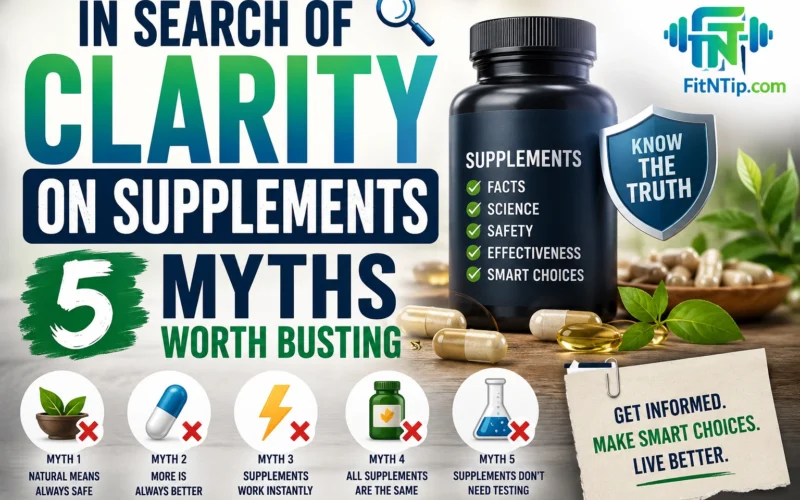
We will look at the myth that more is always better, the myth that natural automatically means safe, the myth that supplements can replace a healthy diet, the myth that expensive means effective, and the myth that you do not need to tell your doctor about the supplements you take. These are not abstract debates. They are decisions that affect real people making real choices about their health every single day.
Key Takeaways: What the Evidence Actually Tells Us
After examining the five most persistent supplement myths, a clear picture emerges that should reshape how you approach every bottle on the shelf. The supplement industry thrives on certainty, offering bold promises wrapped in scientific-sounding language. But the actual evidence tells a far more nuanced story.
More is not better, natural does not automatically mean safe, and no pill can replicate the complex nutritional matrix found in whole foods. What we found across the research is that the most effective approach to supplementation is also the most boring one: identify a specific deficiency, choose a targeted product with verified quality, and use it as a complement to an already solid foundation of diet, sleep, and movement. The people who benefit most from supplements are those with diagnosed deficiencies, malabsorption issues, increased physiological demands, or dietary restrictions that create genuine gaps.
For everyone else, the returns diminish rapidly, and the risks, both financial and physiological, start to climb.
The regulatory reality compounds this challenge. Because supplements occupy a unique space between food and medicine, they face less rigorous oversight than pharmaceuticals. This means the burden of verification falls squarely on you, the consumer.
Third-party testing certifications from organizations like USP, NSF International, or ConsumerLab provide a meaningful layer of protection, confirming that what is on the label is actually in the bottle and that contaminants are absent. Without that independent verification, you are trusting a manufacturer’s word in an industry where that trust has been broken repeatedly. The smartest move you can make is to treat every supplement claim with healthy skepticism, ask for the evidence behind it, and remember that if something sounds too good to be true, it almost certainly is.
Frequently Asked Questions About Supplements
Do I need to take a multivitamin if I eat a healthy diet?
For most people eating a varied, balanced diet rich in fruits, vegetables, whole grains, lean proteins, and healthy fats, a daily multivitamin provides minimal additional benefit. Major health organizations, including the U.S. Preventive Services Task Force, have concluded that there is insufficient evidence to recommend routine multivitamin use for the prevention of chronic disease in healthy adults.
That said, specific populations may benefit, including pregnant women who need folic acid, older adults who may struggle with vitamin B12 absorption, and individuals with restricted diets. The key is identifying whether you have a genuine gap before reaching for a pill.
Are natural supplements safer than synthetic ones?
The word “natural” on a label carries no guarantee of safety. Many of the most potent toxins known to science are entirely natural, and the supplement market is filled with herbal products that carry real risks of liver toxicity, kidney damage, and dangerous drug interactions. Kava, comfrey, and certain green tea extract concentrates have all been linked to serious adverse events.
Synthetic versions of vitamins and minerals, by contrast, often undergo more rigorous purity testing and have more predictable absorption profiles. Safety depends on the specific compound, the dose, the quality of manufacturing, and your individual health profile, not on whether the source was a plant or a laboratory.
How can I tell if a supplement brand is trustworthy?
Look for third-party certification seals from independent testing organizations. USP Verified, NSF Certified for Sport, and ConsumerLab approval all indicate that a product has been tested for identity, potency, purity, and dissolution. These certifications mean an independent lab has confirmed the product contains what it claims, in the amounts listed, without harmful levels of contaminants like heavy metals or pesticides.
Beyond certifications, check whether the manufacturer follows Good Manufacturing Practices as required by the FDA, and look for brands that publish their Certificates of Analysis. If a company is transparent about its testing, that is a strong signal of reliability.
Can supplements interact with prescription medications?
Absolutely, and this is one of the most underappreciated risks in the supplement world. St. John’s Wort can accelerate the breakdown of birth control pills, antidepressants, and blood thinners, potentially rendering them ineffective.
Vitamin K can counteract the effects of warfarin. Calcium and iron can interfere with the absorption of certain antibiotics and thyroid medications. Ginkgo biloba and high-dose fish oil can increase bleeding risk when taken with anticoagulants.
This is precisely why telling your doctor and pharmacist about every supplement you take is not optional, it is essential for your safety.
Is it possible to get all necessary nutrients from food alone?
For the majority of healthy individuals, yes, a well-planned diet can provide virtually all essential nutrients in the amounts needed for optimal health. Whole foods deliver nutrients in complex matrices that enhance absorption and provide beneficial compounds like fiber, polyphenols, and phytochemicals that no supplement can fully replicate. However, certain life stages and health conditions create needs that are difficult to meet through diet alone.
Vitamin D synthesis depends heavily on sun exposure and latitude. Vitamin B12 becomes harder to absorb with age. Iron needs increase dramatically during pregnancy.
In these cases, targeted supplementation fills a real gap that diet cannot easily address.
What is the difference between fat-soluble and water-soluble vitamins, and why does it matter?
Water-soluble vitamins, which include the B-complex group and vitamin C, dissolve in water and are generally excreted when consumed in excess, making acute toxicity rare. Fat-soluble vitamins, including A, D, E, and K, are stored in the body’s fatty tissues and liver, meaning they can accumulate to dangerous levels over time. This distinction matters enormously because it means you can megadose on vitamin C with relatively low risk, but megadosing on vitamin A or vitamin D can lead to serious toxicity symptoms including liver damage, hypercalcemia, and neurological problems. Understanding this difference helps you dose more safely and avoid the common mistake of assuming that if some is good, more must be better.
How long should I take a supplement before expecting to see results?
This depends entirely on what you are supplementing and why. For acute deficiencies, such as iron deficiency anemia or severe vitamin D insufficiency, measurable improvements in blood markers can appear within 4 to 8 weeks of consistent supplementation. For general wellness or preventive purposes, the timeline is far less clear, and many supplements marketed for energy, cognitive function, or immune support lack robust evidence showing meaningful benefits within any specific timeframe.
A reasonable approach is to set a defined trial period of 8 to 12 weeks, track how you feel using a simple journal, and reassess with your healthcare provider. If you notice no difference after that period, the supplement is likely not worth the continued expense.
When to See a Doctor
Supplements exist in a gray area that can make it difficult to know when professional guidance becomes necessary. You should schedule an appointment with your healthcare provider before starting supplements if you take any prescription medications, have a chronic health condition such as kidney disease, liver disease, diabetes, or autoimmune disorders, are pregnant or breastfeeding, or are preparing for surgery. if you have been taking supplements for several months without any noticeable benefit, a doctor can order blood work to check for actual deficiencies and help you determine whether your money is being well spent. Persistent fatigue, unexplained weight changes, hair loss, or frequent illness are not problems to self-treat with supplements, they are signals that warrant proper medical investigation.
Your Next Step
The supplement industry is not going anywhere, and neither are the myths that fuel it. But you now have the framework to cut through the noise. Start by auditing what you currently take.
For each supplement, ask yourself: what specific gap is this filling, what evidence supports it, and has it been independently verified? If you cannot answer all three questions confidently, that product deserves a second look. The most powerful health decision you will ever make is not found in a capsule.
It is found in the daily habits you build around real food, quality sleep, consistent movement, and honest conversations with healthcare professionals who know your history. Use supplements as the occasional tool they are meant to be, not the foundation they can never be.
📚 Why Trust This Article?
- Source-Verified: Every health claim is traced back to authoritative sources — we do not fabricate studies or invent statistics
- Government & Institutional Sources: We cite WHO, CDC, FDA, NIH, Mayo Clinic, Harvard Health, and other established health authorities
- Peer-Reviewed Research: Where available, we reference published studies from PubMed and Europe PMC academic databases
- Transparent About Our Role: We are health information researchers — not medical professionals. We present verified findings from trusted sources; we do not provide medical advice
- Hedging Language: We use careful, qualified language (“research suggests,” “studies indicate”) rather than absolute claims
- Medical Disclaimers: Every article includes “When to See a Doctor” guidance and recommends consulting qualified healthcare professionals
- AI-Assisted, Human-Reviewed: Content is AI-generated for comprehensive coverage, then reviewed against source materials for factual accuracy
The information provided on FitNTip.com is for general informational and educational purposes only. It is not intended as, and should not be construed as, professional medical advice, diagnosis, or treatment. Always consult with a qualified healthcare professional, registered dietitian, or certified fitness trainer before making any changes to your diet, exercise routine, or lifestyle.
Individual results may vary, and what works for one person may not be suitable for another. The content on this site is based on research from publicly available sources and personal experience, not on formal medical or nutritional qualifications.
📋 Our Editorial Process
At FitNTip, we follow a rigorous process to ensure the health information we present is accurate and trustworthy:
- Source Identification: We identify the most relevant and authoritative sources for each topic — prioritizing government health agencies (CDC, FDA, NIH), established medical institutions (Mayo Clinic, Cleveland Clinic), and peer-reviewed research (PubMed, The Lancet, NEJM).
- Fact Verification: Every health claim in our articles is cross-referenced against at least one authoritative source. We do not publish claims that cannot be traced to a credible origin.
- AI-Assisted Drafting: We use AI tools to help draft comprehensive articles efficiently, but the AI is guided by verified research context — not free-form generation.
- Hedging & Qualification: We deliberately use qualified language (“evidence suggests,” “research indicates”) rather than absolute statements, because health science is always evolving.
- Transparency: We clearly disclose that we are researchers and information curators, not medical professionals. Our value is in making verified health information accessible — not in providing medical advice.
- Reader Safety: Every article includes guidance on when to consult a healthcare professional and clear disclaimers about the limitations of general health information.
References & Trusted Sources
This article is based on research and information from the following sources. Last verified: August 14, 2026
- FDA: Dietary Supplements – What You Need to Know [www.fda.gov]
- NIH Office of Dietary Supplements: Using Dietary Supplements Wisely [ods.od.nih.gov]
- JAMA Internal Medicine: Industry Funding and Conflict of Interest in Nutritional Research [jamanetwork.com]
- U.S. Preventive Services Task Force (USPSTF): Vitamin, Mineral, and Multivitamin Supplementation [uspreventiveservicestaskforce.org]
- CDC: National Health and Nutrition Examination Survey (NHANES) [www.cdc.gov]
Note: We strive to link to authoritative sources and peer-reviewed research. If you notice any outdated or incorrect information, please contact us.
This article is for informational and educational purposes only. It does not constitute medical advice, diagnosis, or treatment. The information presented is researched from trusted sources including peer-reviewed scientific journals, CDC, NIH, WHO, and recognized health organizations. Always consult a qualified healthcare professional before making any changes to your diet, exercise routine, or health regimen.